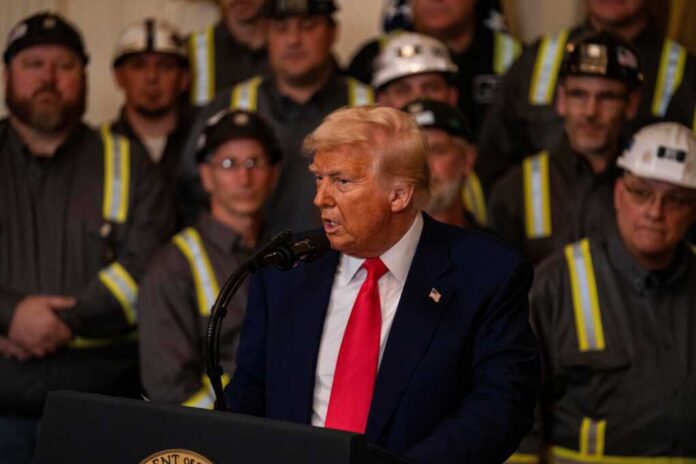
President Trump’s recent bruises, leg swelling, and unsteady walk have intensified scrutiny of his physical and cognitive health, with the White House insisting the condition is benign while critics and experts raise sharper questions.
At a Glance
- Trump diagnosed with chronic venous insufficiency, a circulatory condition.
- Multiple public appearances show bruises on his hands and swelling in his legs.
- White House photos appear edited to minimize visible swelling.
- Psychologists warn of possible cognitive decline linked to observed gait.
- Political opponents openly criticize Trump’s physical condition.
Bruising, Swelling, and a New Diagnosis
President Donald Trump, 79, has once again appeared in public with visible bruising on the back of his right hand, sparking renewed questions about his health. The White House confirmed he has been diagnosed with chronic venous insufficiency (CVI), a condition that restricts blood flow from the legs back to the heart. While the administration has emphasized that the condition is benign and manageable, the visible symptoms continue to attract attention.
Doctors have noted that CVI can lead to swelling, discoloration, and bruising, particularly in older adults. Trump’s hand bruises were attributed in part to his daily aspirin regimen and frequent handshakes, but observers have pointed out that his legs and ankles also appear swollen. Official photographs released after meetings have reportedly been altered to minimize the appearance of swelling, drawing further scrutiny to the administration’s messaging strategy.
Watch now: Trump HIDES HIS HAND as health fears EXPLODE · YouTube
Gait and Balance Observations
During a recent golf outing, video footage showed Trump walking with an unsteady gait and appearing to drag his right leg. Analysts and political commentators have seized on the clip as evidence of possible neurological decline. The footage coincided with new bruises visible on his left hand, reinforcing the perception that his health concerns are not isolated.
Experts in neuropsychology, including Dr. John Gartner and Dr. Harry Segal, have warned that Trump may be exhibiting signs consistent with frontotemporal dementia, citing his gait, posture, and changes in psychomotor function. While no official medical confirmation has been made on this front, such warnings have amplified debate over whether his cognitive health is beginning to show significant decline.
Political Reaction and Public Scrutiny
Trump’s physical appearance has increasingly become a political issue. Illinois Governor J.B. Pritzker, in response to a recent insult from the president, remarked publicly that Trump is “not in good shape.” The comment underscored how health concerns, once treated with caution by political rivals, are now openly cited in public exchanges.
The combination of visible bruises, mobility issues, and alleged photo manipulation has fueled speculation among voters and analysts about Trump’s ability to manage the physical demands of the presidency. For the White House, balancing transparency with reassurance remains a central challenge as questions about both his physical stamina and cognitive resilience continue to mount.
Sources