President Trump’s unilateral National Guard deployments have spurred Democratic governors to escalate policing, raising fears of constitutional breaches and deepening political conflict.
At a Glance
- Trump deployed 800 National Guard troops to Washington, D.C. without a local request.
- Democratic governors rapidly boosted state law enforcement after Trump threatened more deployments.
- Legal experts cite the Posse Comitatus Act to challenge federal authority in routine policing.
- Crime rates in many cities have declined, despite heightened political rhetoric on urban violence.
Governors Strike Back
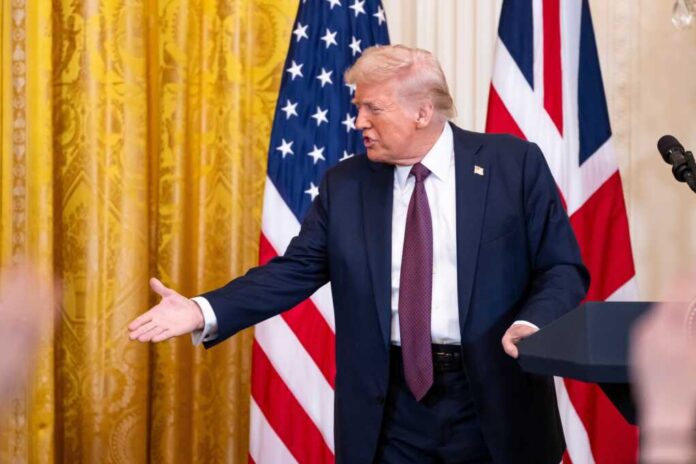
In August 2025, Trump ordered 800 National Guard troops into Washington, D.C., bypassing local leaders. He framed the move as a crime-control push. Governors in Maryland, California, and New Mexico responded by swiftly increasing their own police presence. They claimed that federal involvement undermines community trust and risks escalation.
Watch now: National Guard Deployment Sparks Debate
Maryland’s Wes Moore and California’s Gavin Newsom publicly denounced Trump’s action. They vowed to block further incursions into their states. New Mexico’s Governor Michelle Lujan Grisham and Albuquerque’s mayor issued a joint rebuke, branding the move “executive overreach.” Chicago Mayor Brandon Johnson signaled readiness for litigation, warning of constitutional fallout.
Federal Power vs. State Sovereignty
The White House defended its authority, citing public fear of rising urban violence. Trump allies in Congress applauded the move, calling it decisive leadership. Yet legal scholars note the rarity of using National Guard troops for standard policing, warning it stretches constitutional limits.
The Posse Comitatus Act restricts domestic military roles, and courts have begun weighing in. A federal judge recently found Trump’s D.C. deployment unlawful. That ruling set the stage for broader challenges as states contest his authority. For conservatives wary of federal power, the precedent poses risks for future administrations of either party.
Opponents argue that unchecked federal deployments could shred local control. Civil liberties groups warn of creeping militarization in domestic law enforcement. The clash now turns on whether constitutional barriers hold or bend under political pressure.
Crime Data and Public Perception
The policy battle rests on contested crime narratives. Federal officials describe cities in crisis, justifying extraordinary steps. Yet FBI data shows declining violent crime in several large metros. That statistical gap fuels partisan spin and hardens public divides.
Trump’s backers argue numbers matter less than public perception of insecurity. They claim Guard deployments restore order where local officials failed. Critics counter that heavy-handed military responses corrode public trust. They warn of community backlash, mass protests, and weakened police legitimacy.
Watchdog groups highlight the risk of normalizing military roles in civilian life. They caution that once deployed, such measures rarely retreat. The precedent, they say, may embed federal power deeper into local law enforcement, reshaping the balance of authority for decades.
Long-Term Stakes
Legal battles will drag on, with states filing injunctions to block federal incursions. The constitutional balance between federal and state power is under fresh strain. Public safety concerns now collide with deep anxieties over executive overreach.
For governors, the stakes are both political and practical. Their credibility on crime depends on showing they can maintain order without military aid. For the White House, the gamble is that visible toughness outweighs constitutional qualms in the public mind.
As partisan trench lines harden, the issue may set a durable precedent. The question is no longer just how America polices its streets, but who holds the final authority to decide.
Sources
New Mexico Governor’s Office Press Release
Los Angeles Times National Coverage
The Daily Record Legal Analysis