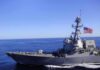
The United States and Philippines just launched their largest-ever joint military exercises near China’s contested waters, deploying 17,000 troops with advanced weaponry in a powerful challenge to Beijing’s territorial ambitions that Washington’s critics say risks dragging America into another overseas conflict.
Story Snapshot
- Balikatan 41-26 exercises involve 17,000 personnel from eight nations, marking the largest edition since the drills began in 1991
- Japan deploys 1,400 troops and warships for its first major active role, signaling unprecedented trilateral military cooperation
- Live-fire exercises near Scarborough Shoal and Taiwan will test BrahMos missiles and Japanese Type 88 anti-ship systems
- China warns against “division and confrontation” as drills unfold within 230 kilometers of contested South China Sea territories
Unprecedented Military Buildup in Pacific Theater
The 41st Balikatan exercises launched April 20, 2026, at Camp Aguinaldo in Manila represent a dramatic escalation in regional military posture. Philippine Armed Forces Chief Gen. Romeo Brawner Jr. and US Chargé d’Affaires Robert Ewing inaugurated drills involving forces from the Philippines, United States, Australia, Canada, France, Japan, the United Kingdom, and New Zealand. The exercises run through May 8 across multiple domains including ground operations, maritime maneuvers, air strikes, cyber warfare, and integrated missile defense. This expansion reflects growing alarm over Chinese aggression in contested waters, though skeptics question whether American taxpayers should fund military buildups thousands of miles from home.
Japan Emerges as Key Military Partner
Japan’s participation marks a watershed moment for regional defense cooperation. Tokyo deployed approximately 1,400 personnel alongside the JS Ise helicopter carrier, JS Shimokita landing ship, JS Ikazuchi destroyer, C-130H transport aircraft, and Type 88 anti-ship missiles for active combat training. Previous Balikatan editions relegated Japan to observer status, but trilateral summit agreements in 2024 elevated Japanese forces to full participants. The shift follows Japan’s 2022 National Security Strategy overhaul and responds to escalating Chinese military activity near Taiwan. This growing alliance demonstrates how nations once divided by World War II now unite against common threats, though some Americans wonder if the Trump administration’s focus should remain on securing borders and prosperity at home.
High-Stakes Training Near Flashpoint Territories
Live-fire exercises will occur in Zambales province, approximately 230 kilometers from Scarborough Shoal where Philippine and Chinese vessels repeatedly clash, and in northern Itbayat near Taiwan. Participating forces will conduct precision strikes, counter-landing scenarios, and a live-fire sinking exercise testing Philippine BrahMos missiles alongside Japanese systems. Lt. Gen. Christian Wortman emphasized the drills simulate “real-world conditions” for interoperability against potential invasion threats. USINDOPACOM Admiral Paparo confirmed the exercise scale despite simultaneous Middle East commitments, underscoring Washington’s “unwavering” Indo-Pacific focus. These activities near contested zones signal deterrence but carry escalation risks that could entangle American forces in conflicts where vital national interests remain debatable to many citizens weary of foreign entanglements.
Strategic Implications and Regional Tensions
The drills enhance military readiness and alliance cohesion under the 1951 US-Philippines Mutual Defense Treaty and the Enhanced Defense Cooperation Agreement. Military officials describe Balikatan 41-26 as the “most expansive in scale and scope,” shifting from bilateral exercises to complex multinational operations integrating advanced weapons systems and cyber capabilities. China issued warnings against “division and confrontation,” viewing the activities as provocative encirclement. For supporters, the exercises showcase free nations defending sovereignty against authoritarian coercion. For critics across the political spectrum, the buildup exemplifies how elites commit American resources and military personnel to defend distant territories while domestic infrastructure crumbles and border security remains compromised. Whether these drills prevent conflict or accelerate an arms race remains uncertain, but one thing is clear: ordinary Americans will bear the costs and consequences of decisions made in Washington’s corridors of power.
Sources:
Philippines, US Kick Off Largest Ever Balikatan Exercises Close to Regional Flashpoints
Philippines, US open ‘biggest’ Balikatan drills
Philippines, US and Allies Launch Largest Ever Balikatan Drills Amid Rising Regional Tensions