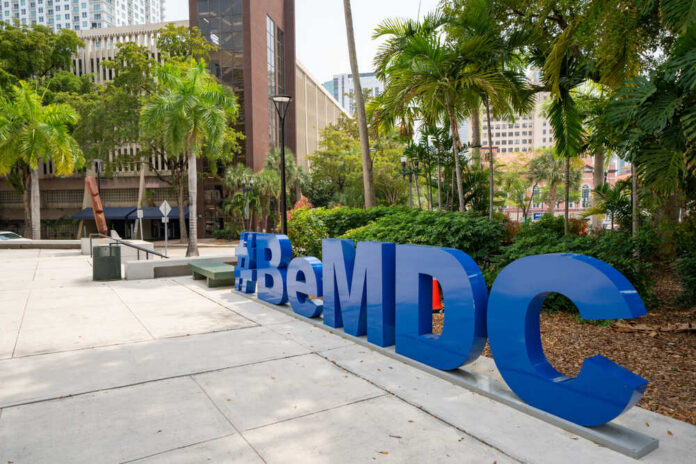
A judge’s tug‑of‑war over prime downtown Miami land for the Trump Presidential Library is exposing just how far activists and institutions will go to control a $67‑million-plus prize.
Story Snapshot
- Miami Dade College’s quiet vote to hand prime land to the state for Donald Trump’s presidential library triggered a Sunshine Law lawsuit and an initial injunction blocking the transfer.
- The original public notice described only a “potential real estate transaction,” not a Trump library, raising real transparency questions even as courts later allowed a redo.
- After a four‑hour, heavily attended re‑vote, the judge lifted the block and dismissed the complaint, keeping the land transfer alive despite continuing public concern. [1][2]
- The battle highlights a broader fight over how public institutions handle high‑value assets, political pressure, and accountability to taxpayers—especially when Trump’s name is involved. [1]
How a Low‑Profile Meeting Sparked a High‑Stakes Court Fight
Miami Dade College’s board quietly voted in September 2025 to transfer roughly 2.6 acres of downtown land to the state of Florida, with the site ultimately earmarked for the Donald J. Trump Presidential Library. The public notice for that meeting reportedly referred only to “potential real estate transactions” and did not spell out that the land would underwrite a Trump library project next to Miami’s historic Freedom Tower. Critics argue that vague label denied ordinary citizens a real chance to understand what was happening.
Historian and activist Marvin Dunn sued, claiming the college violated Florida’s Sunshine Law, which is supposed to guarantee open government and meaningful notice when public bodies make major decisions. A Florida circuit judge, Mavel Ruiz, initially agreed that Dunn’s theory was likely to succeed, granting a temporary injunction to block the land transfer while the case moved forward and scheduling a full trial for 2026. That injunction briefly froze a transaction involving land valued at more than $67 million.
The Redo Vote: Public Hearing or Box‑Checking Exercise?
Once the injunction landed, Miami Dade College regrouped and scheduled a second meeting, this time widely advertised as a vote on transferring the downtown parcel for Donald Trump’s presidential library. Reports describe the redo session as a more than four‑hour public meeting with testimony from nearly 80 speakers on both sides of the debate. Dunn and his attorney, Richard Brodsky, spoke on the record, stressing that their core issue was the lack of meaningful disclosure before the first vote, not silence today. [2]
After the new hearing, trustees unanimously reapproved the transfer, and Judge Ruiz later dismissed the complaint without prejudice, signaling that any procedural defect had been cured by the second, more open process. She was quoted as saying it was “hard to think what more could have been added” to the revised notice to inform the public. Supporters argue this vindicated the college and showed the system works if citizens push back. Critics respond that a rushed, under‑the‑radar first vote on such valuable land should never have happened in the first place. [1][2]
What the Fight Really Says About Power, Trump, and Public Assets
Underneath the legal back‑and‑forth is a deeper question conservatives recognize well: who controls public institutions and how transparent are they when huge sums and political symbolism are at stake? This parcel sits in a prime section of downtown Miami, with some estimates placing its potential value as high as $250 million to $300 million in the right private development. That scale of value makes it reasonable for taxpayers to expect clear, specific notice before their representatives give the land away for any project, Trump‑branded or otherwise. [1]
🇺🇸 Miami is suing over Trump's presidential gift.
Florida handed over a waterfront plot in Miami, a former parking lot for Miami Dade College, worth over $300 million, for the Trump Presidential Library. DeSantis signed off on it.
Trump has said the library will "most likely"… pic.twitter.com/l02XDgWro5
— Mario Nawfal (@MarioNawfal) May 14, 2026
The judge’s decision to allow a redo rather than permanently void the deal fits a broader pattern in Florida Sunshine Law cases: courts often treat a second, properly noticed vote as a sufficient cure for earlier vagueness. That approach protects flexibility for local officials but can leave citizens feeling that political insiders can move fast, apologize later, and keep what they grabbed as long as they backfill procedure. For a Trump‑supporting base already skeptical of higher‑education bureaucracies and activist pressure, the message is mixed: legal standards for transparency remain modest, and lasting accountability still depends on vigilant citizens willing to sue, show up, and speak out. [1][2]
Sources:
[1] Web – Judge ends injunction against Miami land transfer for …
[2] Web – Judge dismisses complaint challenging Miami Dade …