
A one-year-old boy in a stroller was killed in Queens after a pickup driver with an open drunk-driving case allegedly blew a stop sign while impaired by cocaine and cannabis, prosecutors say.
Story Snapshot
- Queens prosecutors charged Elvin Rivera after a stroller strike killed a one-year-old boy in Flushing.
- A scene drug screen detected cocaine and cannabis; a field test indicated impairment, reports say.
- Rivera allegedly had a pending Bronx drunk-driving case and a suspended license at the time.
- Charges include manslaughter, vehicular manslaughter, assault, and impaired driving offenses.
What Prosecutors Say Happened at the Flushing Intersection
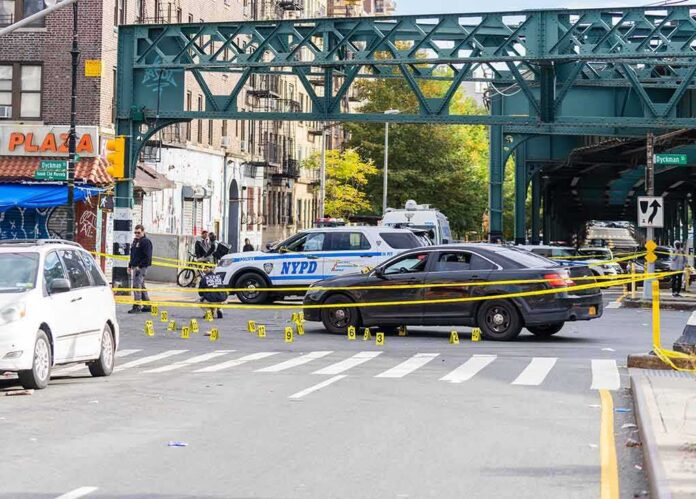
Queens District Attorney Melinda Katz said the crash happened around 8:35 a.m. on October 11 at Murray Street and 32nd Avenue in Flushing. Prosecutors allege Elvin Rivera drove a white 2016 Chevrolet Silverado north on Murray, ran a stop sign, accelerated into the intersection, and hit a stroller being pushed by a nanny. The impact killed one-year-old Justin Hu and injured the caregiver. Police arrested Rivera at the scene after officers evaluated him for impairment, according to reports.
Reports state that a drug screen performed after the crash detected cocaine and tetrahydrocannabinol, the main active compound in cannabis. Outlets also report that Rivera failed a field-sobriety test administered at the scene. Those claims support the prosecution’s theory that drug use impaired Rivera’s driving that morning. The defense has not publicly offered a detailed response. Rivera pleaded not guilty at arraignment, according to coverage of the case.
The Charges and the Open Case That Raises Accountability Questions
Prosecutors charged Rivera with second-degree manslaughter, second-degree vehicular manslaughter, assault, driving while impaired or under the influence of drugs, reckless driving, and unlicensed operation. Media reports say Rivera had an open Bronx drunk-driving case from April 2026 and that his license was suspended at the time of the Queens crash. He had earlier pleaded not guilty in the Bronx case and was released without bail, the Daily News reported.
The combination of a pending drunk-driving case, a suspended license, and a fatal crash feeds a bipartisan worry: systems meant to protect the public are not working. Many readers on the right and the left see a pattern where courts, agencies, and political leaders talk tough but fail to keep dangerous drivers off the road. This case will renew calls for tighter monitoring of suspended drivers and faster action on repeat driving offenses, regardless of party politics.
Why the Impairment Claims Matter in Court and on the Street
New York law treats three questions as linked but separate: Did the driver use drugs, was the driver functionally impaired while driving, and did that impairment cause the death? Courts have held that proof of drug use alone is not enough; prosecutors must show that drug use impaired the person’s ability to drive in a meaningful way. That standard matters for manslaughter and drugged-driving charges in cases like this one.
National Highway Traffic Safety Administration research says drug-recognition evaluations can help police, but accuracy varies by setting. Some studies show high agreement with lab results, while others do not. That is why details about test timing, specimen type, and officer observations often become key at trial. In public debate, though, a deadly crash and reports of drugs can overwhelm patience for those fine points, even when the law requires them.
What Comes Next for the Case and for Policy
Rivera now faces a long legal process. Prosecutors will seek lab-confirmed toxicology, crash reconstruction, and witness testimony. The defense can challenge the drug screen, the field tests, and whether any impairment caused the fatal impact. Meanwhile, city and state leaders will face pressure to close gaps that let suspended or high-risk drivers stay behind the wheel. Families in every neighborhood want safer streets and a system that acts before tragedy strikes.
Sources:
nypost.com, ground.news, hoodline.com, worldjournal.com