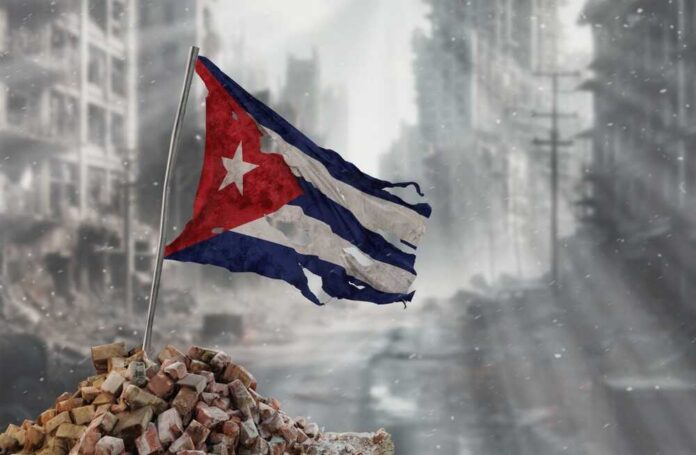
President Trump declared a “New Dawn for Cuba” is coming, signaling potential U.S. intervention in the communist nation after seven decades of socialist rule—leaving Cuban-Americans hopeful and the regime on notice.
Story Snapshot
- Trump promised a transformative change for Cuba “70 years in the making” during a Phoenix rally on April 17, 2026
- The announcement came one day after Cuba’s communist government celebrated the 65th anniversary of its socialist revolution
- Trump directly appealed to Cuban-Americans whose families suffered under Castro’s regime, warning “now watch what happens”
- The vague promise has sparked questions about whether Trump plans military, diplomatic, or economic action against the island nation
Trump’s Phoenix Proclamation Targets Communist Regime
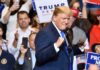
President Donald Trump delivered his most explicit Cuba policy statement of 2026 during a Turning Point USA event in Phoenix, Arizona on April 17. Trump told the crowd that a “New Dawn for Cuba” would arrive “very soon,” describing it as a moment “70 years in the making” that American military strength would deliver. The president specifically addressed Cuban-Americans, acknowledging them as people “brutally treated, whose families were killed and brutalized” under communist rule. His warning to the Cuban government was stark and direct: “And now watch what happens.”
The timing of Trump’s announcement carries significant weight. Just one day earlier, Cuban leader Miguel Diaz-Canel led a rally in Havana celebrating the 65th anniversary of Fidel Castro’s declaration of Cuba’s socialist revolution. The Cuban government used the April 16 commemoration to reassert its commitment to socialist ideology, creating a stark contrast with Trump’s promise of imminent change. This strategic timing suggests Trump’s statement was calculated to directly challenge Cuba’s celebration of its revolutionary legacy while energizing domestic political support among Cuban-American voters.
Seven Decades of Failed Socialist Experiment
Trump’s reference to “70 years in the making” points directly to the 1959 Cuban Revolution that brought Fidel Castro to power and transformed Cuba into a socialist state aligned with the Soviet Union. For seven decades, the Cuban people have endured economic stagnation, political repression, and isolation under communist rule while a thriving Cuban-American diaspora in the United States has maintained hope for their homeland’s liberation. The Cuban-American community, particularly concentrated in Florida, has consistently supported hardline policies toward the Castro regime and its successors, viewing any accommodation with Havana as a betrayal of those who suffered under socialism.
The contrast between Cuba’s continued poverty and repression and the success of Cuban-Americans who escaped to embrace freedom and capitalism illustrates the fundamental failure of socialist governance. While Cuba’s leaders celebrate their revolution, ordinary Cubans struggle with food shortages, crumbling infrastructure, and lack of basic freedoms. Trump’s appeal to Cuban-Americans whose families were “killed and brutalized” acknowledges the real human cost of Cuba’s socialist experiment—a cost that establishment politicians have too often ignored in pursuit of diplomatic normalization that benefits government officials more than oppressed citizens.
Diplomatic Talks Clash With Tough Rhetoric
Trump’s forceful public statements come amid reports that U.S. and Cuban officials have met recently in Havana for ongoing diplomatic discussions. This creates an apparent tension between public rhetoric and private negotiations, though such dual-track approaches are common in foreign policy. Trump has been signaling throughout 2026 that Cuba policy changes would follow resolution of U.S. involvement in Iran, suggesting a sequenced approach to foreign policy challenges. The president’s vague language about “great strength” and action coming “very soon” leaves open multiple possibilities, from increased economic sanctions to diplomatic pressure or even military options.
Cuban citizens themselves have questioned Trump’s timeline, with mixed reactions to his promise of a “new dawn” focused largely on the ambiguity of “very soon” and the lack of specific details. This uncertainty reflects a broader pattern where government officials—both in Washington and Havana—make grand pronouncements while ordinary people remain caught between competing political agendas. Whether Trump’s statement represents genuine preparation for decisive action or political posturing remains unclear, but the appeal to Cuban-American voters ahead of electoral cycles cannot be ignored as a motivating factor.
What Happens Next Remains Uncertain
Trump’s refusal to specify concrete policy measures leaves the nature of this promised “New Dawn” open to interpretation. The options range from enhanced economic sanctions and diplomatic isolation to support for internal Cuban opposition movements or even military intervention. Each approach carries different risks and benefits, with military action potentially destabilizing the Caribbean region while diplomatic and economic pressure might achieve results more slowly. The Cuban government, having survived previous U.S. administrations’ efforts at regime change, may view Trump’s threats as more of the same—or as a genuine warning of unprecedented action.
For Cuban-Americans and Cuban citizens alike, Trump’s promise raises hopes that have been repeatedly disappointed over seven decades. The fundamental question remains whether any U.S. administration will finally take effective action to liberate Cuba from socialist rule, or whether the island nation will continue serving as a reminder of communism’s enduring failure just 90 miles from American shores. Trump’s track record of challenging conventional foreign policy suggests his statement may herald genuine change, but only time will reveal whether his “New Dawn” represents real liberation or another round of political rhetoric that leaves ordinary Cubans waiting for freedom that never arrives.
Sources:
Trump hints at Cuba action during event in Phoenix amid ongoing talks with island nation – WSVN
Cubans Question Trump’s Promised Timeline – CiberCuba
Trump vows ‘new dawn for Cuba’ at Phoenix rally – TRT World