In the war between Russia and Ukraine, food has become a deliberate instrument of pressure, with attacks and blockades aimed not just at an opponent’s economy but at the global supply chains that keep hundreds of millions of people fed.
Key Points
- Russia’s withdrawal from the Black Sea Grain Initiative and subsequent strikes on ports and shipping corridors are part of a sustained campaign that sharply constrains Ukraine’s grain exports and strains global food security.
- Ukraine’s foreign minister explicitly frames this as “holding global food security hostage,” drawing a parallel to Iran’s use of the Strait of Hormuz to pressure global energy markets.
- Independent reporting and institutional analysis describe systematic Russian targeting of agricultural infrastructure and maritime routes, reducing exports, raising prices, and increasing hunger risks in import-dependent regions.
- The militarization of food routes illustrates a broader pattern of “economic warfare,” in which control over civilian supply chains becomes a battlefield in its own right.
From Energy Chokepoints to Food Chokepoints
When Ukraine’s foreign minister Andrii Sybiha told the UN Security Council that “Russia is holding global food security hostage,” he was not speaking in abstractions. He drew a pointed comparison: just as Iran has repeatedly used the Strait of Hormuz—through threats, harassment of tankers, and missile strikes near shipping lanes—to signal that global energy flows can be disrupted at will, Russia is now using the Black Sea and adjacent waters to demonstrate it can disrupt global food flows. The analogy is compelling because both cases revolve around hard geographic facts. Energy and food move through chokepoints, and in modern war, governing those chokepoints is as consequential as taking territory.
Ukraine is among the world’s major exporters of wheat, maize, sunflower oil, and other agricultural commodities; its grain traditionally leaves via deep-water Black Sea ports such as Odesa, Chornomorsk, and Pivdennyi. When Russia invaded in 2022, one of its earliest strategic moves was to restrict access to these ports and lay mines along approaches, effectively trapping tens of millions of tonnes of grain. At first, this looked like collateral damage from war at sea. Over time, the pattern hardened into something more deliberate: a sustained effort to turn Ukraine’s role in the global food system into leverage.
The Black Sea Grain Initiative and Its Collapse
The clearest proof that food routes have become instruments of strategy is the rise and fall of the Black Sea Grain Initiative. Brokered in July 2022 under UN and Turkish auspices, the deal created a monitored maritime corridor from three Ukrainian ports, allowing more than twenty million tonnes of grain to move to world markets despite ongoing fighting. For a year, this corridor was a fragile but functional compromise: Russia accepted limited safe passage in exchange for attention to its own export constraints, and global markets reacted with relief as food prices eased from crisis peaks.
On July 17, 2023, Russia walked away from the arrangement. Almost immediately, Russian forces began renewed strikes on Ukrainian port infrastructure and grain storage, while its navy and coastal forces signaled that any vessel sailing to Ukrainian ports could be treated as a potential military target. Wheat prices jumped on global exchanges after Moscow’s declaration that ships heading toward Ukrainian harbors would be regarded as “potential carriers of military cargo,” making their flag states parties to the conflict. The signal was unmistakable: the corridor was no longer merely suspended; it was being rendered operationally dangerous.
Targeting Ports, Silos, and Ships
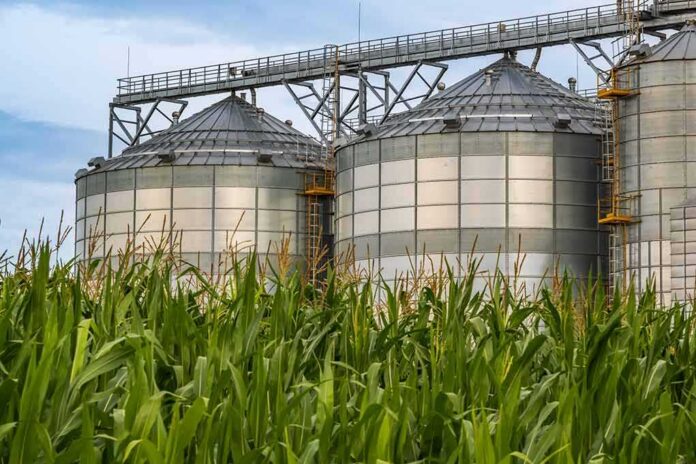
Since the full-scale invasion began, there is extensive documentation of Russian strikes aimed specifically at the facilities that make Ukraine’s agricultural exports possible—fields, silos, processing plants, rail links, and port berths. European Union officials describe a pattern of systematic targeting designed to limit Ukraine’s capacity to produce and export agricultural products: crops burned in the field, farm machinery destroyed, storage depots hit, and port approaches mined. An International Affairs analysis characterizes this as “food warfare,” arguing that Moscow has sought to undermine Ukraine’s resilience by degrading its food production and export capabilities over time.
In the Black Sea region, this pattern has taken a sharper maritime form. Ukrainian and international sources record repeated Russian drone and missile attacks on Odesa-region port facilities and on civilian cargo vessels arriving to load grain, including ships flagged under neutral states. Ukraine’s foreign minister and navy officers have labeled these attacks an assault on global food security, emphasizing that they are timed to peak export seasons and directed at ships that pose no military threat. When vessels stop coming—as happened on days when no ship transited Ukraine’s maritime corridor following intense strikes—the impact is immediate: terminals sit idle, storage fills, and exporters turn to longer, costlier overland routes.
Weaponizing Food: Strategy, Not Accident
Is this merely ruthless but conventional wartime interdiction, or is food itself being used as a weapon? Ukraine’s diplomats and many Western governments now explicitly argue the latter. Ukraine’s foreign ministry notes that senior Russian officials, including Dmitry Medvedev, have openly threatened restrictions on Russian agricultural exports to “unfriendly” countries, and even referred to food exports as a “weapon.” European and transatlantic analyses describe Russia’s approach as a campaign to block Ukrainian grain while manipulating its own exports—continuing shipments to selected regions to maintain influence, even as it drives up global prices through uncertainty.
As a matter of military doctrine, blockading ports and attacking logistical hubs is classic economic warfare: it aims to deprive an adversary of revenue and materiel. What makes the current campaign stand out is its scale and the explicitness of the political messaging. Western and UN officials have repeatedly warned that Russia’s withdrawal from the grain deal and its follow-on attacks on export infrastructure constitute attempts to “weaponize food,” leveraging hunger and price spikes to pressure both Ukraine and the broader international community. Kyiv itself has accused Moscow of playing “hunger games,” blocking some 22 million tonnes of grain at one point and using the threat of famine in Africa and the Middle East as a bargaining chip.
Global Consequences: Prices, Hunger, and Political Pressure
The consequences have radiated far beyond Ukraine’s borders. Prior to the war, Ukraine and Russia together accounted for roughly a third of global wheat exports, alongside major shares of maize, barley, and sunflower oil. When Black Sea ports were first constrained, years of already tight markets—driven by pandemic disruptions, climate shocks, and fertilizer price spikes—combined with the loss of Ukrainian exports to push international food prices sharply higher. Import-dependent states in North Africa, the Middle East, and parts of sub-Saharan Africa suddenly faced higher bills and physical shortfalls.
UN and EU assessments warn that Russia’s blockade and port attacks, by reducing Ukraine’s ability to ship grain, have aggravated a global food crisis and increased the number of people at risk of hunger. Some analyses estimate that prolonged blockage of Ukrainian grain could contribute to starvation or severe undernutrition among tens of millions of people in vulnerable countries. At the same time, Russia has continued to export its own grain, sometimes benefiting from higher prices in markets where buyers have few alternatives. This dual effect—Ukraine constrained, Russia still selling—illustrates the logic of weaponized interdependence: controlling the chokepoint confers influence even without formal sanctions.
The Legal and Naval Lens: Blockade, Exclusion Zone, or Terror?
From the standpoint of maritime law, Russia’s behavior inhabits a gray zone. The Lieber Institute’s analysis notes that Moscow announced restrictions in parts of the northwest Black Sea and declared a “restricted zone” that functions much like an exclusion zone, warning ships away from large areas. However, Russia has not met all legal requirements of a formal, de jure blockade under the law of naval warfare, such as consistent enforcement and neutral-state notifications. Ukraine, for its part, closed its ports by internal order at the start of the invasion for defensive reasons, compounding the operational difficulty for neutral shipping.
In practice, semantics matter little to shipowners making risk calculations. Insurance premia for voyages into the region have soared. Lloyd’s Joint War Committee has advised vessels to avoid most of the Black Sea coastline except Turkey. After escalated Russian strikes on port infrastructure and civilian vessels, major operators such as Maersk suspended services to certain Ukrainian ports “until further notice,” citing safety concerns. Whether one labels Russia’s actions a blockade, an unlawful exclusion zone, or “food terrorism,” as some Ukrainian commentators have, the functional effect is that a critical trade artery is intermittently closed by the credible threat of force.
Ukraine’s Counter-Moves and the Shifting Geography of Grain
Ukraine has not simply watched its export economy strangled. It has worked with partners to open alternative routes, including overland flows through Poland and Romania and new maritime corridors hugging the coasts of NATO members Bulgaria and Romania to reduce exposure to Russian naval forces. Over time, these adaptations have partially restored export volumes, though often at higher cost and with greater complexity. Analysts note that Ukraine’s exports of core crops such as wheat, maize, and barley remain substantially below pre-war levels—down by a third or more in some years.
Kyiv has also increasingly targeted Russian economic infrastructure in return. Drone strikes on Russian oil refineries, ports in the Sea of Azov, and fertilizer plants are designed to impose symmetry: if Russia can pressure global food and fuel markets through attacks on Ukrainian routes, Ukraine can impose its own form of economic pain. Recent reporting shows Ukrainian operations temporarily halting shipping on key Russian wheat routes, contributing to fuel and logistical crises in Russian agricultural regions and forcing Moscow to contemplate export bans and emergency measures. The battlefield has thus widened to encompass not only contested territory but the infrastructure of two large agricultural exporters whose actions ripple worldwide.
Why This Matters: Food, Power, and the Future of Economic Warfare
Sybiha’s comparison between Iran’s attacks on energy routes and Russia’s strikes on food routes captures a broader trend: in a world of tightly coupled supply chains, the ability to disrupt a few strategic corridors can yield disproportionate political leverage. Where previous generations thought of “blockade” primarily in terms of ships off a harbor, contemporary economic warfare embraces ports, pipelines, data cables, and now grain terminals and fertilizer plants. States and non-state actors alike have noticed that the threat of scarcity—of fuel, of food, of critical inputs—can be as powerful as the threat of direct military defeat.
For Ukraine, the weaponization of food is existential. Agriculture is one of its most important export sectors and a cornerstone of its budgetary and rural livelihoods; attacks on farms and ports are attacks on its long-term viability as a sovereign economy. For Russia, controlling or disrupting these flows offers a way to weaken Ukraine, test Western cohesion, and reinforce its own bargaining position with food-importing states. For the rest of the world, the lesson is both sobering and urgent: global food security cannot be treated as a neutral backdrop to war. It is now one of the arenas in which wars are fought.
Sources:
19fortyfive.com, reuters.com, theguardian.com, eeas.europa.eu, fairobserver.com, mfa.gov.ua, bbc.com, press.un.org, pbs.org, europarl.europa.eu, rferl.org, cfr.org, consilium.europa.eu, csis.org, youtube.com, pmc.ncbi.nlm.nih.gov, tandfonline.com, osw.waw.pl, lieber.westpoint.edu