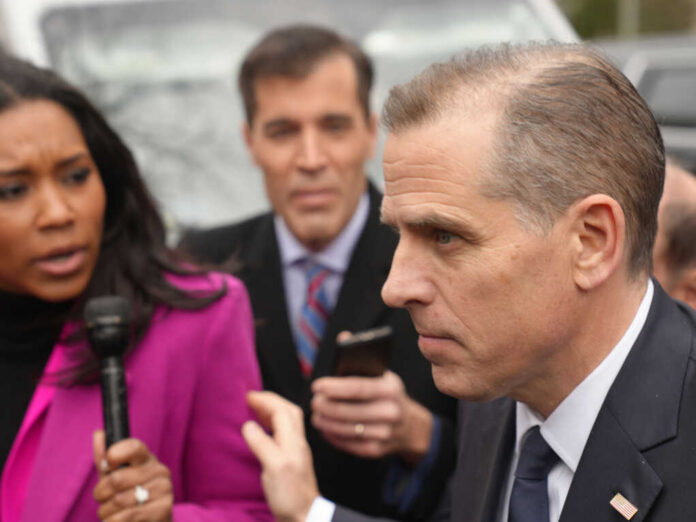
A federal judge just ordered former Overstock chief Patrick Byrne to pay Hunter Biden $1.7 million for spreading a wild Iran bribery story that Byrne refused to defend in court.
Story Snapshot
- Hunter Biden won $1.7 million in punitive damages after Patrick Byrne defaulted in a defamation case.
- The case centers on Byrne’s claim that Biden tried to trade U.S. policy toward Iran for a personal bribe, which Biden says was completely false.
- Byrne repeatedly ignored court orders, leading to a default judgment and extra financial penalties.
- The ruling shows how political speech can cross the line into defamation, even under strong free speech protections.
How Hunter Biden’s Defamation Case Reached a $1.7 Million Judgment
Hunter Biden sued former Overstock.com chief executive Patrick Byrne in November 2023 in federal court in California, claiming Byrne defamed him with extreme claims tied to Iran and U.S. foreign policy. In interviews and online posts, Byrne allegedly said Biden reached out to Iran and offered to have his father unfreeze Iranian funds in exchange for a personal bribe, a story Biden’s complaint called “complete nonsense.” Biden argued those statements were false, harmful, and made to stir political outrage and distrust.
Under California defamation law, a person must show a false statement of fact that hurts their reputation, but public figures like Hunter Biden also must meet a higher federal standard. Since the Supreme Court’s 1964 case New York Times v. Sullivan, public figures must prove “actual malice,” meaning the speaker knew the statement was false or recklessly ignored serious doubts. This rule is meant to protect tough debate about leaders, but it does not give a free pass for knowingly spreading made-up accusations as fact.
Byrne’s Refusal to Cooperate and the Default Judgment
After the lawsuit was filed, Byrne did not follow basic court rules, skipped required steps, and failed to appear as ordered, even as the case moved toward a 2025 trial date. Reports show Biden asked the judge for a default judgment because of Byrne’s repeated misconduct, including no-shows and ignoring discovery, which meant the court would treat his liability as established since he refused to defend himself. Byrne’s pattern fits a growing trend where some political figures mock the legal system yet still face heavy penalties when they simply stop showing up.
By March 2024, a judge had formally defaulted Byrne, clearing the way to decide damages without a full trial on the truth of his statements. Biden’s lawyers pointed to other recent defamation cases, including Rudy Giuliani’s default judgment for false claims about Georgia election workers, as a model for handling public figures who try to dodge accountability. In Biden’s case, the court accepted that Byrne’s Iran bribery story was defamatory per se, a category where the law presumes harm because the accusations are so serious.
What the Judge Awarded and Why It Matters Beyond Hunter Biden
In the final ruling, the federal judge in Los Angeles awarded Hunter Biden $1 in nominal damages for his defamation per se claim and a much larger $1.7 million in punitive damages aimed at punishing Byrne’s conduct and deterring similar future behavior. The judge also ordered Byrne to pay about $35,000 in earlier court sanctions that he still owed, underscoring how he ignored repeated warnings and financial penalties along the way. Together, these amounts send a message that blowing off the court can be very costly.
Punitive damages in defamation cases are rare against media outlets and ordinary speakers, but they are becoming more common when powerful political actors keep pushing false stories that risk real harm. Legal experts say default judgments like Byrne’s are a double-edged sword: they protect victims when defendants stonewall, yet they sidestep a full trial on “actual malice” that would test how the law should treat heated political speech. That tension worries both conservatives and liberals who fear the system now swings hard only when elites fight each other in court, not when regular citizens are harmed.
Free Speech, Political Rumors, and Public Distrust
New York Times v. Sullivan was designed to keep government from silencing critics and reporters, but it never protected outright invented claims sold as fact. When a business leader like Byrne uses his platform to describe supposed secret deals with foreign governments, many Americans on both the left and right see it as another example of powerful insiders trading in rumor while ordinary people struggle under real economic and social pressure. At the same time, some worry that big-money defamation fights mainly shield political families, not everyday folks who are smeared online.
This case highlights a deeper problem: trust in both government and the courts is thin, and many citizens feel there are rules for them and different rules for the elite. Hunter Biden’s win shows that even in a rough political climate, there are legal limits on how far pundits and donors can go when attacking public figures with claimed “inside” stories. But it also raises hard questions about why serious falsehoods about less famous people rarely get this kind of response, feeding the belief that the justice system mostly works when the powerful defend themselves from other powerful players.
Sources:
mediaite.com, reddit.com, yanglawoffices.com, docs.justia.com, courthousenews.com, facebook.com, courtlistener.com, susmangodfrey.com, freedomforum.org, aclu.org, supreme.justia.com, pbs.org