Trump’s deadly boat strike campaign shows how a government can kill 221 people without proving it made America safer or cut the cocaine flowing into its streets.
Story Snapshot
- U.S. forces have bombed at least 67 suspected “drug boats,” killing about 221 people in the Caribbean and eastern Pacific.
- Internal Drug Enforcement Administration (DEA) analysis and outside reporting say cocaine supply and street prices in the U.S. have not fallen.
- Human rights groups argue many victims were civilians and that Washington has released almost no public proof that boats carried drugs or posed an immediate threat.
- The campaign fits a wider pattern where leaders claim “tough on drugs” victories while secrecy blocks voters from seeing if these deadly actions actually work.
A lethal anti-drug campaign with a mounting death toll
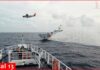
Since September 2, 2025, President Trump’s Operation Southern Spear has used bombs and missiles against small boats in the Caribbean Sea and eastern Pacific Ocean. A new report from the Washington Office on Latin America (WOLA) says U.S. officials have posted 63 strike videos online, showing the moments when 221 people died as their boats exploded. WOLA’s data, backed by other timelines, counts 63 attack events, 67 boats struck, and 221 people reported killed as of early July 2026. These are not battlefield clashes; they are one-sided attacks ordered from Washington and carried out far from U.S. shores.
The strikes are presented by the administration as hits on “narcoterrorists” and drug traffickers, but many of the dead have never been named in public sources. WOLA describes them as civilians traveling on “small boats,” and notes that 23 of the 221 were survivors who were not recovered after strikes. Two survivors were reportedly killed later in a follow-up strike. Other investigative outlets, including the New York Times and Insight Crime, built separate tallies and reached roughly the same 221-death figure, which suggests the casualty count is not just activist spin. For many Americans, this raises a basic question: who were these people, and what proof exists about what they were doing when U.S. weapons hit?
Did the killings actually slow the flow of cocaine?
The Trump administration has repeatedly sold the boat strikes as a way to stop cocaine from reaching U.S. cities, claiming huge cuts in maritime smuggling. Yet a Drug Enforcement Administration assessment obtained by The Washington Post says the campaign has not “reduced the amount of cocaine entering” the United States. According to that analysis, smugglers simply “adapted to the intensified pressure,” shifting to larger vessels, planes, and different routes to avoid the strike zones. Reason magazine and other outlets report that cocaine street prices in the United States have stayed steady, a sign that supply remains strong. If true, that means hundreds of deaths have bought little or no change in what drugs are available on American streets.
For people on both the right and the left, this feeds deep distrust in federal leaders who promise tough action but cannot show clear results. WOLA points out that decades of “supply-side” crackdowns have failed to cut drug availability or use inside the United States. The Atlantic notes that even agencies closest to the boat strikes have “given up the pretense” that this campaign has reduced narcotics flows, even as they keep carrying out attacks. Conservatives who want strong borders and real law enforcement and liberals who want smart, humane drug policy can both look at these numbers and ask whether Washington is repeating a costly, deadly mistake instead of fixing the root problems.
Secrecy, legality, and the question of due process
One of the most troubling parts of Operation Southern Spear is how little the public knows about who ordered each strike and what evidence they used. WOLA says the administration leans on a secret list of groups labeled “terrorist organizations” to justify attacks, yet offers no public proof that the boats carried drugs, weapons, or fighters. Legal scholars quoted by WOLA and other outlets argue that killing suspected traffickers this way, far from any active battlefield and without trials, violates U.S. and international law. They stress that even people suspected of crime must not be treated as enemy combatants unless they pose an immediate threat.
BREAKING: The DEA just SHREDDED Trump’s insane fantasy that his illegal boat strikes stopped the flow of cocaine into the U.S.
Pete Hegseth's military has killed at least 221 people in 67 boat strikes across the Caribbean and eastern Pacific over the past year. According to the… pic.twitter.com/H7XHfVneSC
— Occupy Democrats (@OccupyDemocrats) July 27, 2026
The pattern of survivors and missing people adds to those fears. WOLA’s data notes survivors who were never recovered and at least two who died in later strikes. Other timelines count several instances where some passengers lived through the blast, only to disappear at sea. Without public names and case files, Americans are asked to simply trust that everyone targeted was a legitimate threat. This secrecy is exactly what many citizens mean when they talk about a “deep state” that acts in the shadows and answers only to itself. When the government can kill 221 people based on secret lists, with no open court review, it is hard to believe ordinary citizens still have real control.
What this says about a government that feels unaccountable
For decades, both parties have backed hard-line drug policies, yet overdose deaths and cartel power keep rising. This boat strike campaign is a vivid new chapter in that story. It shows a federal government willing to deploy lethal force far from home, claim big victories, and then hide the data that might prove those claims wrong. The DEA assessment, WOLA reports, and other media coverage all point in the same direction: traffickers changed tactics, cocaine kept coming, and the promised “war on drugs” win never arrived. Those facts match what many Americans already suspect—that elites in Washington care more about looking tough than about solving problems.
Conservatives angry about waste and global adventurism can see these strikes as another expensive overseas show that did not make their communities safer. Liberals worried about human rights and inequality can see them as proof that poor people in far-off waters, not the powerful bankers and politicians tied to drug profits, pay the highest price. Both sides can agree on this: a government that kills by remote control, keeps secrets about who died and why, and cannot prove that its actions work is a government that has drifted far from the basic American promise of transparent, accountable power. Whether the subject is drugs, immigration, or national security, citizens will keep asking for something simple—real evidence that deadly policies are lawful, effective, and worthy of a free nation.
Sources:
reason.com, nytimes.com, insightcrime.org, wola.org, archyde.com, x.com, yahoo.com, riotimesonline.com, cbsnews.com