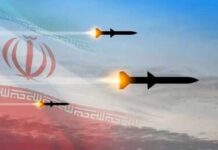
Iran has escalated its aggression against Israel by deploying cluster munitions—indiscriminate weapons banned by 112 nations—that scatter deadly submunitions across civilian areas, marking a dangerous new phase in the conflict that puts innocent lives at risk.
Story Overview
- IDF confirms Iran launched ballistic missiles with cluster bomb warheads spreading up to 80 submunitions across Israeli territory
- Twelve Israelis wounded as scattered explosives hit central Israel, with unexploded ordnance posing ongoing landmine-like threats to civilians
- Iran’s use of banned cluster munitions represents a significant escalation, contrasting with conventional warheads used in previous exchanges
- Neither Iran nor Israel signed the 2008 Cluster Munitions Convention, leaving populations vulnerable to these indiscriminate weapons
Iran Deploys Banned Weaponry Against Israeli Civilians
The Israel Defense Forces confirmed on March 4, 2026, that Iran launched multiple ballistic missiles equipped with cluster bomb warheads targeting Israeli territory. These weapons disperse between 20 and 80 submunitions mid-flight, each weighing approximately 2.5 kilograms, across areas spanning up to eight kilometers wide. Unlike conventional missiles with single warheads, cluster munitions act as indiscriminate area-denial weapons, scattering explosives that function like unguided bombs or landmines. CCTV footage captured impacts across central Israel, where at least 12 civilians sustained injuries from the scattered bomblets, with explosions documented in populated areas.
Escalation Following Year of Direct Conflict
This deployment follows the Twelve-Day War of June 2025, when Israel conducted Operation Rising Lion striking Iranian nuclear facilities while Iran and Houthi proxies fired cluster-armed missiles at Israeli targets. Tensions exploded after joint US-Israeli strikes killed Iran’s Supreme Leader Ali Khamenei, triggering broader hostilities. The Iranian Islamic Revolutionary Guard Corps now claims responsibility for launching advanced Koroush missiles—with 3,000-kilometer range and two-ton payloads—fitted with cluster warheads targeting sites including Ben Gurion Airport. Israel authorized Operation Iron Strike in January 2026, dropping thousands of bombs on Iranian leadership complexes and strategic facilities, while Iranian missile volleys continue attempting to overwhelm Israeli air defenses.
Humanitarian Concerns Over Indiscriminate Weapons
Cluster munitions pose severe long-term threats to civilian populations, which explains why 112 countries banned them under the 2008 Convention on Cluster Munitions. Unexploded submunitions remain hazardous for years, obstructing reconstruction efforts and causing injuries to civilians returning to affected areas. The Israeli Home Front Command issued warnings urging citizens to avoid missile remnants that act as landmines. Military analysts note these weapons expand the destructive footprint compared to precision-guided munitions, creating indiscriminate risks in populated zones. Human rights groups emphasize the distinction between cluster munitions and conventional weapons, highlighting the prolonged civilian harm and economic disruption they cause to communities attempting recovery after conflict.
Tehran’s Arsenal Expansion Despite Sabotage Efforts
IDF experts suggest Iran’s deployment of cluster-equipped ballistic missiles signals an expansion of Tehran’s arsenal capabilities despite Israeli covert operations targeting Iranian weapons facilities and scientists. This represents the first public confirmation of cluster munitions in this phase of the direct Israel-Iran war, differing from Iran’s previous use of conventional 500-kilogram warheads. Military analysts speculate about potential foreign technology transfers to Iran, though evidence remains unverified. Israel maintains air superiority with successful F-35 operations including the first air-to-air kill of an Iranian Yak-130 over Tehran. The power dynamics show Israel leveraging precision strikes and advanced aircraft while Iran relies on missile volume and indiscriminate weaponry to challenge Israeli defenses and terrorize civilian populations.
The ongoing exchange as of March 6, 2026, shows no signs of de-escalation, with continuous missile launches targeting central Israel and Israeli airstrikes intensifying against Iranian strategic sites. Prime Minister Benjamin Netanyahu’s administration pursues a strategy aimed at destabilizing the Iranian regime amid internal uprisings, while the IRGC seeks retaliation for strikes on nuclear and military installations. This conflict risks broader regional involvement, with American support bolstering Israel’s defensive capabilities and speculation about potential Russian or Chinese assistance to Iran remaining unconfirmed. The use of cluster munitions by Iran underscores the regime’s willingness to employ weapons that indiscriminately harm civilians, violating international norms embraced by democratic nations worldwide.
Sources:
Cluster Warheads Escalate Israel–Iran Conflict – Daily Pioneer
Iran’s cluster missiles scattering bombs and destruction across Israel – The Times of Israel
Iran using cluster bomb warheads in ongoing conflict: Israel military – Times of India