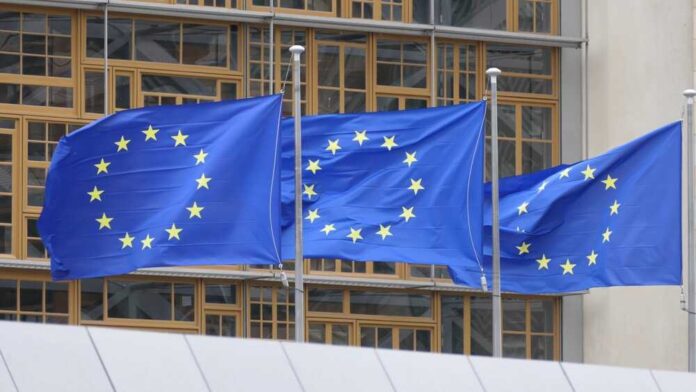
European leaders have pledged direct military support to defend Gulf allies against Iranian aggression, marking an unprecedented escalation that threatens to drag NATO forces into open conflict with the Islamic Republic.
Story Snapshot
- E3 nations (UK, France, Germany) commit to “proportionate military defensive measures” against Iranian missile and drone attacks on Gulf allies
- Iran’s closure of Strait of Hormuz strands 150 oil tankers, threatening global energy supplies while targeting civilian infrastructure across UAE, Kuwait, and Bahrain
- UK Prime Minister authorizes US use of British bases for strikes on Iran and deploys Ukrainian specialists to enhance Gulf drone defenses
- Conflict stems from President Trump’s Operation Epic Fury, successfully eliminating Supreme Leader Ali Khamenei and dismantling Iran’s nuclear program
European Powers Cross the Rubicon on Iran Defense
Britain, France, and Germany announced February 28, 2026, their willingness to employ military force defending Gulf partners from Iranian retaliation following coordinated US-Israeli strikes. UK Prime Minister Keir Starmer authorized American forces to operate from British bases for defensive operations against Iranian threats. This represents the first explicit European military commitment in the escalating Iran conflict, fundamentally shifting the regional balance of power. Iranian Foreign Minister Araghchi immediately warned that European involvement would constitute an act of war, raising the specter of direct confrontation between NATO and Tehran’s remaining military apparatus.
Iran Targets Critical Gulf Infrastructure in Massive Retaliation
Iranian forces launched Operation True Promise IV with devastating effect, deploying over 170 ballistic missiles and 541 drones against Gulf nations hosting US military installations. Strikes devastated civilian targets including Kuwait International Airport, where an 11-year-old child was killed, Dubai’s commercial districts, and UAE’s critical Jebel Ali Port. The Islamic Revolutionary Guard Corps sank 10 commercial vessels and closed the Strait of Hormuz, stranding 150 oil tankers and crippling global energy transport. Qatar immediately ceased all energy production under the assault, while Bahrain evacuated civilians near the US Fifth Fleet headquarters. These attacks represent Iran’s desperate attempt to coerce Gulf states into abandoning support for Trump’s decisive military campaign.
Trump’s Strategic Strikes Decapitate Iranian Regime
President Trump ordered Operation Epic Fury strikes from Air Force One on February 27, coordinating with Israeli forces to eliminate Iran’s nuclear capabilities and regime leadership. The February 28 offensive successfully killed Supreme Leader Ali Khamenei and destroyed command infrastructure at nuclear facilities including Fordow, Natanz, and Isfahan. US Central Command confirmed the operation systematically dismantles Iran’s security apparatus, targeting the Revolutionary Guard and proxy networks threatening American interests. Trump projected a 4-5 week timeline to neutralize Iran’s nuclear program completely. This decisive action vindicates conservative warnings about Iran’s existential threat and demonstrates the strength necessary to counter rogue regimes undermining American security and global stability.
Energy Crisis and Civilian Casualties Mount
Iran’s aggression triggered catastrophic humanitarian and economic consequences across the Gulf region. Iranian Red Crescent reported 555 Iranian civilians killed by March 2, including 57 children in a school strike, though Tehran’s propaganda apparatus likely manipulates casualty figures. Three American servicemembers died in Kuwait from Iranian missile strikes, with additional wounded troops evacuated from Bahrain. The Strait of Hormuz closure threatens $1.2 trillion in annual oil shipments, potentially triggering global recession if prolonged. Gulf states summoned Iranian ambassadors demanding immediate cessation of attacks on civilian infrastructure. Ukrainian defense specialists deployed to Gulf nations provide drone interception expertise, leveraging experience from Russian aggression to protect critical energy facilities threatened by Iranian kamikaze drones.
EU, Gulf States Urge Iran to End Attacks Threatening 'Global Security'https://t.co/RTUbAcbgo0
— Asharq Al-Awsat English (@aawsat_eng) March 5, 2026
The conflict fundamentally reshapes Middle East alliances, uniting Gulf states with Western powers against Iranian aggression. Conservative analysts emphasize this vindicates Trump’s maximum pressure approach abandoned by the previous administration’s appeasement policies. Iran’s targeting of civilian populations and energy infrastructure demonstrates the regime’s disregard for international norms and human life. American resolve under Trump’s leadership signals a return to strength-based diplomacy that protects national interests and allies from authoritarian threats, unlike the weakness that emboldened Iranian aggression during years of failed diplomatic engagement.
Sources:
Iran War Timeline 2026 – NukeClock
War in the Middle East: what implications for the EU and the world – Institute for Security Studies
The Gulf that emerges from the Iran war will be very different – Atlantic Council
Iran strikes: Trump-Israel attack timeline – The Independent