A so‑called “major milestone” with Iran may help keep oil flowing and bombs paused for now—but it also hands a dangerous, untrustworthy regime new leverage that conservatives will be watching like a hawk.
Story Snapshot
- Vice President JD Vance says Iran has agreed to let nuclear inspectors back in and calls it a “major milestone.”
- The Switzerland talks built a framework on the Strait of Hormuz, nuclear inspections, and future technical negotiations, but no final peace deal.
- Past rounds ended without agreement, and Iran still has not given a clear, permanent “no nukes” pledge.
- Any sanctions relief or weak enforcement could strengthen the Tehran regime and threaten U.S. security and allies like Israel.
Vance Hails ‘Very, Very Good Day’ After Switzerland Talks
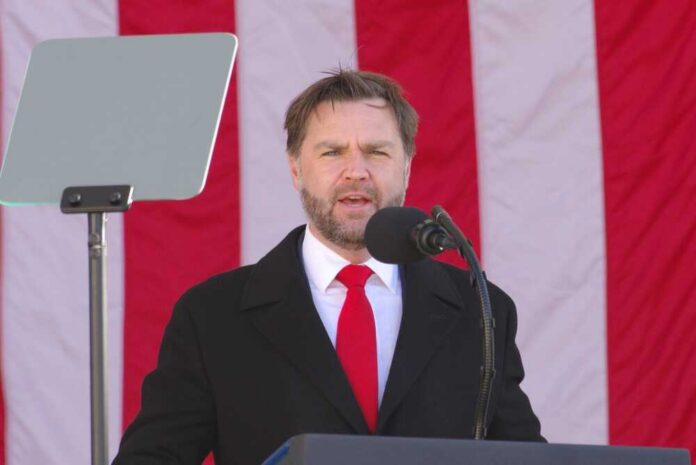
United States Vice President JD Vance came out of the latest U.S.–Iran talks in Switzerland declaring it “a very, very good day” and pointing to what he called a “major milestone” in efforts to end the war and stop Iran’s nuclear ambitions.[8] Speaking to reporters, Vance said Iranian negotiators agreed to invite the International Atomic Energy Agency, the United Nations nuclear watchdog, back into the country for inspections. He argued this step is the “first” move toward permanently ending Iran’s nuclear weapons program, and something the Trump administration had pushed for from the start of this round of diplomacy.[2][8]
Vance also highlighted three other deliverables from the Switzerland talks. First, he said negotiators created a system to keep the Strait of Hormuz open so that global oil and natural gas can keep moving without constant threats or incidents.[2] Second, they worked on a regional “deconfliction” mechanism meant to keep clashes between Israel, Iran, and Iranian‑backed groups like Hezbollah from spiraling into a wider war.[2] Third, he said the United States, Iran, Qatar, and Pakistan set up a process for ongoing technical negotiations on nuclear, economic, and security issues. In his words, the latest understanding is “the foundation,” while any final peace deal would be “the house” built on top of it.[2][8]
What Was Really Achieved — And What Was Not
Even as Vance celebrated progress, he admitted these talks did not produce a final peace agreement or a complete settlement of Iran’s nuclear program.[2] The Switzerland session wrapped up with frameworks and road maps, not a signed, public treaty. Technical negotiations are set to continue in the coming days and weeks, and both sides still have to hammer out details on verification, sanctions, and timelines.[2][8] Earlier this year, Vance used similar language after long talks in Pakistan, saying the United States had made “a lot of progress” but stressing that “the ball was in the Iranian court” because Tehran would not yet accept U.S. terms that it must never obtain a nuclear weapon.[1][3][6]
Those Pakistan talks, which ran about 21 hours, ended with no deal after Iran refused to give the clear “no nukes” commitment that President Donald Trump and Vance have called non‑negotiable.[1][6] A U.S. official later told reporters that core issues remained unresolved, including what would happen to Iran’s stockpile of enriched uranium and how to reopen the Strait of Hormuz without giving Iran new tools to charge tolls or choke off traffic.[4][6] Outside analysts describe the broader diplomatic picture as fragile and at times stuck, with mediators in Pakistan and Qatar working to keep channels open even as military pressure and threats from both sides continue.[15][17]
Why Conservatives See Both Promise And Peril
For many conservatives, there is a clear upside to some of what Vance describes. If inspectors from the International Atomic Energy Agency do in fact return, they can help verify whether Iran is cheating or hiding key parts of its nuclear program.[2][8] If the Strait of Hormuz stays open and safer, American drivers and families could be spared another spike in gas prices driven by a foreign crisis. And if Trump’s hard‑line pressure helped push Iran back to the table after attacks and a naval blockade, that confirms what many on the right already believe: peace is more likely when the United States negotiates from strength, not weakness.[16][17]
At the same time, there are serious reasons for caution that many on the right will not ignore. So far, the main source claiming Iran agreed to restore inspections is Vance himself; there is not yet a public, detailed agreement text or a matching statement from Tehran or the International Atomic Energy Agency spelling out binding terms.[2][8] Earlier leaks about a draft memorandum of understanding spoke of unfreezing up to $24 billion in Iranian assets during a 60‑day talks period, raising alarms that the regime could get major economic relief even while key nuclear and regional issues stay unresolved.[18] Critics also warn that past U.S.–Iran deals, from the 2015 nuclear agreement to other ceasefires, started with hopeful “frameworks” that later broke down or were never fully enforced.[13][14][15]
What Comes Next For Trump, Vance, And The Iran Gambit
Vance has staked much of his own political future on getting to a durable deal that ends the war, keeps Iran from building a bomb, and avoids another long Middle East quagmire.[5][9] Supporters on the right see a chance for the Trump administration to achieve what past globalist and “woke” foreign‑policy teams did not: a tougher peace that protects American interests without endless ground wars. But if Iran drags its feet, exploits new cash flows, or blocks inspectors once the cameras are gone, many conservatives will view the “major milestone” talk as dangerous spin that rewarded a hostile regime. For now, the path ahead is simple to state but hard to secure: trust verification, not promises, keep sanctions relief tightly tied to real behavior, and never forget that Tehran’s rulers, not American patriots, created this crisis in the first place.
Sources:
[1] Web – ‘A Very, Very Good Day!’ JD Vance Crows About ‘Major Milestone’ in …
[2] YouTube – US-Iran Historic Meeting: Vice-President JD Vance Assures ‘Great …
[3] Web – ‘We laid a very good foundation’: Vance details progress in US-Iran …
[4] Web – Vance: US Made a Lot of Progress in Talks With Iran
[5] YouTube – JD Vance Calls U.S.-Iran Talks Highest-Level Since 1979 Revolution | …
[6] YouTube – JD Vance says progress made in Iran talks despite no deal & Trump’s …
[8] YouTube – US Vice President JD Vance Says US Iran Talks Progressing, Warns …
[9] YouTube – Replay: JD Vance addresses US-Iran talks • FRANCE 24 English
[13] Web – JD Vance warns Iran against trying to ‘play’ the US in peace talks
[14] Web – Iran’s Strategic Options: Rethinking Negotiation with America
[15] Web – A timeline of U.S.-Iran relations | PBS News
[16] Web – A History of US-Iranian Relations – Middle East Studies Center
[17] Web – ‘The Iranians Feel They Have Won the War’ as US-Israel Pressure …
[18] Web – Diplomacy: The First Causality in US-Israel/Iran War – ICDI