
Federal agents say a man hurled a lit bottle at an Atlanta immigration office, turning a fence into a brief wall of fire before they tracked him down and charged him.
Story Snapshot
- Justice Department charged a Georgia man with attempted arson of a federal building and damage to government property.
- Security cameras allegedly showed the suspect ignite an item and throw it toward the Immigration and Customs Enforcement facility.
- The device hit the exterior fence, sparked flames, and left physical evidence at the scene.
- Officials used store video, a contactless payment, and license-plate data to link the man to the area.
Charges Announced After Alleged Firebomb Attempt
United States prosecutors said a federal magistrate judge approved a criminal complaint on October 23, 2026, charging Inique Hinton with attempted arson of a federal building and depredation of government property. The case centers on an incident outside the Immigration and Customs Enforcement office at 180 Ted Turner Drive in downtown Atlanta. Officials said the attack happened after dark and targeted the facility’s perimeter. No injuries were reported. The government emphasized that these are charges, and the case has not reached a conviction.
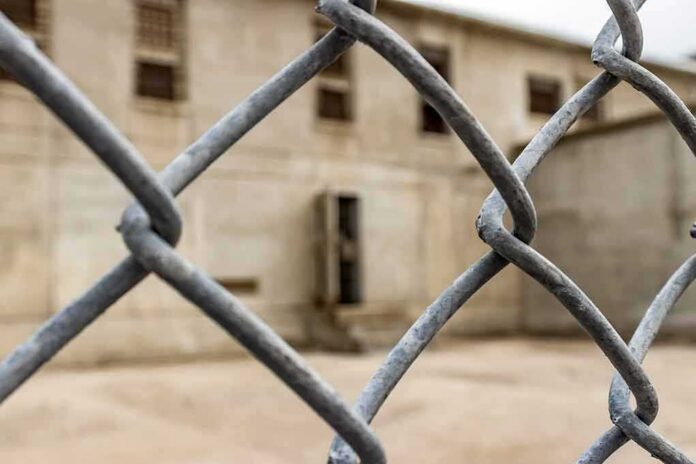
According to the U.S. Attorney’s Office for the Northern District of Georgia, security cameras recorded a person approach the site, light an object, and throw it toward the building. Prosecutors said the item struck the exterior fence line instead of the main structure and then burned. This account matches several news reports that described flames on the fence’s upper section, not on the building itself. The distinction matters because the charges focus on attempted arson and damage to government property.
Evidence Cited by Investigators
Investigators said they recovered burned cloth, a glass bottle, lighter fluid, and a lighter from the area, items consistent with an improvised incendiary device. These details suggest a simple but dangerous design aimed at starting a fire quickly. Officials did not report building damage beyond the fence, which limited the fire’s spread. The facility’s security features, including the perimeter barrier, appear to have worked as intended by absorbing the impact and keeping flames from the structure.
The Washington Times reported that investigators linked several data points to the suspect after the incident. The report said nearby-store cameras captured images of a person, a contactless Visa payment connected to a cellphone timestamped a purchase, and license-plate readers later placed a Kia Optima tied to Hinton near the area. Together, those factors formed a trail that agents said supported the arrest. Authorities did not describe a motive in public filings.
Public Safety, Rule of Law, and a Tense Policy Backdrop
Officials framed the episode as a direct attack on a federal facility that carries real safety risks for officers and the public. Immigration sites have drawn intense protests and, at times, violence in recent years. A 2025 case in Texas involved a group attack on a detention center with gunfire and explosives, which left an officer wounded. The Atlanta case differs in scale and outcome. It involved one alleged throw and no reported injuries, but it still triggered serious felony charges.
Americans across the political spectrum worry that core institutions feel unresponsive and unaccountable. Many conservatives see immigration enforcement as undermined by past policies, while many liberals see harsh tactics that harm families. Both sides, however, agree that political fights should not spill into violence that puts people at risk. This case highlights that shared line: you can oppose a policy, but you cannot try to burn a federal site to make a point.
What Comes Next in the Case
The charges move next through the federal court process, starting with initial appearances and possible grand jury action. Prosecutors will present evidence to support the complaint. Defense lawyers can challenge the identification, the device description, and the link between the items and the accused. If a grand jury issues an indictment, the case would proceed to arraignment and discovery. Sentencing in federal arson cases can be severe if there is a conviction, but penalties depend on final findings.
A suspect allegedly attempted to firebomb an ICE facility in Atlanta before fleeing an officer on foot.
Authorities say an incendiary device became caught on a perimeter fence, preventing it from reaching the facility. The FBI is now offering up to $20,000 for information… pic.twitter.com/iVt7OrPZZq
— The Dallas Express News (@DallasExpress) October 22, 2026
Authorities have not released a statement on motive or whether anyone else helped plan the act. News outlets widely reported the arrest and charges, citing law enforcement briefings and the Justice Department release. For now, the public record supports a clear bottom line: officials say a lit bottle hit a government fence and burned, and agents followed digital and video clues to a named suspect. The court will decide if that story holds up under the rules of evidence.
Sources:
pjmedia.com, justice.gov, wsbtv.com, washingtontimes.com, wsbradio.com, forth.news, us.cnn.com