
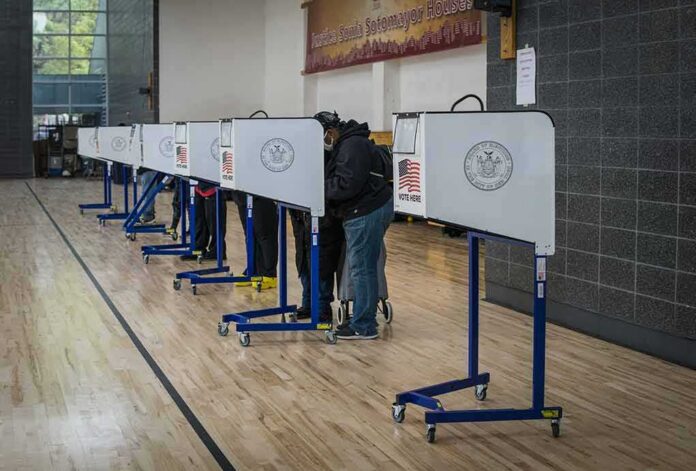
Texas opened early voting today with a record 19 million registered voters and statewide access rules locked in by law.
Story Highlights
- Early voting in Texas runs October 19–30 for the November 3 election
- Texas reports a record 19,041,684 registered voters heading into the midterms
- Voters can use any early-voting site in their home county; hours vary by location
- State rules require long weekday hours, with extended hours in the final week
Early Voting Window And Who Set The Dates
The Texas Secretary of State set October 19 as the first day of in-person early voting for the November 3 election, with the period running through October 30. The official election law calendar lists these dates and anchors local planning across all 254 counties. A statewide announcement last week repeated the same window and reminded voters that early voting covers two workweeks before Election Day. Local offices built staffing and site plans around that schedule.
The public-facing voter portal confirms those dates and explains how early voting works. Registered and eligible Texans can vote at any early-voting location within their county of residence. That rule helps people choose a site near work, home, or school. The portal also notes that polling-place hours vary by site, so voters should check local postings or county websites before heading out during the October 19–30 period.
Record Registration And What It Means
Texas entered the early-voting period with 19,041,684 registered voters, the highest number on record. The Secretary of State announced the figure on October 16, framing it as a milestone before the midterm election. Independent reporting the same day echoed that registrations topped 19 million ahead of November 3, showing broad interest across the state. A record roll does not guarantee turnout, but it raises the ceiling for participation if people use the early-voting window.
News outlets across Texas reiterated the official early-voting dates as sites opened this morning. Houston’s major local station reported that early voting “kicks off Monday and runs through Oct. 30,” aligning with the state calendar. That report also reminded viewers that Election Day is November 3, giving voters two full weeks to cast ballots before the final day rush. Consistent messaging from officials and media helps reduce confusion over when and where to vote.
Hours, Access Rules, And How Counties Must Operate
Texas law sets minimum operating hours for early voting to keep access broad across a large state. Counties must open main early-voting sites at least nine hours on weekdays, and at least twelve hours on each weekday in the final week. Sites cannot open before 6:00 a.m. or close after 10:00 p.m. These standards give working voters more chances to get in and out around job and family duties during the October 19–30 window.
Some voters need a limited ballot because they moved between counties but remain registered in Texas. A state advisory explains that these limited ballots are available only during the early-voting period, again October 19 through October 30. That guidance helps a mobile workforce still take part in statewide contests, even if local races differ between old and new addresses. Clear rules tell both poll workers and voters what is allowed and when.
Why Today Matters Beyond Politics
Today’s start is less about party wins and more about whether the system works for busy people. The law gives two weeks of early access, countywide vote-anywhere options, and long weekday hours. Those features aim to cut long lines, reduce last-minute stress, and keep faith that every voter can find a time and place that fits real life. Texans now have eleven weekdays to act before Election Day arrives on November 3.
Early voting opens today (Oct 19) in Alaska, Arkansas, Colorado, Connecticut, South Carolina, and Texas ahead of the November 3 midterms.
If you’re in one of these states, make a plan and get out and vote! Every vote counts. pic.twitter.com/hdz1cGonCQ— Mike Bales™ 🫡🇺🇸 (@MikeBales) October 19, 2026
This is also a test of clear information. The strongest tools right now are the state calendar, the voter portal, and steady local reporting. Voters who plan ahead can avoid surprises about hours or locations. If you can vote early in your county, you can likely find a site close to your routine and move on with your day. That is what the rules were built to deliver during this midterm cycle.
Sources:
youtube.com, sos.texas.gov, texastribune.org, kdhnews.com