North Korea just answered America’s defensive drills with a mass missile salvo—reminding voters why strength and readiness still matter in a dangerous world.
Story Snapshot
- North Korea launched about 10 ballistic missiles on March 14, 2026, as U.S.-South Korea Freedom Shield drills continued.
- South Korea’s military detected the launches around 1:20 p.m. local time from the Sunan area near Pyongyang, with projectiles heading toward the East Sea.
- South Korean and allied authorities assessed the barrage as a show of force tied to Pyongyang’s long-running opposition to joint exercises.
- Analysts and South Korean assessments raised the possibility the weapons were KN-25 “super-large” rocket artillery, a system associated with potential tactical nuclear delivery.
What Happened: A Salvo Timed to Freedom Shield
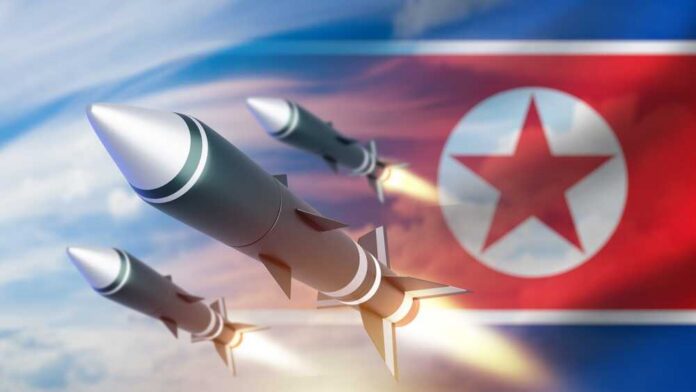
South Korea’s Joint Chiefs of Staff reported that North Korea fired roughly 10 missiles on March 14, 2026, toward the East Sea (Sea of Japan), with detections beginning around 1:20 p.m. local time. The launches came from the Sunan area near Pyongyang and occurred while the U.S. and South Korea conducted the Freedom Shield exercise, scheduled to run March 9–19. Japan also tracked the trajectories, and allied forces increased surveillance afterward.
South Korean reporting indicated the missiles flew on the order of a few hundred kilometers before splashing down at sea, with some outlets citing about 350 kilometers. Authorities said the projectiles landed outside North Korea’s exclusive economic zone, helping explain why there were no immediate reports of direct damage. Even so, a 10-missile event stands out because it compresses multiple launches into one coordinated burst, forcing defenders to practice detection, tracking, and rapid information-sharing in real time.
Why Pyongyang Uses Drills as a Trigger
U.S.-South Korea exercises have been a consistent flashpoint for decades, and Freedom Shield is no exception. The drill emphasizes computer-simulated command-post training alongside scaled field activity under the broader umbrella of allied readiness. North Korea routinely denounces these events as invasion rehearsals and often uses them to justify weapons demonstrations to domestic audiences and to signal resolve externally. That pattern appeared again here, with the missile launches closely synchronized to the exercise window.
North Korean rhetoric around this drill reportedly included warnings from Kim Yo-jong, while South Korean officials publicly emphasized that allied forces would maintain a robust defense posture. The basic dispute is familiar: the U.S. and South Korea describe the exercise as defensive and necessary given North Korea’s growing missile and nuclear capabilities, while Pyongyang frames it as provocation. What is measurable is the behavior—missiles in the air—rather than the propaganda claims made by a regime that tightly controls information.
The KN-25 Question and Tactical Nuclear Concerns
South Korean military assessments and related reporting raised uncertainty about the exact weapon type, with discussion that the launches could involve KN-25 600mm “super-large” multiple rocket launchers, sometimes described as quasi-ballistic because of their flight profile. That distinction matters because KN-25 systems are designed for saturation attacks against key facilities, and open-source analysis has long treated them as part of North Korea’s evolving short-range strike toolkit. South Korea and the United States continued analyzing the launches after detection.
It also connected the KN-25 discussion to North Korea’s claims of tactical nuclear capability, including references to warhead concepts that Pyongyang has publicized in the past. Officials have not publicly confirmed the missiles carried any nuclear payload—there is no evidence they did—but the strategic concern is the delivery platform itself. For Americans who value deterrence and peace through strength, the lesson is straightforward: a regime that fires large salvos during routine exercises is practicing the kind of rapid strike sequencing allies must be able to stop.
Regional Security Strains as U.S. Priorities Stretch
Several accounts pointed to a broader backdrop of regional anxiety, including debate over U.S. force posture as Washington manages multiple global hotspots. South Korea’s security depends on credible extended deterrence, and Japan’s role in tracking and warning grows as missile events become more frequent. The immediate allied response—tightened monitoring and continued drills—signals continuity. But the long-term challenge is sustaining readiness when adversaries test limits, probe seams, and try to normalize high-tempo launches as political messaging.
North Korea Fires 10 Ballistic Missiles During U.S.-South Korea Freedom Shield Drills https://t.co/tYjvKjl3rj
— The Gateway Pundit (@gatewaypundit) March 14, 2026
Freedom Shield continues through March 19, and officials have warned that further North Korean activity remains possible. The facts available so far show a coordinated barrage, allied detection, and ongoing analysis of missile type and performance. Beyond the technical details, the constitutional point for U.S. voters is that national defense is the first duty of the federal government. When the world looks more like a live-fire range than a seminar, the case for serious deterrence—rather than wishful “engagement” talk—writes itself.
Sources:
North Korea fires ballistic missiles toward sea amid US-South Korea military drills
Missile show of force: North Korea fires 10 ballistic missiles during US-South Korea war drills
Chosun Biz coverage of North Korea launch during Freedom Shield drills
N. Korea fires projectile as S. Korea, US conduct joint drills
North Korea fires missiles toward sea in show of force, Seoul says
Stars and Stripes coverage of prior Freedom Shield-related North Korea missile activity
North Korea fires 10 ballistic missiles during U.S.-South Korea military drills