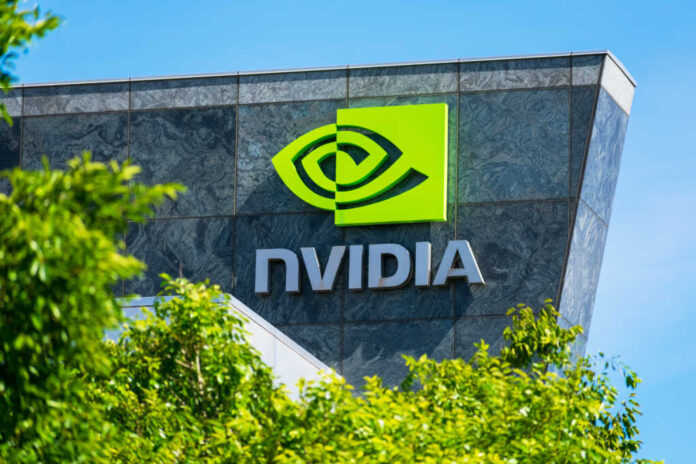
A recent White House decision to allow Nvidia to ship its most powerful H200 AI chips to China, conditioned on a substantial 25% surcharge, has ignited a fierce debate among conservatives. This move breaks from years of tightening export controls, offering a potential economic windfall for a key U.S. company. However, it forces a critical evaluation of America-first prosperity against the long-term strategic risks of fueling a geopolitical rival’s military, surveillance, and cyber capabilities with frontier AI hardware. This transactional approach tests the limits of monetizing U.S. technological leverage over Beijing.
Story Highlights
- Trump approved Nvidia’s H200 AI chip sales to China in exchange for a 25% surcharge, reversing years of tightening export controls.
- The move could restore billions in revenue for a flagship U.S. company while testing how far America can monetize leverage over Beijing.
- Security hawks warn that giving China frontier AI hardware may fuel its military, surveillance, and cyber power.
- Conservatives now face a core question: how to balance America‑first prosperity with long‑term strategic advantage over the Chinese Communist Party.
How Trump’s H200 Deal Breaks From Biden-Era Chip Crackdowns
For years, especially under Biden, Washington’s message to Beijing on high-end AI chips was simple: no sale. Sweeping 2022 export controls choked off Nvidia’s A100 and H100 GPUs, and follow-on rules even targeted “watered-down” versions like the H20 built just for China. That pressure campaign slashed a market that once made up as much as a quarter of Nvidia’s data-center revenue, and it sent Chinese firms scrambling to stock up on homegrown chips from Huawei and others instead.
The Trump White House is now taking a different tack with the H200, Nvidia’s latest top-tier AI workhorse combining massive compute and cutting-edge memory. Rather than a blanket ban, the administration is allowing sales into China tied to a hefty 25% surcharge. Financial outlets report that Nvidia’s stock jumped on the news, as investors rushed to re-price billions in Chinese demand that had effectively been written off when the company removed China from its guidance.
The United States will allow Nvidia's H200 processors, its second-best artificial intelligence chips, to be exported to China and collect a 25% fee on such sales, President Trump said. Read more: https://t.co/6NqDmT2pg5 pic.twitter.com/pUFavWlm4c
— Reuters Business (@ReutersBiz) December 9, 2025
Economic Upside: Leveraging America’s Tech Crown Jewels
From an America-first economic lens, the logic is straightforward. Nvidia is one of the crown jewels of U.S. innovation, anchoring a domestic ecosystem of chip designers, fabs, toolmakers, and high-wage engineering jobs. Reopening access to its single biggest foreign market means more revenue, more taxable profits, and more fuel for U.S.-based research and development. A 25% surcharge effectively turns previous export controls into a bargaining chip that can extract cash from Beijing rather than simply shutting the door.
Conservatives who remember how Trump used tariffs in his first term will recognize the pattern. Instead of accepting the Biden model of regulation-heavy tech controls that often hit U.S. businesses hardest, this structure moves toward a transactional framework: China wants American technology, and it will pay extra for that privilege. The question nagging many right-leaning national security voices, however, is whether those added dollars are enough to offset the strategic value of the computing power now flowing into a rival superpower’s hands.
National Security Concerns: AI Power for a Communist Rival
National security officials across administrations have warned that advanced GPUs are not just fancy gaming cards; they are the engines of modern military and surveillance AI. The same H200 clusters that train harmless language models can also optimize hypersonic missiles, enable real-time targeting, and supercharge the Chinese Communist Party’s social-credit dragnet. Once chips cross the border, end-use monitoring is notoriously hard, especially inside a system built on military-civil fusion where commercial labs and the People’s Liberation Army routinely share resources.
Previous Huawei 5G battles showed how deeply China is willing to embed foreign technology into critical infrastructure, then bend it toward state power. Conservative hawks now fear a similar pattern in AI: American hardware at the heart of Chinese systems that surveil dissidents, bully neighbors, and probe U.S. networks. They argue that years of hard-won export-control leverage could be diluted if Beijing concludes that enough money or diplomatic flattery can soften Washington’s red lines whenever it becomes politically convenient.
Balancing Conservative Priorities: Prosperity, Deterrence, and Limited Government
For Trump supporters who value both economic strength and a tough stance on the Chinese Communist Party, this deal lands in a gray zone. On one hand, it reflects classic conservative principles: using U.S. leverage to cut a better trade deal, favoring private-sector champions like Nvidia over bureaucratic micromanagement, and extracting direct financial concessions rather than writing endless foreign-aid checks. On the other, it raises a sobering strategic question: does short-term revenue risk long-term erosion of America’s technological edge over a hostile regime?
Many on the right will judge this arrangement by outcomes. If the surcharge feeds stronger domestic industry, funds faster innovation, and is paired with relentless pressure on Chinese espionage, cyber theft, and illegal technology transfer, they may see it as a hard-nosed tradeoff that still tilts in America’s favor. If, instead, Chinese AI capabilities close the gap and threaten U.S. forces or allies, pressure will grow inside the conservative movement to tighten controls again and reassert a security-first posture in future negotiations.
Watch the report: Trump Team Floats Selling Nvidia H200 Chips to China
Sources:
Trump greenlights exports of Nvidia H200 chips to China | CNN Business
Trump clears way for Nvidia to sell its H200 AI chips to China | Daily Sabah
Nvidia Stock Rises After Trump Approves H200 Chip Sales to China – Barron’s
Trump clears way for sale of powerful Nvidia H200 chips to China | Business and Economy | Al Jazeera