Suspicious trades timed to President Trump’s market-moving announcements are reviving a nightmare for ordinary investors: the sense that insiders play by a different set of rules.
Quick Take
- Multiple reports describe trading spikes minutes or hours before major Trump announcements on Iran, tariffs, and oil-related news.
- Trump said he is “not happy” about the reports but added, “it is what it is,” while the White House denies any improper profiteering.
- No charges have been filed, and the trades cited are largely anonymous, making intent and access to nonpublic information hard to prove.
- Ethics and securities rules bar using nonpublic government information for profit, but enforcement questions persist after prior cuts to enforcement actions.
Trading Patterns Put Market Fairness Back in the Spotlight
Reports tied to Trump’s second term describe a recurring pattern: unusual market bets appearing shortly before the president’s announcements move prices. The most pointed examples involve oil and geopolitical headlines linked to the Iran conflict, where prices can swing quickly on a ceasefire or renewed escalation. The timing is what raises alarms—minutes or hours before public statements—because average Americans and long-term investors never get that kind of early signal.
The core problem is not partisan: markets function only when participants believe the same public information is broadly available at the same time. When trades cluster just before official news, the public naturally wonders whether someone knew in advance, or whether sophisticated players simply guessed correctly based on patterns in presidential decision-making. In the research provided, the reporting emphasizes that the trades’ origins are unclear and that anonymity makes the trail difficult to follow.
What Trump and the White House Are Actually Saying
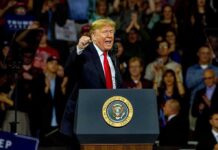
Trump’s reaction—saying he’s “not happy” with the reports while also brushing them off with “it is what it is”—has become its own political flashpoint. White House officials, including spokesman Kush Desai and counsel David Warrington, have rejected the allegations and argue federal rules prohibit employees from using nonpublic information for personal gain.
The reports did not establish a direct link between Trump, specific officials, and specific trades. In practical terms, the standard for public outrage is far lower than the standard for criminal charges—especially when key trading details are not public.
Why Proving Insider Trading Is Hard—and Why That Doesn’t Calm the Public
Insider trading has been illegal for decades, and federal ethics rules generally bar government employees from using nonpublic information for profit. Even so, enforcement typically hinges on evidence of duty, access, intent, and a clear chain connecting information to a specific trade. Many of the highlighted positions appear tied to anonymous or hard-to-identify accounts, which complicates efforts to demonstrate who benefited and whether the advantage came from illicit leaks.
Conservatives who already distrust bureaucratic “rules for thee, not for me” politics will see the timing and shrugging tone as another elite immunity problem. Liberals who distrust Trump’s inner circle will frame it as corruption. The overlap is important: both sides are reacting to the same fear—that a political class and its orbiters can profit from government decisions while working families absorb the fallout through volatility, higher energy costs, or retirement-account uncertainty.
Enforcement Questions Grow After Reported Case Terminations
It also points to a second layer: confidence in enforcement. Axios reported that the administration terminated 159 federal enforcement actions tied to donors or contributors in 2025, a data point that critics cite when arguing white-collar accountability has weakened. Whether or not that figure is connected to any specific trading episode, it adds political fuel to the perception that insiders operate with less fear of consequences.
For everyday Americans, the practical takeaway is that faith in institutional guardrails is thin—especially after years of inflation, rising costs, and a sense that the economy is managed for people who can hire lawyers and move money instantly. If investigations proceed, the most useful focus will be narrow and evidence-based: identifying who traded, whether they had access to nonpublic information, and whether regulators have the tools—and will—to enforce the same standards for everyone.
VIDEO – Trump Says He’s ‘Not Happy’ with Reports of Insider Trading, ‘But It Is What It Is’ https://t.co/P9kVZS85zA
— Grabien (@GrabienMedia) April 24, 2026
The pattern described is real enough to raise serious questions, but the public record does not prove who is responsible. That gap often becomes the breeding ground for broader distrust in government. If leaders want to restore confidence, they will need more than denials; they will need transparency that demonstrates the system cannot be gamed.
Sources:
https://www.axios.com/2026/03/25/trump-iran-oil-insider-trading
https://www.nasdaq.com/market-activity/stocks/djt/insider-activity
https://www.wonderwall.com/politics/trump-admin-accused-of-insider-trading-in-bombshell-report/