The U.S. is squeezing Iran at sea during a ceasefire—without shutting down the world’s most critical oil chokepoint—and the Pentagon says it will keep tightening the vice “as long as it takes.”
Quick Take
- Defense Secretary Pete Hegseth says the U.S. naval blockade of Iranian ports will remain in place indefinitely to force negotiations.
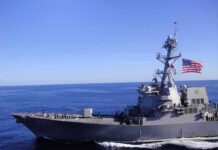
- Pentagon officials report 34 ships have been turned away from Iranian ports, while non-Iranian vessels continue transiting the Strait of Hormuz.
- President Trump extended the ceasefire indefinitely but paired it with warnings: negotiate or risk renewed bombing.
- Rules of engagement allow lethal force against Iranian mining attempts and hostile fast-boat activity, raising escalation risks even during the pause in combat.
Blockade Strategy: Maximum Pressure Without a Full Hormuz Shutdown
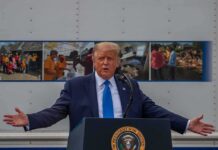
Defense Secretary Pete Hegseth and Joint Chiefs Chairman Gen. Dan Caine used an April 23 Pentagon briefing to draw a bright line between a targeted blockade and a broader closure of the Strait of Hormuz. The U.S. approach focuses on Iranian ports and coastline access, not stopping global shipping. Pentagon officials say non-Iranian vessels are still moving through Hormuz, while Iran’s inbound maritime traffic is being turned back.
Gen. Caine described the enforcement as effective without requiring direct combat, emphasizing that the goal is to deny Iran the economic and logistical oxygen that comes from regular port traffic. Pentagon updates put the ship count at 34 vessels turned away from Iranian ports, a figure repeated across multiple reports. The administration’s message is that Iran can keep its commercial lifelines only by changing course at the negotiating table.
Ceasefire With Teeth: Trump Extends the Pause, Keeps the Leverage
President Trump’s decision to extend the ceasefire indefinitely has not meant a return to the pre-war status quo. Operation Epic Fury began in late February, followed by a two-week ceasefire starting April 8 and the naval blockade beginning April 13. The current posture treats the ceasefire as a window to negotiate under pressure. Trump has also warned publicly that bombing could resume if Iran refuses a deal.
That balance—pause the strikes, escalate the choke points—helps explain why the administration has repeatedly framed this as a test of Iran’s choices rather than America’s patience. Hegseth’s “as long as it takes” language signals that time is not a concession the U.S. intends to offer. For Americans weary of endless wars, the key question is whether sustained maritime pressure can achieve security aims with fewer boots on the ground and fewer open-ended commitments.
Why Hormuz Matters: Energy Prices, Shipping Risk, and Global “Free-Riding” Debates
The Strait of Hormuz remains the strategic pressure point because it carries a significant share of global oil flows. Even when the U.S. says it is not closing the strait, the surrounding conflict can reduce traffic and raise insurance and transport costs. Pentagon briefers have acknowledged shipping is down from pre-war levels, underscoring how quickly a regional clash can ripple into household economics through fuel and inflation pressure.
Hegseth has also used the crisis to argue that allies should shoulder more of the burden, criticizing “free-riding” as global trade relies on U.S. power to keep sea lanes open. That argument will resonate with voters who see globalism as a one-way street—American taxpayers paying the bill while other wealthy nations benefit. At the same time, any prolonged standoff risks the very volatility it is meant to deter, especially if mining threats increase.
Escalation Risks: Mining Attempts, Interdictions, and Rules of Engagement
The most immediate risk comes from the tit-for-tat maritime actions around Hormuz. Reports describe U.S. interdictions of Iran-linked tankers and Iranian actions against commercial shipping, including claims tied to toll revenue in the strait. Trump has also directed rules allowing lethal force against Iranian mining attempts, indicating the U.S. sees mines as a red line that could end the ceasefire’s practical value.
Gen. Caine’s description of an effective blockade “without shots fired” is a snapshot, not a guarantee. The combination of crowded waterways, armed small craft, and contested claims creates the kind of environment where a single incident can cascade. If the blockade lasts for months, the pressure on Iran increases—but so does the likelihood of miscalculation, especially if Tehran tries to demonstrate leverage without inviting a wider strike campaign.
Internal Signals: Leadership Turbulence and a Shifting Naval Playbook
Beyond the front line, another storyline is the administration’s reported shake-up inside the Navy’s leadership amid disputes over how to fight and deter in chokepoints like Hormuz. Reporting around the firing of Navy Secretary John Phelan has been linked to internal strategy and procurement debates, including questions about expensive surface ships versus drones and uncrewed systems for persistent maritime control.
That matters because the blockade is not only a near-term tactic; it is also a real-time test of whether distributed, technology-heavy maritime power can enforce policy without dragging the U.S. into another grinding Middle East war. For voters skeptical of Washington “experts” and bureaucratic inertia, the episode highlights a familiar tension: hard power still decides outcomes, but the institutions managing that power remain under constant scrutiny.
This story has a clear limitation: the public briefings provide broad operational metrics and posture statements, but they offer limited detail about the diplomatic channel, specific negotiation demands, and independent verification of Iran’s internal economic conditions. Even so, the core facts are consistent across primary U.S. statements: the ceasefire continues, the blockade is expanding, ships are being turned away, and the administration is signaling it will hold the line until Iran agrees to terms.