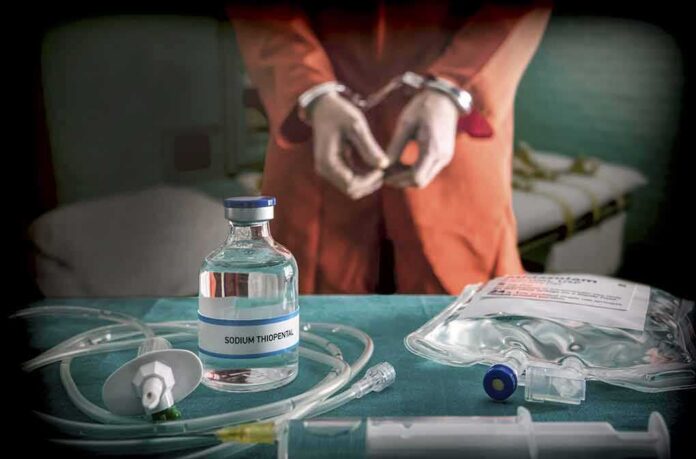
Witnesses say Tennessee gave Christa Pike two lethal doses and still could not complete the execution, raising urgent questions about state power and basic competence.
Story Snapshot
- Reporters selected as official witnesses described two pentobarbital doses and no confirmed death.
- The viewing timeline ran long and irregular, with Pike heard snoring after the drugs.
- Tennessee planned the execution for September 30 after court actions cleared the way.
- Officials offered no immediate clear account, fueling public concern over transparency.
What Witnesses Reported Inside the Chamber
Official media witnesses reported that Tennessee officers appeared to administer two doses of pentobarbital to Christa Pike on September 30. After the second dose, they said Pike was still awake and snoring more than 40 minutes later. Reporters described a prolonged, irregular timeline and an execution that did not finish as expected. These details came from journalists approved to observe the procedure in person by the state corrections department.
Accounts from the viewing room included specific time cues. One outlet reported the curtain opened and later closed as events stretched on, while sounds from the chamber suggested Pike remained alive. Another report stated her status remained unknown after the injection and that a second dose followed when the first did not cause death. These descriptions shape the public record in the absence of a detailed official timeline.
What the State Planned and Who Was Cleared to Watch
The execution date came after filings at the Supreme Court of the United States confirmed a September 30 setting for lethal injection. The Governor said he would not intervene and would uphold the sentence. The Tennessee Department of Correction named specific journalists, including major outlets, as official witnesses. That selection created an on-site pool to observe and later report what they saw and heard.
State media guidance before the execution said only the communications director or a designee could answer questions about the procedure. That policy centralized information in one office. After the reported problems, witnesses and the public lacked an immediate, detailed update from medical staff or the team that handled the drugs and lines. The gap let witness summaries frame the first wave of facts for everyone else.
Why This Event Taps a Wider Confidence Crisis
Americans on the left and right often agree that government struggles at basic execution of duty. A failed or prolonged execution adds to that worry. People who want strict justice will ask why the state could not carry out a process it controls. People focused on due process will ask whether opaque methods risk pain or error. Both groups see a system that demands trust but offers little clear data when things go wrong.
Tennessee death row inmate Christa Pike receiving medical care after failed execution https://t.co/D5wyQl3gsj
— Lori Kersey (@LoriKerseyWV) October 1, 2026
Historical records show lethal injection has the highest rate of botched executions among methods used in the United States. Experts cite problems with intravenous access, drug sourcing, and secretive protocols. That pattern helps explain how an execution can stall or stretch on, even with strong intent to finish it. It also shows why early witness accounts matter when official logs and medical records are not yet public.
What We Know, What We Do Not, and What Comes Next
Facts supported by named sources show two apparent doses, a long delay, and no immediate confirmation of death. The Governor’s stance and court records set the stage, while the state’s approved witness list establishes who watched. We still lack an official medical record, execution log, or a precise minute-by-minute account from the team that handled the drugs. Those records will decide whether this was a failed attempt, a pause, or another outcome.
Tennessee officials face pressure to release exact drug amounts, timing, intravenous checks, and the pronouncement process. Clear records would answer core questions: Did the drugs enter the bloodstream as planned? Were backup steps used? When and by whom was any status confirmed? Without that, trust erodes further. When government asks for broad power, it must match that with full, timely, and verifiable facts, especially when a human life is at stake.
Sources:
abcnews.com, wkrn.com, supremecourt.gov, abc7ny.com, fox17.com, dailymail.com, apnews.com