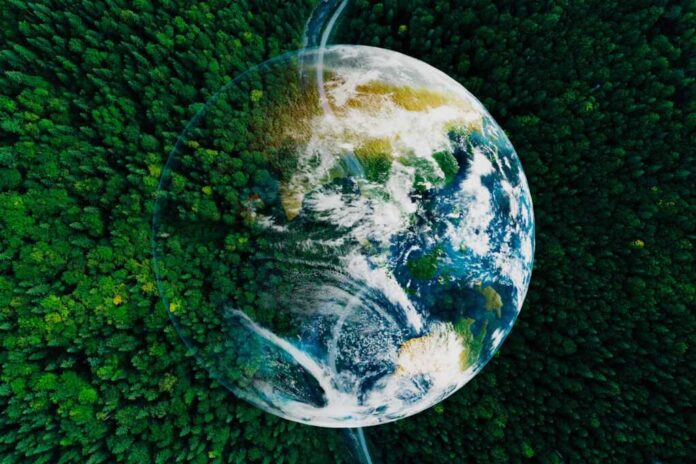
A new report indicates that Earth has crossed its first climate “tipping point,” a development that raises concerns regarding economic stability and environmental stewardship.
Story Highlights
- Coral reef die-off identified as Earth’s initial climate “tipping point.”
- Scientists emphasize the potential for irreversible changes without significant action.
- Global warming at 1.4°C is reported to intensify climate impacts on ecosystems.
- Climate policy is a key focus in anticipation of COP30.
- Coral Reefs: A Critical Climate Milestone
Scientists from the University of Exeter have announced that Earth’s first climate “tipping point” has been reached. This assessment is based on widespread coral reef bleaching, attributed to rising global temperatures. The observed coral die-off suggests that irreversible changes are occurring within the planet’s ecosystems, necessitating immediate reductions in greenhouse gas emissions.
The concept of climate tipping points, previously discussed as future risks, is now considered a current reality. This development is particularly relevant for those concerned with environmental stewardship and economic stability, as the implications extend to global economies and communities reliant on these ecosystems.
https://twitter.com/MrMatthewTodd/status/1977529303970754759
Climate Policy and Upcoming Action
As COP30 approaches, discussions surrounding climate tipping points are intensifying. The Global Tipping Points Report 2025 synthesizes research underscoring the urgency of the situation. Scientists and policymakers are collaborating to influence climate policy, advocating for prompt reductions in greenhouse gas emissions. Governments are facing increased pressure to implement effective strategies to prevent further ecological and economic disruptions.
Beyond coral reefs, other ecosystems are also at risk. The broader implications of climate tipping points could affect various industries, including tourism and fisheries, which depend on healthy marine ecosystems. Their decline could lead to economic repercussions.
Economic and Societal Considerations
Short-term consequences of coral die-off include biodiversity loss and reduced ecosystem services. In the long term, the potential collapse of other ecosystems could result in significant environmental, economic, and social impacts. Coastal communities, which rely on coral reefs for protection and livelihoods, face immediate threats. The global economy may experience disruptions in fisheries, tourism, and coastal protection, highlighting the need for strategic climate policies that consider economic stability and resource management.
This situation presents a critical juncture for policymakers and stakeholders. While some experts express optimism about the potential for clean energy transitions to mitigate impacts, others caution that the window for effective action is narrowing. This underscores the importance of pragmatic and balanced approaches that aim to safeguard both the environment and the economy for future generations.
Watch the report: Has Earth Already Crossed MAJOR Tipping Points? | Full Episode | Weathered: Earth’s Extremes
Sources:
Nature: “Coral die-off marks Earth’s first climate ‘tipping point’, scientists say”
Global Tipping Points Initiative
Global Tipping Points Report 2025