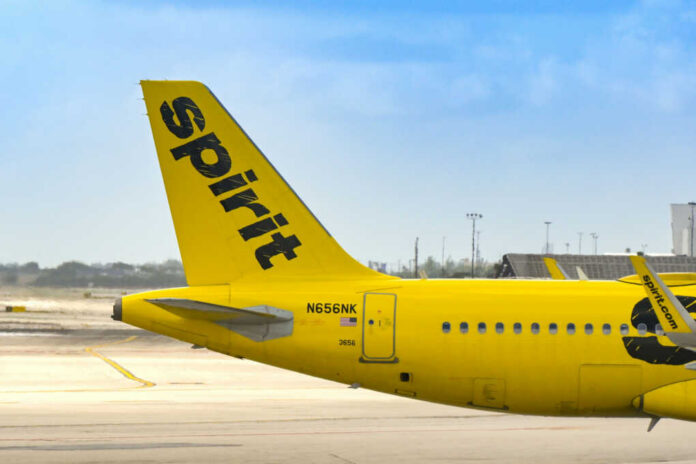
America’s cheapest airfare may vanish overnight as Spirit Airlines warns it could run out of cash and be forced to ground planes with little notice.
Quick Take
- Reports say Spirit faces an “as soon as this week” shutdown risk tied to cash shortages and debt payments coming due.
- Higher jet fuel prices linked to the Iran war are squeezing Spirit’s ultra-low-cost model, where fuel is one of the biggest costs.
- Spirit is still flying and selling tickets, while publicly declining to comment on “rumors,” leaving travelers to manage the uncertainty themselves.
- Travel experts warn passengers to build a backup plan now, because a sudden grounding could strand travelers and complicate refunds or insurance.
Why Spirit’s shutdown talk matters beyond one airline
Spirit Airlines could be approaching liquidation after a cash crunch worsened by spiking jet fuel prices. Spirit remains in operation, but the risk is the “no-notice” kind that hits consumers hardest: planes stop flying, call centers get overwhelmed, and customers discover that refunds, chargebacks, and insurance rules don’t move as fast as a family emergency or a work trip. That’s the immediate public-interest problem.
For a country already fed up with institutional failure, the story also lands politically. The travel system is a private market, but it runs through heavily regulated airspace, federally managed airports, and consumer rules shaped by Washington. When an airline teeters, Americans end up asking the same question they ask about everything else in 2026: who, exactly, is accountable when the system breaks—executives, creditors, or government?
Two bankruptcies, then a fuel shock that changed the math
Spirit’s problems did not start this spring. The airline filed for bankruptcy in late 2024 and again in August 2025, aiming to restructure and preserve the ultra-low-cost model built on high volume and add-on fees. Reports say the company reached an agreement with creditors in late February 2026 to exit bankruptcy by summer, but the same period brought the Iran war and a surge in fuel prices that quickly worsened Spirit’s cash burn.
Fuel is a ruthless input cost because airlines can only raise fares so fast before customers walk away. That pressure is more severe for a budget carrier promising rock-bottom base fares. Industry watchers also flagged signs of a company repositioning for a smaller footprint, including aircraft reportedly spotted in storage at Victorville, California, alongside network changes. Those moves can be ordinary restructuring, but they can also be preparations that reduce exposure if operations stop.
Who holds the power now: creditors, not passengers
Multiple reports emphasize that creditors have outsized leverage at this stage, because near-term payments and continued support can determine whether planes keep flying. That is why analysts have been blunt about the consumer risk: if creditors lose confidence, the fleet could be grounded abruptly. Spirit’s public stance has been limited, with a spokesperson saying the company does not comment on “market rumors and speculation,” which leaves the public reading tea leaves while still being asked to buy tickets.
The political angle is not imaginary, but it is also not confirmed in detail. Reports indicate Spirit has sought emergency help from the Trump administration, and Transportation Secretary Shawn Duffy is expected to meet with executives from Spirit and other low-cost carriers. What remains unclear is whether any assistance is on the table, what form it could take, and what taxpayer exposure would be involved.
What travelers should do if they have Spirit tickets
Travel experts are urging practical steps that reflect the central risk: uncertainty on short timelines. Passengers with near-term trips can reduce exposure by booking backup flights on a different carrier, monitoring for competitor “rescue fares,” and using payment methods that provide consumer protections. Travelers also may want to avoid stacking nonrefundable hotels and car rentals on top of a Spirit itinerary unless they can cancel without penalty, because one failure can cascade through an entire trip.
Insurance is a special trap for consumers because it sounds like a fix until policy exclusions appear. Travel insurance professionals have warned that bankruptcy can become a “known event,” meaning coverage may not apply to tickets purchased after a filing or after widely reported trouble. Policy terms vary, so the key point is procedural rather than partisan: read the contract and call the insurer before relying on “coverage” as your only plan. For many households, a backup plan is cheaper than a legal fight.
The broader issue: volatility, consolidation, and distrust in institutions
If Spirit collapses, the immediate cost is disruption for travelers and potential job losses across airports and contractors that depend on high passenger volume. Over time, fewer ultra-low-cost options can mean less price competition, which typically pushes fares higher—especially on routes where Spirit was the low-price pressure valve. The industry trend line also points toward consolidation, where surviving carriers take over gates, planes, and routes once a competitor disappears.
Spirit Airlines could shut down as soon as Saturday https://t.co/styVmt6PkE
— CBS Mornings (@CBSMornings) May 1, 2026
The bigger takeaway is what this episode says about fragility in modern life. A geopolitical shock can ripple straight into family budgets through airfare, and consumers are then told to “be flexible” while corporations, creditors, and regulators negotiate behind closed doors. That dynamic fuels a bipartisan frustration: Americans do not feel protected by the systems they pay into. Whether the answer is better market discipline, smarter regulation, or both, the public will judge outcomes—not press releases.
Sources:
Spirit Airlines could shut down: What travelers should know
Spirit Airlines shutting down? What travelers should know
Is Spirit Airlines shutting down? What to know if you have tickets