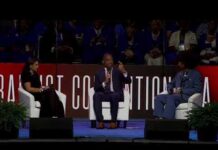
Former President Donald Trump publicly criticized Georgia’s former lieutenant governor after he announced his departure from the Republican Party to become a Democrat, escalating intraparty tensions ahead of key state and national elections.
At a Glance
- Former Georgia lieutenant governor Geoff Duncan announced he is leaving the Republican Party for the Democratic Party
- Donald Trump labeled Duncan a “total loser” following the announcement
- Duncan cited disagreements with the Republican Party’s direction as his reason for switching
- The party switch comes as Georgia remains a pivotal battleground state for the 2024 elections
Party Switch Sparks Controversy
Former Georgia lieutenant governor Geoff Duncan made headlines by declaring his switch from the Republican Party to the Democratic Party. Duncan, who served as Georgia’s lieutenant governor from 2019 to 2023, attributed his decision to his opposition to the current trajectory of the Republican Party, stating that the party no longer reflects his values or political views.
The announcement quickly drew national attention, especially after former President Donald Trump responded on social media by calling Duncan a “total loser.” Trump’s criticism reflects ongoing internal divisions within the Republican Party, as the GOP faces challenges both from within its own ranks and from a determined opposition in the lead-up to the 2024 elections.
Watch now: Trump Calls Geoff Duncan a Total Loser – But Who’s Really Losing? · YouTube
Duncan’s party switch highlights the ideological rifts that have developed in Georgia politics since 2020, a state that has become increasingly competitive in recent election cycles. His move also comes at a time when both parties are seeking to solidify their bases and court undecided voters in the closely watched swing state.
Implications for Republican Strategy
Trump’s response underscores the importance of party loyalty as a theme in GOP politics, particularly in states where electoral margins have been narrow. Georgia, which played a critical role in the 2020 presidential election and subsequent Senate runoffs, is viewed as a must-win for both Republicans and Democrats in 2024.
Duncan’s departure from the Republican Party could influence other moderates or disaffected conservatives to reconsider their political affiliations, according to analysts. Party officials are concerned that visible fractures within the GOP could undermine efforts to present a united front against Democratic opponents.
At the same time, Democratic leaders welcomed Duncan’s decision, using the opportunity to argue that their party is more inclusive and better aligned with the views of moderate voters. Some Republican strategists downplayed the significance of Duncan’s move, suggesting that his influence within the state party had diminished since leaving office.
Georgia’s Pivotal Role in 2024
Georgia remains one of the most closely watched battlegrounds ahead of the 2024 presidential and congressional elections. The state’s recent history of competitive races and high voter turnout has placed additional pressure on both major parties to appeal to a broad spectrum of voters.
Political observers note that public disputes, such as Trump’s rebuke of Duncan, may have unpredictable effects on voter perceptions and turnout. As Georgia’s electorate continues to evolve, both parties are likely to encounter new challenges in maintaining unity and attracting support from key demographic groups.
Duncan’s high-profile defection and Trump’s forceful response have further illustrated the dynamic and often contentious nature of Georgia’s political environment as the 2024 campaign cycle intensifies.
Sources