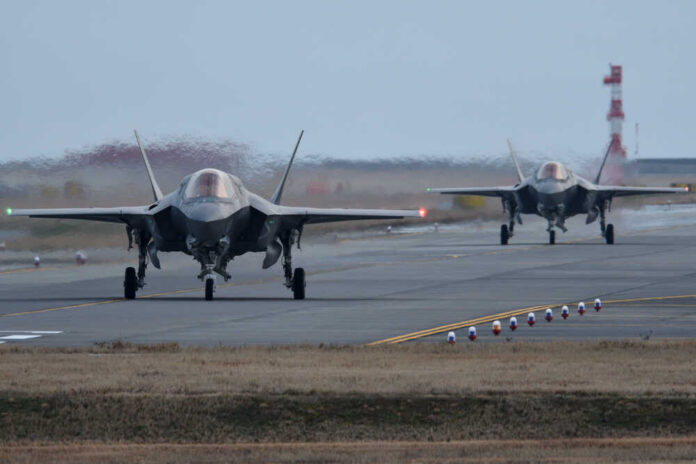
Canada’s $14.5 billion investment in American F-35 fighter jets has become entangled in a controversy exposing how U.S. software control over critical military systems threatens allied nations’ operational sovereignty—raising fundamental questions about whether expensive defense partnerships compromise national security independence.
Story Snapshot
- Canada and European allies express concerns over U.S. control of F-35 software systems essential for combat effectiveness
- Defense experts confirm no physical “kill switch” exists, but Mission Data File dependency creates real operational vulnerability
- U.S. maintains strict policies preventing foreign operators from independently testing or modifying F-35 systems
- Former Munich Security Conference head warns that control restrictions could trigger contract cancellations across Europe
The Kill Switch Myth Masks Real Control Concerns
Defense analysts have debunked the notion that Pentagon officials can remotely disable F-35 fighter jets through an embedded kill switch. However, this technical clarification misses the broader strategic vulnerability facing Canada and other allied nations. The real issue centers on Mission Data Files—electronic battle manuals providing known target characteristics essential for the F-35’s fusion engine. A 90-person team at Eglin Air Force Base in Florida manages these critical updates, which occur rapidly and frequently during conflict. Without continuous American cooperation, allied F-35s face severely compromised combat effectiveness.
Software Dependency Undermines Military Sovereignty
The United States maintains restrictive policies limiting foreign operators’ ability to independently test or modify F-35 systems. Only Israel operates a fully independent version with its F-35I Adir. This dependency structure creates strategic concerns for NATO allies including Italy, Germany, and the United Kingdom, which rely on F-35s for critical missions including nuclear deterrence. Industry analyst Bill Sweetman emphasizes that the dependency extends beyond simple software updates—allies face structural reliance on American defense systems for targeting capacity, communications, intelligence gathering, and munitions assumed necessary for wartime operations.
European Allies Question American Partnership Terms
Wolfgang Ischinger, former head of the Munich Security Conference, issued a stark warning about potential consequences if Washington restricts allied F-35 operations. If the U.S. were to limit German F-35s as it has with Ukraine’s F-16s, contract cancellation becomes a serious consideration. The debate has intensified amid escalating geopolitical tensions, particularly following Trump administration freezes on military aid to Ukraine and intelligence-sharing pauses. Over 1,100 F-35 aircraft serve across 16 armed forces worldwide, making this dependency structure a concern affecting billions in collective allied defense investments.
Growing Distrust Threatens Defense Industrial Cooperation
The controversy signals a fundamental shift in allied nations’ willingness to accept American-controlled defense systems. European voices across the defense establishment have raised sovereignty concerns, even as technical experts clarify that no physical remote-disable mechanism exists. This erosion of confidence threatens the unified NATO defense posture while creating market opportunities for alternative suppliers offering greater operational independence. The situation exposes a troubling reality: allies who invested heavily in cutting-edge American military technology now question whether those purchases strengthen or compromise their national security autonomy in an increasingly unstable geopolitical environment.
Canada faces a critical decision between accepting operational dependency on U.S.-controlled systems or exploring alternatives that prioritize military sovereignty. The F-35 debate reveals how technological sophistication can create strategic vulnerability when essential capabilities remain under foreign control. For taxpayers and citizens concerned about government accountability, this situation demonstrates how major defense procurement decisions carry implications extending far beyond equipment specifications—they fundamentally shape whether nations maintain genuine independence or become dependent clients in their most critical security relationships.
Sources:
The Aviationist – F-35 Kill Switch Myth
Militär Aktuell – Thanks to Kill Switch and Dependency Turning Away from the F-35
Euronews – Can the US Turn Off European Weapons? Experts Weigh in on Kill Switch Fears