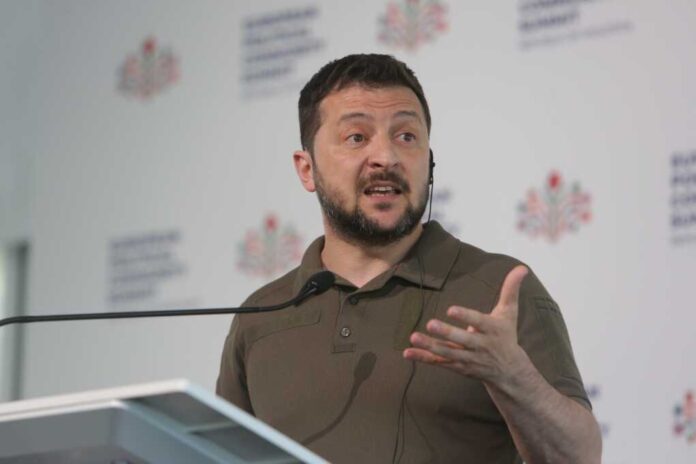
A major $100 million embezzlement scandal at the highest levels of Ukrainian leadership is fueling a conservative backlash. This corruption, allegedly involving a close ally of President Zelensky in the energy sector, is raising critical questions about the unchecked flow of U.S. foreign aid and the reliability of oversight mechanisms. The revelations reinforce long-standing conservative demands for strict accountability, fiscal restraint, and an “America First” policy to curb international spending on questionable regimes.
Story Highlights
- Ukraine’s anti-corruption watchdog uncovered a $100 million embezzlement scheme allegedly involving a close Zelensky ally.
- The scandal erupted as Western aid continued pouring into Ukraine’s war-torn energy sector.
- Immediate resignations of high-ranking Ukrainian ministers signal the gravity of the accusations.
- The revelations raise serious concerns about U.S. aid accountability and the effectiveness of past oversight efforts.
Massive Corruption Uncovered Amid Ongoing U.S. Aid
Ukraine’s National Anti-Corruption Bureau (NABU) revealed a colossal embezzlement operation within President Volodymyr Zelensky’s inner circle, with longtime business partner Timur Mindich accused of siphoning more than $100 million from contracts meant to rebuild the country’s battered energy infrastructure. This revelation comes as the U.S.—under President Trump’s renewed “America First” foreign policy—faces mounting pressure to halt the unchecked flow of taxpayer dollars into corrupt foreign regimes, especially after years of lax oversight under previous administrations.
During a 15-month investigation, NABU traced the diversion of emergency energy funds—intended to support Ukraine during relentless Russian attacks—to shell companies and intermediaries reportedly tied to Mindich and other key political figures. The exposure of such a vast scheme, at a time when the West is being asked to “stand with Ukraine,” highlights the ongoing risk of foreign aid being misused in regions with deep-rooted corruption. These findings have sent shockwaves through both Ukrainian society and international donor circles, prompting questions about the reliability of Ukraine as a partner in the fight for democracy.
Former Zelenskyy associate accused in $100 million embezzlement scheme. 👀 https://t.co/zOalNhsbkG
— Erik-Conservative In Cali 𝕏 (@caliucconserv) November 16, 2025
Resignations Signal Accountability—or Scapegoating?
The fallout was swift: Ukraine’s justice and energy ministers resigned within hours of the scandal’s public disclosure. While some international observers argue this shows a commitment to accountability, critics—both within Ukraine and in the U.S.—see it as evidence of systemic rot and possible scapegoating rather than real reform. The proximity of Mindich to Zelensky himself intensifies concerns about informal power networks and the lack of true transparency, especially since these officials oversaw sectors directly receiving Western aid.
Western partners, including the U.S. and EU, have now expressed heightened demands for transparency and anti-corruption safeguards before any further disbursements of aid. For American taxpayers, whose hard-earned dollars funded Ukraine’s energy reconstruction, these developments reinforce long-standing concerns: that foreign aid is too often lost to corruption, with little to show in terms of U.S. national interest or constitutional values.
Historical Patterns of Corruption and Failed Oversight
Ukraine’s reputation for entrenched corruption—particularly in the lucrative energy sector—is nothing new. Since the Maidan Revolution in 2014, reform efforts have been demanded by both the Ukrainian public and Western backers. Yet, as this latest scandal reveals, oversight mechanisms remain woefully inadequate. Prior high-profile cases, such as the 2023 defense procurement scandal, had already triggered calls from U.S. lawmakers for stricter monitoring of foreign assistance. However, under previous U.S. leadership, billions continued to flow overseas with limited accountability, eroding confidence among American citizens and fueling frustration among those who prioritize responsible governance and fiscal restraint.
President Trump’s administration, in contrast, has championed policies aimed at curbing wasteful international spending, demanding results and accountability. The exposure of this Ukrainian scandal offers a potent reminder of why such vigilance matters, especially as the U.S. Constitution provides no mandate for endless foreign entanglements or the funding of questionable regimes abroad. Conservative voters see the current situation as a vindication of their demands for strict oversight and a clear demonstration of the pitfalls of globalist, open-ended aid policies embraced by the prior administration.
Bigger Implications for U.S. Policy and Western Security
The political and economic fallout from the Ukrainian embezzlement scandal is still unfolding. In the short term, there’s already been political instability in Kyiv and the potential for further resignations or prosecutions. More importantly for Americans, the episode renews debate over the wisdom of sending resources to foreign governments lacking proven safeguards against corruption. For those committed to constitutional, limited government and the defense of national interests, the lesson is clear: unchecked foreign aid, especially to countries with a history of graft, endangers both American values and international credibility.
As Trump’s administration pursues a new era of accountability and puts America’s priorities first, the Ukrainian case stands as a cautionary tale. Conservatives are right to demand that Washington stop writing blank checks to foreign powers and instead focus on policies that restore trust, uphold constitutional principles, and guarantee that every taxpayer dollar serves the American people—not corrupt elites overseas.
Watch the report: Ukraine Corruption Scandal: NABU Exposes $100M Wartime Graft Operation. Zelenskyy Pledges Reform
Sources:
Former Zelenskyy associate accused of $100 million embezzlement scheme
Key Zelensky ally accused of over $100 million corruption scheme
Key Zelenskyy ally accused of $100 million corruption scheme – The Hindu