Oil roaring back to $100 a barrel after Houthi attacks on Saudi tankers is a fresh shock that confirms how easily distant conflicts can hit Americans’ wallets while political leaders and global elites keep playing with fire.
Story Snapshot
- Brent crude jumps back above $100 after Houthi militants claim attacks on Saudi oil tankers in the Red Sea.
- Yemen-based fighters and Iran’s wider showdown have turned key sea lanes into war zones, forcing ships to reroute and raising energy costs.
- Experts warn that a blockade at vital Middle East chokepoints could trigger severe supply disruption and much higher prices.
- Americans on both left and right see rising oil prices as proof that global conflicts and government missteps keep crushing the basic cost of living.
Houthi Attacks Push Oil Back to $100
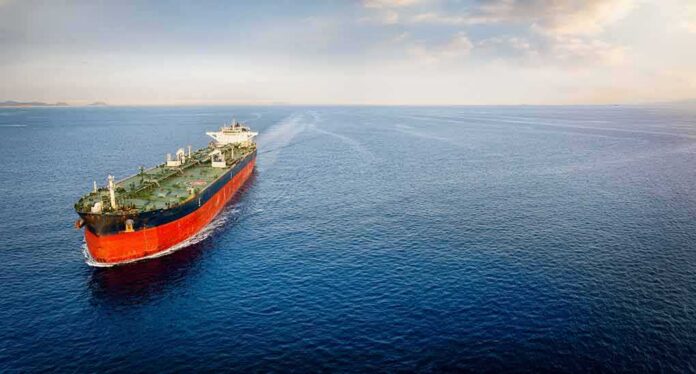
Oil markets jumped after Iran-backed Houthi militants in Yemen said they attacked two Saudi oil tankers in the Red Sea, using drones and missiles to enforce a self-declared blockade on Saudi shipping. Brent crude, the main global price benchmark, surged about 7% and crossed the $100 per barrel mark for the first time since late May. United States West Texas Intermediate crude also spiked to more than $92 per barrel, a roughly 6% gain in one day. Traders rushed to price in the risk that a local clash could become a lasting hit to oil flows.
Reports from regional and Western outlets say at least one tanker was confirmed damaged, while a second claimed attack has not yet been fully verified by independent monitoring groups. Even with limited confirmed damage, the location matters: the Red Sea and the Bab el-Mandeb Strait form a critical link between the Persian Gulf, the Suez Canal, and global markets. When missiles start flying near tankers in that corridor, traders assume more trouble is coming and move prices long before actual barrels go offline.
Red Sea and Hormuz: Chokepoints Under Threat
Energy experts have warned for years that narrow sea lanes like the Red Sea and the Strait of Hormuz are “chokepoints” where even small threats can shake the world economy. During the current Middle East war, Iran’s actions around Hormuz have already led to a near-halt of shipping there, adding strain to global supply routes. The Houthis previously used missiles and drones to harass ships in the Red Sea after the Gaza war began, forcing many Western shippers to reroute around Africa at much higher cost. Now, a declared blockade of Saudi oil traffic raises the stakes further.
Analysts quoted by major outlets say the real danger is not just one damaged hull, but the chance that these attacks mark the start of a longer campaign against energy infrastructure. Some bank research desks have even floated worst-case scenarios in which prolonged disruptions could send prices well above current levels, possibly toward $150 a barrel if both Hormuz and the Red Sea remain unsafe. That kind of spike would move from trading screens to everyday life fast, as higher fuel and shipping costs feed into food prices, rent, and almost everything sold in stores.
Tankers Reroute and Costs Climb
Shipping data and news reports show that many companies are already diverting tankers away from the Red Sea when Houthi threats intensify, even when attacks cause limited physical damage. Earlier waves of Red Sea strikes since 2023 prompted more than 2,000 ships to choose longer routes around Africa, raising travel times and fuel use. Those detours raise freight rates and insurance premiums, which then push up the final cost of oil and other goods reaching the United States and Europe. In this latest episode, traders see the same pattern starting again, and are pricing in that risk.
At the same time, some analysts stress that actual oil supply losses so far appear smaller than the market fear suggests. They note that in previous Red Sea flare-ups, price jumps were sharp but short-lived when flows were rerouted rather than cut off. However, the longer attacks continue and the more often groups like the Houthis hit or threaten energy vessels, the more likely it becomes that a temporary “risk premium” turns into a lasting higher price level baked into every gallon of gas and every shipped product.
Global Conflict Meets Everyday American Reality
President Trump has already threatened “massive” retaliation against Iran over the role of its allies in these attacks, tying military action directly to the protection of energy supplies. More troops and more strikes add another layer of uncertainty, because every new blow risks widening the war and bringing fresh targets into play. For many Americans, it feels like a familiar cycle: global tensions rise, leaders trade threats, and ordinary families get stuck paying more at the pump and in the grocery aisle while Washington and foreign capitals argue over strategy.
Houthi Red Sea Blockade Could Shatter Hopes for Lower Oil Prices
Renewed Houthi blockade of Saudi Red Sea ports threatens up to 4 million bpd of redirected Saudi crude exports, adding fresh supply risks. https://t.co/zfyWdDwTi0
— Be Part of the Energy (@TransparentEner) July 23, 2026
People on the right often see this as proof that years of “green” energy experiments and dependence on unstable regions left the country exposed. People on the left argue that an “America First” focus on short-term drilling and sanctions has deepened conflict instead of building safer, steady supplies. Yet both sides increasingly agree on one point: the system seems rigged so that geopolitical gambles benefit oil majors, traders, and political elites, while regular citizens absorb the inflation and uncertainty. The latest surge to $100 oil after Red Sea attacks looks like another warning that distant wars, fragile chokepoints, and unaccountable decision makers keep steering the United States away from the stable prosperity most people still work hard to achieve.
Sources:
insiderpaper.com, energyconnects.com, reuters.com, thenationalnews.com, investing.com, straitstimes.com, bloomberg.com, foxbusiness.com, voanews.com, cfr.org, atlanticcouncil.org, atlasinstitute.org, youtube.com