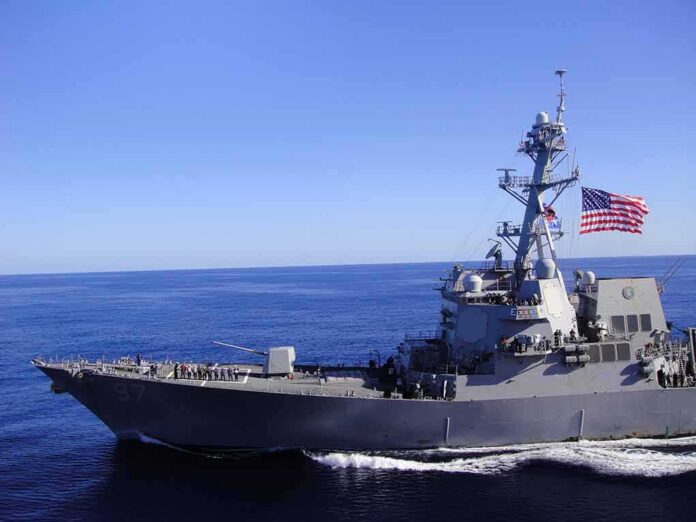
Eight sailors linked to the USS Abraham Lincoln strike group attempted suicide during its Iran war deployment, according to an official Navy letter to Congress.
Story Highlights
- An acting Navy secretary told Congress there were eight suicide attempts across the Lincoln strike group.
- No deaths were reported during the deployment, the letter said.
- The figure covers the carrier, air wing, destroyers, and embarked squadrons, not the carrier alone.
- Earlier Navy statements said they had not identified an increase in attempts, creating a messaging gap.
What the Navy Told Congress
Acting Secretary of the Navy Hung Cao reported eight suicide attempts tied to the USS Abraham Lincoln carrier strike group during its deployment that included combat operations against Iran. Cao’s letter to Senator Kirsten Gillibrand stated the count covered the carrier crew and attached units such as the air wing, destroyers, and embarked aviation squadrons. Cao also wrote that no service members died by suicide during the deployment period, a key detail confirmed in multiple outlets that reviewed the letter.
Major national outlets independently reported the same core figure from the same letter. Reports by CNN, The Hill, USA Today, the British Broadcasting Corporation, and others all cited the eight attempts and the wider strike group scope. This shared sourcing anchors the public record on the number and the units included. The Navy has not released case-level records for these attempts, and public reporting has not named the sailors or given dates for each incident.
How the Strike Group Scope Works
Carrier strike groups are large. They include the aircraft carrier, its air wing, a destroyer squadron staff, and several escorting destroyers. Cao’s letter said the eight counted attempts spanned those elements, not only the carrier’s crew. That framing matters because headlines can shrink the scope and lead readers to think all cases happened on the carrier itself. The letter’s definitions and full text were not published, which limits outside review of how each case was classified.
The deployment context was hard. Reports described a modern record for time at sea and combat operations against Iran, which can strain crews and support systems. Research on sailors underway has linked long deployments to higher stress and to barriers in getting mental health care while at sea. Navy carriers have embedded behavioral health staff, but access and stigma can still be challenges during intense operations. Those stressors do not prove cause for any individual case, but they form a credible backdrop.
The Messaging Gap and Why It Matters
Earlier in the summer, Navy officials said they had not identified an increase in suicidal ideation or suicide attempts aboard the ship. Those public statements now sit beside the later letter that cites eight attempts across the broader strike group during the deployment. The change underscores a common pattern in military reporting: early general statements are later refined by targeted data tied to unit scope and time windows. Both can be true in their own frames, but the shift can erode trust if not explained.
The U.S. Navy has confirmed eight suicide attempts among personnel assigned to the USS Abraham Lincoln carrier strike group during its extended deployment, including a period when the group supported U.S. combat operations against Iran.https://t.co/1ZyDTcdL6C pic.twitter.com/wdE4JYzpu7
— Khaama Press (KP) (@khaama) September 24, 2026
Members of Congress pressed for answers about conditions aboard the Lincoln as stories of low morale and shortages circulated during the long cruise. Families and veterans recognize the wider worry: when information drips out, people suspect leaders care more about image than fixing problems. Many Americans on the right and left feel that way about Washington, and this case taps that same nerve. Clear, steady reporting of unit-level mental health data would help close that trust gap.
What Comes Next for Accountability and Care
Congress can ask for the full letter, the Navy’s definitions for “attempt,” and anonymized, unit-level timelines. Lawmakers can also request audits comparing this deployment with other carrier tours for rates of attempts and access to care. The Navy can brief how sailors report self-harm, how commands respond at sea, and how quickly higher care is reached. None of this requires exposing identities. It does require timely data so leaders can act while ships are still underway.
Why This Story Hits Home
Americans expect the military to be honest about risks and to protect those who serve. Eight non-fatal suicide attempts across one strike group in one deployment is a warning light, whether you blame long wars, tight budgets, or poor planning. People across the political spectrum see a government slow to own problems and quick to spin them. Straight facts, plain language, and real fixes are not partisan. They are the minimum our sailors deserve.
Sources:
mediaite.com, cnn.com, thehill.com, newsweek.com, bbc.com, ynetnews.com, marineinsight.com, x.com, wsws.org