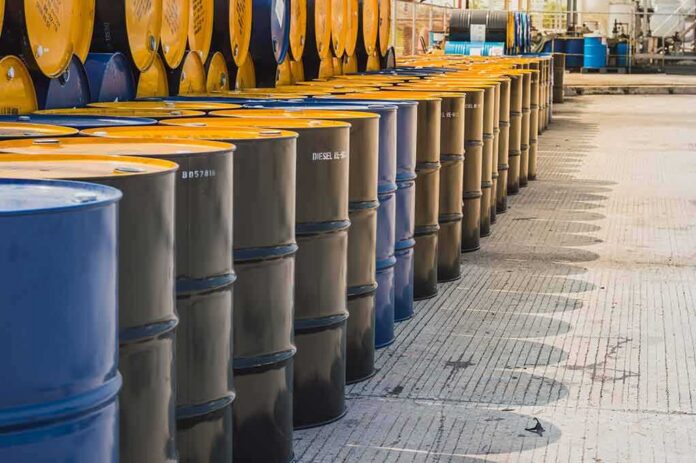
President Trump signed an order letting tax-free red-dyed diesel be used on highways and deferring the federal diesel tax to cut costs.
Story Highlights
- Order temporarily allows off-road red-dyed diesel for highway use and defers the federal diesel excise tax.
- White House says the move aims to lower shipping, farm, and consumer costs this year.
- Agencies are directed to work with states, industry, and farmers to expand access.
- Experts caution the policy’s price impact may be limited, though relief could reach heavy users.
What The Executive Order Does Right Now
President Trump signed an executive order that opens access to tax-exempt, red-dyed diesel for highway use through year-end and defers the federal excise tax that normally applies to on-road diesel sales. The White House described the move as a temporary step to bring down diesel costs for Americans and for the businesses that move goods. The order also tells the Treasury Department to look at ways to reduce or remove any liability for the deferred taxes, subject to legal limits.
The action shifts a long-standing rule. Since the 1990s, red-dyed diesel has been allowed for off-road uses, like farm equipment, construction gear, and heating, and has been exempt from the highway tax under federal law and Internal Revenue Service rules. On-road use has been restricted and often policed because the red dye shows untaxed fuel in vehicle tanks. The order uses executive authority to broaden lawful access as a cost relief measure.
How It Could Affect Prices And Supply Chains
The White House argues that cheaper diesel can lower costs for trucking and farming and ease prices that consumers pay at stores. Diesel moves food, building materials, and almost everything on shelves. If fleets can buy lower-cost fuel, they could pass some savings through freight rates over time. However, analysts quoted in national coverage say the overall impact on pump prices may be modest, given global fuel markets and refinery constraints. The relief may help most where users buy large volumes.
Any savings depend on how states respond and how fast suppliers adjust. The order directs the Departments of Transportation and Agriculture and the White House Office of Intergovernmental Affairs to work with states, industry, labor, and farmers to expand access points and share guidance. Some states also tax highway diesel. State choices on tax treatment, inspections, and labeling will shape the rollout. Clear rules and enforcement will matter to avoid confusion between taxed and untaxed supplies.
Legal And Administrative Guardrails
Federal fuel tax rules draw a bright line between taxed highway diesel and red-dyed, tax-exempt diesel. The dye marks untaxed fuel so that inspectors can spot misuse in on-road vehicles. The current move does not erase that history. It temporarily changes who can buy and use dyed fuel and when the federal tax is due, within executive authority and existing law. Treasury is told to defer collection and study options to ease or cancel liability for deferred payments, if lawful.
Compliance steps will be key. Fuel terminals, distributors, truck stops, and fleets will need clear paperwork on tax status, volumes, and dates. That helps prevent fraud and supports a clean audit trail if the deferred tax becomes due later. Federal guidance since 1994 has stressed traceable dyeing, clear records, and targeted checks to keep the system honest. Agencies say they will coordinate with states and industry to keep supply flowing while avoiding gray areas.
Why This Move Resonates Beyond Fuel Policy
High diesel costs hit people across the map. Farmers pay more to plant and harvest. Truckers pay more to move goods. Families see higher prices at checkout. The White House framed this order as fast help during a stretch of stubborn costs. Supporters on the right see it as cutting red tape and taxes that raise prices. Supporters on the left often push for relief to working families and small businesses that carry the load when costs spike.
Trump expands access to tax-exempt dyed diesel to try to lower fuel costs https://t.co/Lsrbn35PCJ
— TIME (@TIME) October 6, 2026
Many Americans also share a deeper concern: a system that helps insiders first and leaves everyone else with the bill. This step targets a real pain point that hits the middle of the economy. It also tests whether the federal government can act quickly without adding confusion. If savings show up in freight rates and farm budgets, the policy will feel concrete. If not, public frustration with Washington’s promises will grow, again, across party lines.
Sources:
facebook.com, nytimes.com, washingtonexaminer.com, govinfo.gov