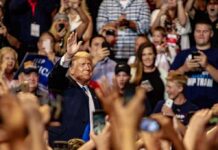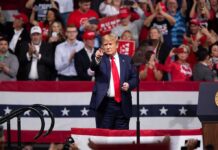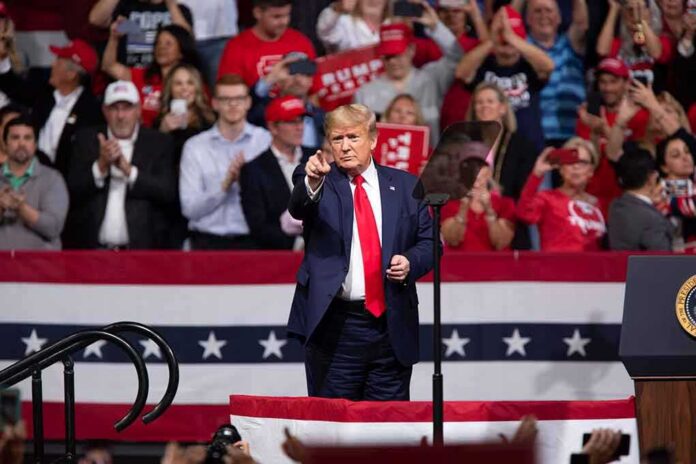
With early voting days away, President Trump headlined a charged midterm rally in Clarksville, Tennessee, to fire up Republican turnout in a state the party already dominates.
Story Highlights
- Trump staged a midterm rally at F&M Bank Arena in Clarksville to energize GOP voters.
- Kid Rock introduced Trump before he took the stage in the afternoon program.
- Senator Marsha Blackburn, Senator Bill Hagerty, and state GOP leaders joined the event.
- The appearance fits a wider red-state tour aimed at boosting turnout before Nov. 3.
Confirmed Event Details and Timing
Local and national outlets reported that President Trump held a midterm campaign rally at the F&M Bank Arena in downtown Clarksville on Saturday, Oct. 10. Doors opened late morning, and Trump took the stage midafternoon after an introduction by musician Kid Rock. The Tennessean described the event as a pre–Election Day push occurring just before early voting began, while network affiliates framed it as part of a sprint toward the Nov. 3 midterms.
Coverage noted the rally’s practical details that matter to voters who planned to attend. Reports listed the venue, the Saturday timing, and the stage schedule. The purpose, as stated by Republican sources and Trump’s own announcements, was to rally Republicans in Tennessee ahead of voting. This aligns with how campaigns typically use late-cycle visits to turn enthusiasm into ballots, especially where the party expects favorable margins but still wants strong turnout.
Who Was on Stage and Why It Matters
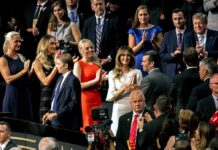
Senator Marsha Blackburn and Senator Bill Hagerty were featured figures, underscoring a focus on statewide and congressional races important to Republican control. Tennessee Republican Party Chair Scott Golden welcomed attendees, and Blackburn addressed the crowd. The Republican National Committee characterized the stop as meant to supercharge Republicans in a friendly state, reflecting a broader “lock down the base” strategy before Election Day. These appearances signal coordination between the White House, party leaders, and statewide campaigns.
Campaigns often bring in high-profile surrogates to energize volunteers, donors, and casual supporters. Kid Rock’s high-visibility introduction served that purpose by priming the crowd and broadening media reach beyond political reporters. Such programming choices aim to stretch the rally’s impact across local news, social feeds, and talk radio. That attention can translate into volunteer shifts, small-dollar donations, and final-week chatter, even if the direct effect on votes is often modest and short-lived.
Why Tennessee, and Why Now
Choosing Clarksville fits a well-tested playbook: visit friendly ground to shore up turnout and keep the party’s coalition engaged. The Tennessean’s reporting paired the stop with warnings from Republicans about possible Democratic gains elsewhere, which tracks with efforts to keep supporters focused and motivated late in the cycle. By anchoring a rally in a red state, the party can generate large crowds, signal momentum, and project organizational strength heading into early voting.
Political research shows presidential visits can boost enthusiasm and short-term engagement among the base, though the effect on final vote shares often varies and may be limited. Still, campaigns value the signal they send to activists and donors, and the structure they bring to get-out-the-vote operations. In short, even small gains can matter down the ballot. That is why presidents of both parties often flood safe states and swing states alike in the final weeks.
What We Know—and What the Event Does Not Prove
The record is clear on the core facts: where the rally happened, when the doors opened, who appeared on stage, and the stated goal to energize Republicans. Outlets documented Trump’s role, the location, and the supporting cast. Those facts are not in dispute across the cited reporting. However, the available coverage does not, by itself, show how much the rally changed turnout, vote margins, or fundraising in Tennessee races. That impact typically requires later data to assess.
Reports also differ on some peripheral details common in fast-moving campaigns, like the exact slate of endorsements or full speech transcripts. That does not change the main takeaway: the President and Tennessee Republican leadership used a weekend stage, music star wattage, and local media focus to push supporters toward early voting and Election Day. Voters across the spectrum may see rallies as theater, but campaigns stage them because they help organize action when time is short.
Sources:
cbsnews.com, tennessean.com, cbsaustin.com, yahoo.com, ground.news, fox17.com, academia.edu, rex.libraries.wsu.edu