

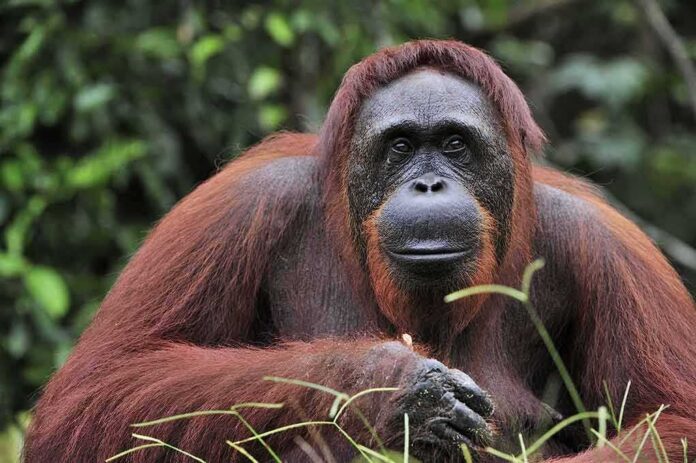
Wildfires burning across Indonesian Borneo have pushed into forest that is home to more than half of the world’s wild orangutan population, forcing rescue teams to pull starving and injured animals from the flames.
Story Snapshot
- Fires are burning inside habitat holding 52% of Borneo’s orangutan population, including 13 of the 20 largest remaining groups.
- Indonesian conservation group YIARI and government officials rescued at least seven critically endangered Bornean orangutans in one month.
- The Forestry Ministry evacuated a weakened orangutan found near an oil palm plantation after suspected smoke exposure.
- Scientific studies show wildfire smoke changes orangutan behavior and energy levels long after flames die down.
Fires Engulf Orangutan Strongholds Across Borneo
Fires have torn through Indonesian Borneo’s rainforests for weeks, fueled by a strong El Niño weather pattern that dried out thick peat soils. The International Union for Conservation of Nature says active fires are burning inside habitat that holds 52 percent of Borneo’s orangutan population, including 13 of the 20 largest remaining groups left on the island. Smoke has also drifted into Sumatra, choking cities and grounding flights across the region.
Orangutans caught in the fire zone face a brutal choice. They must flee burning trees or stay and risk smoke inhalation and starvation as food sources disappear. Many end up wandering into community farms and palm oil plantations looking for food, putting them in direct contact with people and raising the risk of injury or death at human hands.
Rescue Teams Pull Animals From the Flames
The Indonesian wildlife group YIARI, working with government conservation officials, recovered seven critically endangered Bornean orangutans from the fire-ravaged island last month alone. Rescue crews track down animals reported by villagers, tranquilize them when needed, and move them to veterinary care before deciding whether they can return to protected forest.
Indonesia’s Forestry Ministry separately evacuated a Bornean orangutan found in weak condition near an oil palm plantation in Ketapang District, West Kalimantan, after officials suspected the animal had been exposed to wildfire smoke. Silverius Oscar Unggul, who leads the Indonesian Nature Rehabilitation Initiative Foundation, said repeated fires keep destroying habitat and pushing orangutans deeper into plantations where conflict with humans is more likely.
Smoke’s Hidden Toll on Wild Populations
The damage from fires does not end once the smoke clears. A study of wild Bornean orangutans at a research station in Central Kalimantan found that smoke exposure led four adult males to rest more, travel less, and burn through body fat faster than normal. Researchers tracked the animals before, during, and after a major fire season to measure the effects.
A separate study found that low fruit production can continue for months after fires pass, and that this food shortage made wild female orangutans less social and less tolerant of each other. The pattern mirrors what happened after earlier fire seasons, when a female orangutan named Epen was found foraging on a farm in West Kalimantan after fleeing her burning forest home, before rescuers captured and later released her into protected land.
Wildfires in Indonesia force a massive relocation of orangutans to protect the specieshttps://t.co/boQ57IPuw9
Donate to the Orangutan Fire Fund. Link in bio.🦧❤️🔥🌳— Orangutan Outreach 🦧❤️🌳 (@redapes) October 16, 2026
Conservation groups say the fires expose a deeper problem: dried peatlands, cleared forest, and plantation expansion keep making Borneo’s landscape easier to burn each dry season. Until that underlying pattern changes, rescue teams expect to keep responding to displaced and injured orangutans every time drought and fire return to the island.
Sources:
youtube.com, thejakartapost.com, ifaw.org, malaymail.com, en.antaranews.com, news.mongabay.com, e-journal.unas.ac.id