
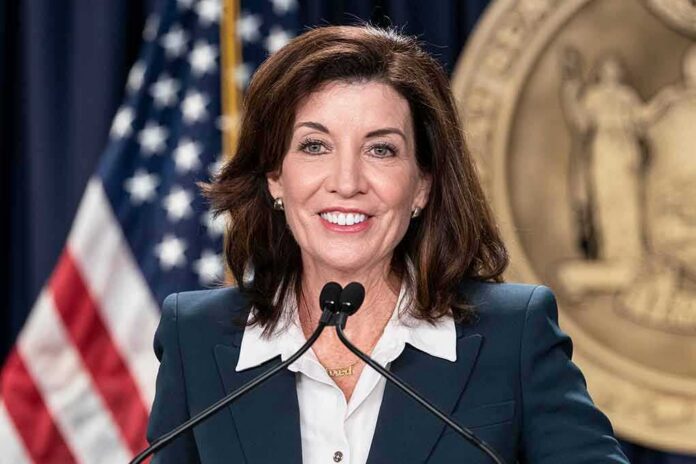
New York Governor Kathy Hochul said Trump rallies are “poisoning” Nicki Minaj’s mind, turning a celebrity jab into an election-week brawl.
Story Snapshot
- Hochul linked Minaj’s criticism to her attendance at Trump rallies days earlier.
- Minaj called Hochul “an evil woman” and urged voters to back Republican Bruce Blakeman.
- Blakeman amplified Minaj’s message and framed it as a case to fire Hochul.
- Evidence shows timing and rhetoric, not proof that rallies “poisoned” Minaj’s thinking.
What Hochul Said And Why It Landed Hard
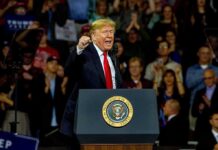
On October 28 in Albany, Governor Kathy Hochul told reporters that Nicki Minaj should “get outside and get offline” and “stop going to Trump rallies,” which she said were “kinda poisoning your mind”. The remark came days after Minaj appeared at a Michigan rally with President Trump and praised him, signaling support for Republican candidates. Hochul’s phrasing targeted Minaj’s judgment rather than her claims. That choice made the exchange feel personal and sharpened reactions across party lines.
Minaj’s earlier posts on X hit hard at Hochul. She called the governor “an evil woman,” warned she would “not escape God’s wrath,” and urged Democrats to drop her. She also shared a past Hochul remark about Bronx children and technology as evidence of disrespect, while telling followers to vote for Republican Bruce Blakeman. The back-and-forth turned into a fast campaign clip cycle, where lines and labels spread faster than any policy talk.
Minaj’s Stance, Rally Timeline, And The Causation Gap
Reports show Minaj stood onstage with Trump in Michigan on October 25 and said he “changed the energy of the country.” She has called herself Trump’s “number one fan,” and said earlier this year that she was moved by what she saw as bullying and smear campaigns against him. Those facts tie her politics to Trump before Albany. Hochul’s “poisoning” claim signals blame, but reporting shows timing, not proof of a rally-driven shift.
Journalists did not cite a specific Trump line or moment that allegedly altered Minaj’s views. They also did not present evidence that Minaj changed positions after the rally versus before it. Without concrete examples, Hochul’s charge reads as a campaign retort, not a tested finding. This gap matters because voters on both sides worry that leaders dodge substance by attacking motives, personalities, or mental states rather than answering claims directly.
How Campaigns Turn Outrage Into Reach
Blakeman seized the moment. He replied to Minaj with a promise to bring the “U-Haul,” saying it was time to fire “the worst governor in America”. That response linked Minaj’s viral posts to a clear call to vote. The cycle is familiar: a celebrity strikes, an official hits back, and a rival campaign packages the spike in attention. Each step rewards sharper words and keeps the focus on drama, not fixes.
NY Governor Kathy Hochul Fires Back at Nicki Minaj After Rapper Calls Her ‘Evil’: “Get Outside and Get Offline a Little More” #KathyHochul #NickiMinajhttps://t.co/FcBtcIWDGH
— Hates Orange Cheeto the Pedoedo (@jeffc_RN) October 29, 2026
Research on celebrity politics shows mixed effects. Some endorsements barely move voters, while others—like Oprah Winfrey’s 2008 backing of Barack Obama—had measurable impact. Effects often depend on audience fit and trust, not star power alone. Social media also rewards moral outrage, which can push extreme language to the top of feeds and bury context. That helps explain why this dispute blew up near Election Day, even as the policy stakes stayed vague.
What This Fight Reveals About Trust And Power
Hochul’s “poisoning” line and Minaj’s “evil woman” claim both tap into deeper frustration. Many Americans think leaders play to cameras and clout while avoiding hard work on safety, costs, schools, and fairness. This episode again centers attention on who said what, not what they will do. The timing, tone, and amplification serve campaigns more than citizens. Voters deserve specifics, not insults, on crime, opportunity, and respect for every community.
Limits And What To Watch Next
Available reports quote short clips and posts, not full transcripts or full-event videos. They show what each side said, but not the fuller context that could confirm intent or address evidence behind the claims. Watch whether either side offers direct answers: Will Hochul address Minaj’s stated concerns point by point? Will Minaj lay out clear policy reasons for backing Blakeman beyond labels? Clear answers would help voters cut through the noise.
Sources:
youtube.com, yahoo.com, silive.com, bbc.com, tandfonline.com