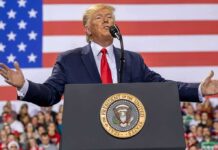
A new federal initiative targets Antifa’s financial networks, sparking debates over civil liberties.
Story Highlights
- The Trump administration launches a federal strategy to dismantle Antifa funding.
- Antifa is officially designated as a domestic terrorist organization.
- Federal agencies coordinate efforts to investigate financial crimes linked to Antifa.
- Concerns arise over potential overreach and impacts on free speech.
Trump Administration’s Bold Move Against Antifa
In September 2025, President Donald J. Trump signed a National Security Presidential Memorandum (NSPM) establishing a comprehensive federal strategy to investigate, disrupt, and dismantle organized political violence and domestic terrorism. The focus is primarily on Antifa, now officially designated as a domestic terrorist organization. This strategy involves coordination among federal agencies such as the FBI, Department of Justice, Treasury, and IRS to expose and disrupt funding networks associated with Antifa.
The NSPM marks a significant escalation in efforts to address domestic political violence. The Trump administration’s directive encompasses a “whole-of-government” approach, tasking multiple federal agencies with tracing financial networks, dark money sources, and nonprofit channels allegedly funding Antifa. This initiative aims to provide a robust response to allegations of organized political violence, despite ongoing debates over Antifa’s organizational structure and legal standing.
'Riot Inc.': Trump launches 'whole-of-government' push to expose Antifa funding networks, dark money sources https://t.co/GOGEg2SHhl
— Deenie (@deenie7940) October 9, 2025
Implications and Reactions
The designation of Antifa as a domestic terrorist organization has sparked significant concern among civil liberties groups. Critics argue that this move could lead to government overreach, potentially infringing on free speech and assembly rights. Nonprofit organizations are also under scrutiny, fearing that increased oversight might stifle legitimate advocacy work. The administration’s strategy reflects a broader trend of employing national security tools to address domestic challenges, raising questions about the balance between security and civil liberties.
The push against Antifa’s financial infrastructure is unprecedented, emphasizing the tracing and disruption of funding networks. This approach aligns with the administration’s goal of presenting itself as tough on domestic unrest and political violence, appealing to its conservative base. However, the strategy’s success hinges on effective interagency coordination and legal interpretations, especially given the decentralized nature of Antifa’s operations.
Potential Long-term Effects
The long-term implications of this strategy are profound. Legally, it could set new precedents for federal actions against domestic political movements, impacting civil liberties. Nonprofits, particularly those involved in social justice advocacy, may face increased regulatory risks. Politically, the strategy is likely to exacerbate partisan divides, influencing debates on national security and civil rights.
As federal agencies begin implementing the NSPM, the outcomes of these efforts remain to be seen. The strategy’s focus on financial networks represents a novel and potentially far-reaching approach to countering domestic political violence. While supporters argue for its necessity in maintaining public safety, critics warn against the potential suppression of legitimate dissent.
Watch the report: FULL: President Trump holds roundtable on antifa
Sources:
Countering Domestic Terrorism and Organized Political Violence
Designating Antifa as a Domestic Terrorist Organization
Attacks on Freedom of Speech: What Nonprofits Need to Know