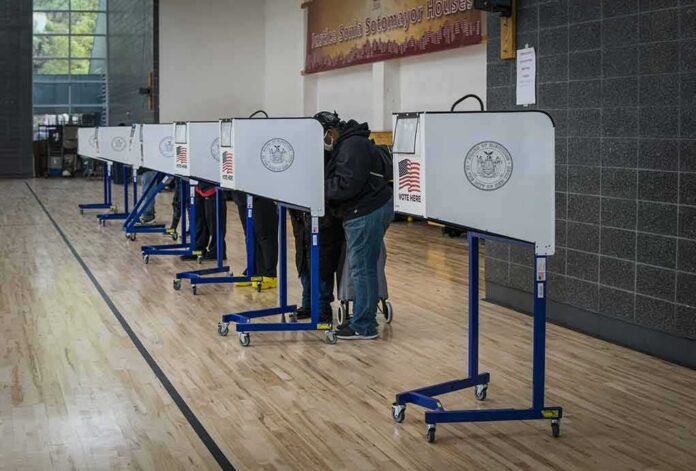
On the eve of voting, the Trump administration asked the Supreme Court to set aside certain California ballots tied to about 20,000 flagged registrants, arguing that once counted they cannot be uncounted.
Story Snapshot
- The Justice Department identified about 20,000 registered voters in California as likely noncitizens and sought a narrow hold on their ballots pending verification.
- California officials and outside analysts questioned the list’s accuracy, citing errors and mismatches with current voter files.
- A federal judge and an appeals panel rejected ballot segregation amid concerns about changing rules during an ongoing election.
- The Supreme Court application frames the request as temporary and reversible, focused on preventing irreversible commingling of ballots.
What the Administration Asked the Supreme Court to Do
On November 2, the administration asked the Supreme Court for an emergency order concerning California ballots linked to about 20,000 registered voters the government flagged as likely noncitizens. The filing asked the Court to require counties to set aside those ballots and not count them until citizenship is verified. The Justice Department described this as a limited and temporary step, not a purge or a mass disenfranchisement. The request relied on federal laws that bar noncitizen voting in federal elections.
Solicitor General D. John Sauer told the Court the harm would be irreversible if ballots from listed registrants are mixed with other ballots before review. He argued that once commingled, those ballots cannot be separated, so any ineligible votes would be locked in. The administration said it worked with the Department of Homeland Security to compile the list. It asked the Court to protect the count while citizenship checks occur, labeling the step a modest remedy.
How California Officials and Courts Responded
California leaders pushed back and said the federal government had not provided evidence proving the listed individuals were noncitizens. State and local officials said many names did not match active registrations, and that a preliminary county review found some people appeared to be born in the United States. They warned that segregating ballots during active processing was unlawful and could disenfranchise eligible voters. A federal district judge then rejected the bid to set aside ballots.
Judge David O. Carter wrote that the government’s vague description of its matching process, and similar claims that fell apart in other states, undercut its credibility. He said the requested step risked sowing chaos and blocking legitimate votes in an election already underway. A divided appellate panel declined to order segregation, leaving the administration to seek emergency relief from the Supreme Court. The rulings put heavy weight on stability close to Election Day.
What We Know—and Do Not Know—About the List
The Justice Department said the list pinpoints roughly 20,000 registrants who may be noncitizens. The department did not claim all listed people are ineligible; it sought time to verify. Outside reporting and court filings say the government has not publicly revealed the matching rules, data sources, or error rates used to build the list. That opacity limits outside testing and has fueled concern from both election officials and researchers about false matches.
Independent analysis heightened those concerns. Researchers reported that a large share of the names did not match California’s current voter file, and that at least some listed individuals are U.S. citizens. They also estimated that many naturalized citizens could be wrongly flagged using the government’s apparent approach. Those findings, along with a county’s spot check, gave state officials further grounds to resist last-minute ballot segregation without individual review.
Why Timing and Process Are the Core Fight
The core legal clash is not over whether noncitizen voting is illegal; it is. The clash is over due process and timing. The administration argues that segregating ballots first, then verifying, prevents harm that cannot be fixed later. California argues that segregation now, during active voting, is unlawful, unworkable, and risks discarding lawful votes. Recent court rulings also warn against changing election procedures right before ballots are cast and counted.
What This Means for Trust—and Next Steps to Watch
Many Americans across the spectrum see a system that feels built to protect itself, not voters. Here, both sides claim to defend election integrity, yet the system offers little public proof either way. The federal side has not released detailed methods to test accuracy. The state has not offered an alternative rapid audit for flagged names at scale. The Supreme Court will weigh process, timing, and harm. The ruling will signal how far courts will go to adjust election handling at the buzzer.
Sources:
youtube.com, nytimes.com, edition.cnn.com, cbsnews.com, argusleader.com, brennancenter.org