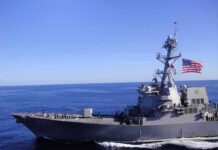
A Chinese coast guard ship blasted a Philippine government vessel with a high‑pressure water cannon at a disputed reef, again showing how small fishermen are caught in the middle of a power struggle they never asked for.
Story Snapshot
- Chinese water cannon hit a Philippine government ship resupplying fishermen near Scarborough Shoal, causing damage but no reported injuries.
- China admits firing the water cannon and says it was “necessary” law enforcement against what it calls Philippine “intrusions” into its territory.
- The clash fits a long pattern of close, dangerous encounters where China uses force to control disputed South China Sea waters.
- These incidents deepen global fears that rival great powers are putting ordinary workers and regional peace at risk while the “elites” argue over maps and power.
What Happened At The Disputed Reef
Philippine officials say the latest incident happened near Scarborough Shoal while their ships were bringing fuel and supplies to local fishermen. The Philippine Coast Guard reported that a Chinese coast guard vessel came within about seven meters of the BRP Datu Paduhinog and fired a high-pressure water cannon directly at it. The blast damaged parts of the ship but there were no immediate reports of injuries. Two other Philippine vessels on the same mission were also targeted by water cannons but were not hit.
China’s coast guard later issued its own statement claiming the Philippine ships had “intruded” into what it calls Chinese waters and ignored repeated warnings. Chinese officials said they “took necessary measures,” including firing water cannons, to “resolutely drive them away.” As in past encounters, Beijing framed the clash as routine law enforcement, while Manila described a dangerous attack on a lawful mission inside the Philippine exclusive economic zone. This sharp contrast in stories has become common whenever the two sides meet at sea.
Pattern Of Escalating Confrontations
This is not a one‑off event; it is part of a clear pattern of confrontations around Scarborough Shoal and other disputed areas in the South China Sea. For more than a decade, Chinese ships have repeatedly used water cannons and risky maneuvers against Philippine vessels, including fishing boats and coast guard patrols. In one documented case, a Chinese ship’s water cannon damaged a Philippine fisheries vessel and injured a crew member, shattering glass on the bridge. In another, a BBC team on board a Philippine ship filmed Chinese vessels blasting water across its bow while shadowing it at close range.
Sometimes these stand‑offs turn into collisions. Video released by the Philippines in an earlier incident showed a Chinese navy ship hitting a Chinese coast guard vessel as both tried to push a small Philippine patrol ship away from Scarborough Shoal. In other clashes, China has accused Philippine vessels of “deliberately ramming” its ships, while the Philippines says Chinese forces used water cannons and aggressive steering that caused the damage. Each time, both governments rush out statements and footage to defend their side, and ordinary people see yet another sign that powerful states treat contested waters like a game board.
Why This Matters Beyond Asia
Scarborough Shoal lies close to the Philippine coast and inside the area international judges said falls within the Philippines’ economic zone, a ruling China rejects. The reef is a vital fishing ground for poorer coastal communities, whose livelihoods depend on small boats and simple gear, not on politics. Every time water cannons slam into a supply ship or a patrol boat, those families worry about fuel, food, and safety, while distant leaders argue over maps and legal claims. The clash highlights how regular workers pay the price when global powers flex their muscles.
ANOTHER WATER CANNON
The Philippine Coast Guard on Friday accused its Chinese counterpart of firing water cannon at government vessels near the Scarborough Shoal for a second day. | via Reutershttps://t.co/RxelvIK3m9
— News5 (@News5PH) July 24, 2026
For many Americans watching from home, this story feeds growing anger at how international “elites” operate. People on the right see China’s behavior as another example of bullying and lawless expansion, while asking whether the United States government is really protecting our interests or just managing headlines. People on the left see poor fishermen and sailors caught between large states and worry about a world where military and economic might matter more than human lives. Both sides share a deeper fear: that distant bureaucrats and powerful networks, sometimes called the “deep state,” make choices that raise the risk of war while regular citizens struggle with high prices, stagnant wages, and broken promises.
Risks Of Miscalculation And A Wider Crisis
Each close‑range encounter carries real danger. Heavy water cannons can shatter windows, knock people off their feet, and damage navigation systems. Ships maneuvering within a few meters of each other can collide, as recent videos already show. A single serious injury or death could push domestic anger higher in either country, making it harder for leaders to back down. That is how small clashes can grow into larger crises that eventually pull in more nations, including the United States.
The United States has treaty obligations with the Philippines, and American officials have already condemned China’s “illegal use of water cannons and perilous maneuvers” in earlier incidents. More dangerous confrontations could force Washington to respond more visibly, from more patrols to more military deployments. That would mean more money, more risks, and more attention going overseas while many Americans feel their own government is ignoring problems at home. For citizens already skeptical of globalism and foreign adventures, this feeds the sense that everyday people come last in the priorities of the powerful.
Sources:
straitstimes.com, apnews.com, amp.scmp.com, reuters.com, bbc.com, cnn.com, youtube.com