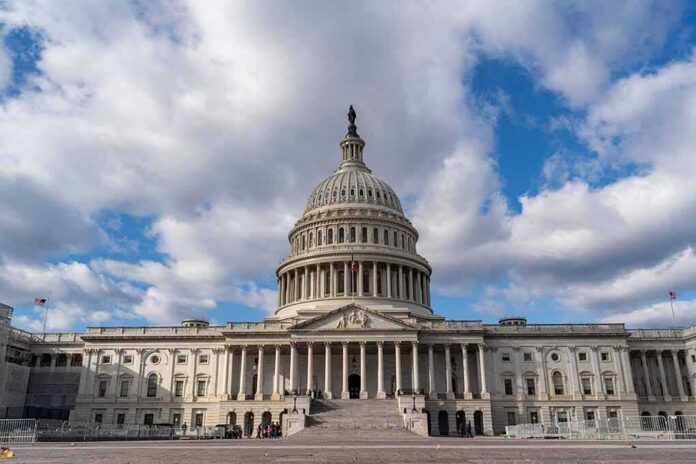
Ukrainian President Volodymyr Zelenskyy walked into the U.S. Capitol for a closed-door meeting with senators just days after sitting down with President Trump, the latest stop in a nearly four-year string of Washington visits aimed at keeping American money and weapons flowing to Kyiv.
Story Snapshot
- Zelenskyy met privately with senators at the Capitol after a White House sit-down with President Trump.
- The visit tied to a Senate bill that would add tougher sanctions on Russia and its trading partners.
- The trip coincided with Senator Lindsey Graham’s funeral in Washington, drawing several world leaders.
- This marks at least the sixth major Zelenskyy trip to Capitol Hill since Russia’s 2022 invasion.
A Familiar Scene Returns to the Capitol
Zelenskyy arrived at the Capitol for a closed-door session, one described in earlier visits as taking place in the historic Old Senate Chamber. All 100 senators were invited to weigh in on a bill that would impose harsher sanctions on Russia and countries that trade with it. The meeting followed his face-to-face talk with President Trump, part of a fast-moving Washington visit that also touched on Ukraine’s defense needs.
The Capitol stop came during the same week Zelenskyy and other foreign leaders traveled to Washington for Senator Lindsey Graham’s funeral, giving the Ukrainian leader a rare chance to combine mourning with lobbying in one trip. That overlap shows how tightly Ukraine’s fight for aid is now woven into everyday Washington business, even solemn occasions.
A Pattern Stretching Back to 2022
This is not new territory. Zelenskyy first addressed a joint session of Congress in December 2022, thanking Americans for treating aid as “an investment,” not “charity”. He returned in September 2023 to meet lawmakers directly, this time without an invitation to speak before Congress, a sign that enthusiasm was already cooling. By December 2023, he was back again, making what NPR called a “last-ditch effort” to unlock stalled funding.
Each trip followed the same script: private meetings with Senate and House leaders, appeals framed around battlefield stakes, and reporters chasing him through Capitol hallways. By 2024, the New York Times noted his “star power” had faded, with only a small group of lawmakers meeting him privately while the House Speaker declined to engage. The current visit shows that pattern has not disappeared, only shifted to a new administration.
Republican Divisions Shape the Aid Debate
Reuters reported that continued U.S. backing for Ukraine could be “in jeopardy” depending on shifting political winds in Washington, a warning that has only grown sharper as President Trump’s team reshapes foreign policy priorities. CNBC reported some Republicans souring on open-ended support even before Trump’s return to office, questioning how long Congress should keep approving billions without a clear endpoint to the war.
That skepticism cuts across party lines in ways that go beyond typical partisan fights. Republicans worried about deficit spending and endless foreign commitments echo concerns some Democrats raise about accountability for how aid dollars are tracked and spent. Neither side has been given a full public accounting of the sanctions bill’s exact terms or timeline, since the closed-door format keeps most of the substance out of public view.
What Americans Are Really Asking
Voters on both the left and right increasingly share one question: why does Congress keep holding private meetings on billions in foreign spending while basic problems at home go unresolved? The closed-door nature of these Capitol sessions, repeated across three different congressional sessions and two presidential administrations, means most Americans learn only secondhand what their representatives promised or refused.
That secrecy fuels a broader, shared frustration that Washington operates on its own terms, disconnected from the people it answers to. Whether the concern is unchecked spending abroad or transparency about how tax dollars are used, the recurring nature of these visits, four years running now, suggests a pattern more Americans want explained rather than simply repeated.
Sources:
pbs.org, youtube.com, nbcnews.com, investing.com, aljazeera.com, cnbc.com, nytimes.com, abcnews.com