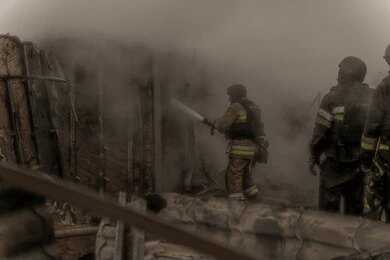
Russian fire crews died after a renewed strike in Kharkiv, and the public record now raises a hard question about intent.
Quick Take
- A Russian strike in Kharkiv killed emergency responders after they arrived at a fire scene.
- One widely shared report says Russian forces launched a second strike after responders reached the site.
- The available materials support the timing of the follow-up hit, but not a full forensic proof of deliberate targeting.
- The case fits a wider war pattern in which rescue crews often face danger before investigators can sort out intent.
What Happened in Kharkiv
Reports from Ukraine and later social posts describe a Russian strike that set off a fire in Kharkiv, followed by another blast while emergency workers were already on scene. One report says the second strike hit after responders arrived, and a fire truck was damaged. Other accounts say five rescue workers were killed and at least five more were injured while fighting the fire [1][5].
The details matter because the key dispute is not whether rescuers were present. It is whether they were hit as part of a broad attack or were deliberately targeted after they came to help. The sources provided support the sequence of events, but they do not include a direct Russian admission, an intercepted order, or battlefield forensics that would prove intent on their own [2][3][4].
Why the Timing Matters
A second strike after rescuers arrive can point to what many analysts call a double-tap pattern. That pattern is especially alarming because it can turn a rescue scene into a trap. In this case, the public materials show a renewed strike during firefighting, but they do not establish the exact aiming point, weapon path, or command decision behind it [6][7].
That gap leaves room for two readings. Ukrainian officials and supporting reports see the attack as evidence of reckless or deliberate harm to responders. A narrower reading says the incident may have happened inside a larger strike wave, where emergency crews were caught in the middle of active bombardment. The sources here support the first strike, the second strike, and the damage, but not a full legal finding [1][4][5].
The Bigger Pattern Behind the Story
Kharkiv has been hit many times in the war, and the city’s rescue teams have repeatedly worked under fire. The broader reporting in this package describes drone and missile attacks on homes, hotels, kindergartens, and other civilian sites, with responders rushing in after each blast. That pattern helps explain why public anger is so strong when rescuers are then struck at the same scene [2][3][6].
🇺🇦 While the G7 opens in Évian this morning to discuss the Iran deal: Kyiv is still assessing the damage from Sunday night's Russian attack.
4 killed. 23 wounded. 140,000 households without power.
The Dormition Cathedral of the Kyiv Pechersk Lavra – UNESCO World Heritage Site -…
— The Tectonic (@thetect0nic) June 15, 2026
The case also shows a wider problem that cuts across politics. People on the left and right may disagree on blame, but many share the same distrust of official claims when war is involved. In active combat zones, smoke, speed, and propaganda can outrun proof. That is why the strongest public claim here is limited but serious: responders were hit after arriving, and the current record does not fully settle whether the attack was intentional [7][8].
Sources:
[1] YouTube – Emergency responders killed after Russian strike in Kharkiv
[2] Web – Russian Missile Strike in Ukraine’s Kharkiv Leaves Two Dead
[3] Web – Rescuers put out fire after Russian drone strikes on Kharkiv …
[4] Web – Russian Drone Strike Hits Residential High-Rise in Kharkiv, Sparks …
[5] Web – Officials have released video showing emergency services at the …
[6] Web – Ukraine Responders Battle Fire After Russian Drone Hits Hotel in …
[7] Web – Rescuers take cover as Russian drones attack Kharkiv – Facebook
[8] YouTube – Ukrainian First Responders Deal With Aftermath Of Russian Strikes …