As Washington and Tehran trade missiles, a United Nations warning suggests the real casualties could be tens of millions of ordinary people worldwide quietly pushed toward hunger by rising fuel and food costs.
Story Snapshot
- The United Nations World Food Programme warns up to 45 million more people could face acute hunger in 2026 if the Iran war drags on and oil stays above $100 a barrel.[3][4]
- Import‑dependent countries in Africa and Asia are most exposed, with projected double‑digit jumps in food insecurity tied to higher fuel, shipping, and fertilizer costs.[3][4][5]
- Humanitarian supply lines are already being rerouted and delayed, raising costs and reducing the amount of aid that can reach conflict‑scarred and poor nations.[2][3][4]
- The forecast is conditional and scenario‑based, and critics warn that dramatic projections can be politicized or used to chase donor money even as elites avoid accountability.[3][4]
UN Warning: How a Regional War Becomes a Global Hunger Shock
The United Nations World Food Programme (World Food Programme) now projects that if the Middle East conflict involving Iran continues through mid‑year and oil prices remain above one hundred dollars per barrel, almost forty‑five million additional people could be pushed into acute food insecurity worldwide.[3][4] That shock would come on top of an estimated three hundred eighteen million people who were already food insecure before this latest escalation, pushing global hunger toward record levels last seen after Russia’s invasion of Ukraine.[1][3][4] World Food Programme officials describe this as an “extremely alarming scenario” that could mark the worst disruption to lifesaving aid since the pandemic.[3][4]
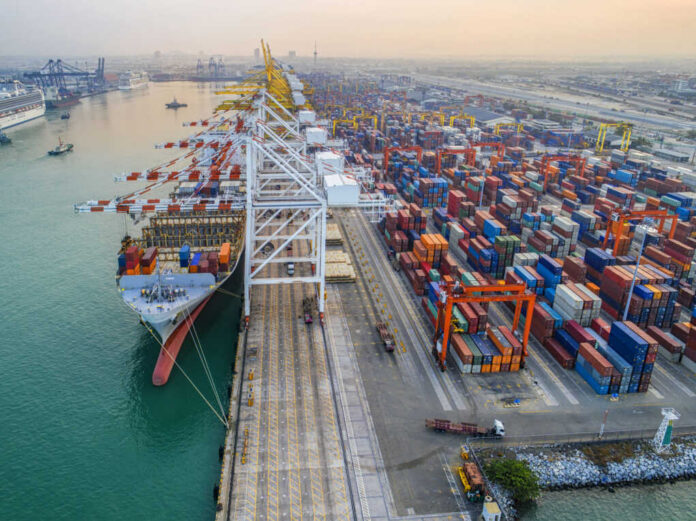
World Food Programme analysts describe a clear chain reaction: conflict in the Middle East has driven up oil prices, which in turn raise the cost of shipping, fertilizers, and food across the globe.[3][4][5] Even though World Food Programme does not move most of its food directly through the Strait of Hormuz, disruption there and in nearby sea lanes forces commercial and humanitarian traffic onto longer, more expensive routes, with some shipping costs reportedly rising seventy to three hundred percent because of rerouting, congestion, and higher insurance premiums.[2][5] Those added costs ripple into supermarket prices and aid budgets, leaving poor families and relief agencies paying more for every calorie delivered.[2][4][5]
Who Pays the Price: Vulnerable Countries Far from the Battlefield
World Food Programme’s modeling suggests that countries which rely heavily on imported food and fuel, especially in sub‑Saharan Africa and Asia, face the steepest increases in hunger risk.[3][4] The agency’s breakdown indicates that in Asia alone, nine point one million people across ten countries could be pushed into acute food insecurity, a roughly twenty‑four percent jump under the conflict‑and‑oil scenario.[4] West and Central Africa could see about ten point four million more people go hungry, a rise of roughly twenty‑one percent, while East and Southern Africa could see nearly seventeen point seven million more, a seventeen percent increase.[4]
These numbers are not just abstract projections; they land hardest in places where families were already balancing on the edge.[3][4][5] Afghanistan, Somalia, and Sri Lanka are cited as especially exposed because they import much of what they eat and lack the financial cushion to absorb higher fuel and grain costs.[1][4][5] In parallel, countries in the Middle East and North Africa, including Lebanon, Yemen, and Gaza, are grappling with direct war damage and displacement while also paying more for every shipment of wheat, cooking oil, and fertilizer.[2][3][5] When elites in wealthy capitals debate sanctions and airstrikes, the people who feel the consequences first are often subsistence farmers and urban poor thousands of miles away.
Strained Aid Systems and the Politics of Dire Forecasts
Humanitarian agencies warn that rising costs and disrupted routes are already undermining their ability to deliver aid just as needs surge.[2][3][4] World Food Programme reports that tens of thousands of metric tonnes of food assistance have been delayed or rerouted because sea and land corridors linked to Iran and the wider Gulf are no longer reliable, affecting hundreds of thousands of intended beneficiaries.[2] Higher shipping, fuel, and insurance prices mean agencies can feed fewer people with the same dollar, while bureaucratic delays and security risks slow convoys to places like Afghanistan, Yemen, and the Palestinian territories.[2][3][5] For citizens who already doubt that international institutions and national governments can manage crises competently, another bottlenecked response reinforces that skepticism.
In the latest from the Middle East
Southern Lebanon continues to be bombarded by Israel just 24 hours after a conditional ceasefire was agreed, with seven killed in the city of Tyre.
Millions are being pushed into hunger by the conflicts in the Middle East, the UN World Food… pic.twitter.com/0mangwe2SU
— CGTN Europe (@CGTNEurope) June 5, 2026
At the same time, the World Food Programme forecast has built‑in uncertainties that deserve attention from readers across the political spectrum.[3][4][5] The forty‑five million figure is explicitly conditional on the war continuing through June and oil staying above one hundred dollars, and the public summaries do not disclose the full details of the model’s assumptions and sensitivity tests.[3][4] Critics note that multiple crises—Sudan, Gaza, southern Lebanon, Haiti, climate shocks—are also driving hunger, making it hard to isolate how much of any future spike is really “because of” the Iran war alone.[3][4][5] Others warn that humanitarian agencies under funding pressure have incentives to highlight worst‑case scenarios to sustain donor attention, even as elected leaders and entrenched bureaucracies avoid hard questions about energy policy, war decisions, and trade rules that keep the global food system so fragile.[1][3][4]
Sources:
[1] Web – UN Food Agency Warns Millions Pushed Into Hunger By Prolonged Iran War
[2] Web – UN food agency says millions are being pushed into hunger by Iran …
[3] Web – UN Agency Warns Trump’s Illegal Iran War Pushing Millions Into …
[4] YouTube – UN warns Iran war could drive record global hunger
[5] Web – Middle East war risks pushing 45 million more people into acute …