The blackout of Donald Trump’s primetime election-security speech by major networks is not just another skirmish in the media–politics feud; it exposes a deeper rupture over who gets to frame reality for American voters when claims of fraud collide with documented evidence.
Key Points
- Trump’s July 2026 election-security address blended serious intelligence about foreign interest in U.S. voter data with sweeping, unsupported claims that past elections were compromised.
- Declassified documents he touted largely reaffirm prior assessments: foreign actors probed U.S. systems and harvested data but did not alter votes or outcomes in 2020.
- Major networks NBC, ABC, and CNN chose not to air the speech on primary platforms, citing his long record of falsehoods and the risk of amplifying misinformation.
- Conservative outlets cast the blackout as ideological “censorship,” while election experts and intelligence summaries see Trump’s narrative as part of a broader pattern of evidence‑thin election denial.
- For audiences like “Aunt Mary and Uncle John,” the clash is prompting a binary, emotionally charged choice: trust favored politicians and partisan outlets or trust institutional media and nonpartisan research.
Trump’s Election Speech: What He Claimed and What the Documents Show
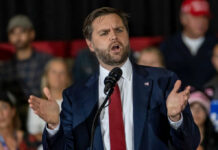
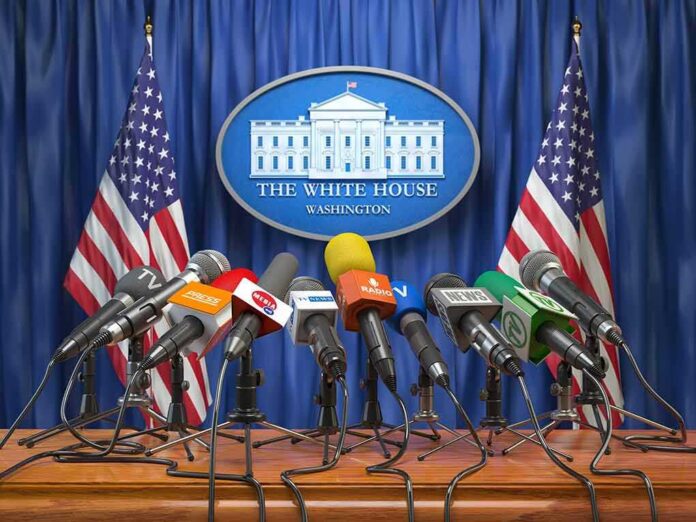
Trump’s East Room speech was designed as a dramatic unmasking of what he called “shocking vulnerabilities” and “the largest compromise of election data in history.” In his telling, newly declassified intelligence proved that China had acquired about 220 million U.S. voter files starting in 2020 and that U.S. adversaries possess the capability to compromise election machines on a large scale. He linked these assertions to broader allegations: hundreds of thousands of non‑citizens supposedly registered to vote, fraudulent registrations in Michigan, and a clandestine effort by U.S. intelligence officials to withhold information about Chinese activity from his Presidential Daily Brief.
Those claims, however, must be weighed against the very documents he declassified and against pre‑existing assessments from the intelligence community. A March 2021 federal intelligence report—later declassified—states plainly that agencies “have no indications that any foreign actor attempted to alter any technical aspect of the voting process in the 2020 U.S. elections, including voter registration, casting ballots, vote tabulation, or reporting results.” Another document concludes that vote‑tabulation systems “would be difficult to manipulate on a wide enough scale to compromise election results,” undermining the idea of “shocking vulnerabilities” in the core machinery of counting votes.
The newly released memo on Chinese acquisition of voter files is also narrower than Trump’s rhetoric. It acknowledges that Chinese entities obtained large quantities of voter data, much of which can be purchased legally from state databases, but explicitly notes that analysts lack evidence that this data was used to influence voters or alter outcomes. In other words, the documents substantiate foreign interest and probing—something election‑security professionals have warned about for years—but they do not substantiate systemic vote‑changing or outcome‑flipping.
Foreign Probing vs. Proven Election Fraud
One reason this speech resonates with some viewers is that it taps a legitimate concern: foreign governments do study U.S. politics, collect data, and experiment with influence operations. CIA and other agencies have documented that China explored ways to reduce Trump’s vote share in 2018 by nudging business leaders and journalists, and that adversaries possess the technical capability to target certain election systems. This is real and worth worrying about.
Capability, however, is not the same as execution at scale. Intelligence assessments after 2020 consistently found that Russia, China, Iran, and others engaged in information operations and exploratory cyber activity but did not change vote tallies or hack systems in ways that affected the result. Researchers examining post‑2020 fraud narratives note a recurring pattern: technical vulnerabilities or isolated irregularities are inflated into claims of “massive” fraud without corresponding evidence of large‑scale exploitation.
Academic work on election fraud beliefs reinforces this divide. Studies in 2022–2024 show that partisanship strongly predicts whether people endorse fraud narratives, with Republicans far more likely to say that multiple fraud types are “common,” even when controlling for other factors. A majority of Trump voters surveyed after 2020 believed fraud was widespread and that he actually won, despite the absence of meaningful evidence of systemic manipulation. Trump’s latest speech sits squarely inside that pattern: real vulnerabilities and foreign curiosity are not invented—but their significance for past election outcomes is dramatically overstated.
Why NBC, ABC, and CNN Declined to Air the Speech Live
To Trump’s supporters, the most vivid moment was not a technical detail but the networks’ decision to stay with entertainment programming rather than carry the address live. NBC and ABC declined to interrupt their primetime schedules, and CNN did not broadcast the speech on its primary television platform, though it covered it online and in later segments. Trump responded in real time, accusing these outlets of being part of a “plot” and saying their licenses “should be revoked”—a threat he has made before when angered by coverage.
From the networks’ perspective, this was not simply defiance but an editorial choice driven by experience. By 2026, Trump had amassed a documented record of tens of thousands of false or misleading public statements, including repeated, adjudicated‑false claims about election fraud. During earlier post‑2020 speeches, some networks had cut away midstream, explaining to viewers that he was making unfounded allegations. Media law experts pointed out that broadcasters enjoy strong First Amendment protections: they are not obligated to carry any presidential speech live, and the government cannot revoke licenses as punishment for editorial judgment.
In that light, the blackout was less a spontaneous “censorship” campaign than a continuation of a policy: when a political figure with a long record of spreading falsehoods promises yet another round of contested fraud claims, major outlets may prefer to fact‑check after the fact rather than transmit the claims unfiltered. CNN and others did exactly that, covering the declassified documents and quoting national‑security reporters who underscored that none of the new releases showed foreign interference changing U.S. election outcomes.
How Conservative Media and Viewers Interpreted the Blackout
On the right, the networks’ decision landed very differently. A widely circulated column framed the speech as the most consequential address “this side of ‘a day which will live in infamy’,” praising Trump for exposing what it called “the Titanic hitting America’s election iceberg.” NBC, ABC, and CNN were described as “blackout media” performing a protective function for the “radical left,” by refusing to let viewers hear the president’s description of Chinese data acquisition and alleged deep‑state concealment.
In that narrative, the blackout itself becomes evidence of wrongdoing: if the claims were trivial or false, the argument goes, hostile media would happily air them to make Trump look foolish. The choice not to air them is therefore read as proof that the claims are dangerous to entrenched interests. The anecdote of “Aunt Mary and Uncle John deleting NBC, ABC, and CNN” is emblematic—middle‑American viewers, pictured as previously apolitical or mainstream, are portrayed as snapping under the strain and abandoning legacy outlets altogether.
What this framing sidesteps is the evidentiary gap. Even sympathetic conservative coverage generally repeats Trump’s allegations about Chinese voter‑file acquisition and DHS figures on non‑citizen registrations but does not present independent documentation that these developments changed votes, nor new forensic audits that would validate outcome‑level fraud. The emotional force lies in the sense of betrayal and concealment, not in newly demonstrated election tampering.
The Broader Pattern: Election Denial, Media Gatekeeping, and Public Trust
Once you step back from the latest speech, the pattern is unmistakable. Journalists and political scientists have chronicled a “election denial movement” in which losing candidates or their allies allege broad fraud—often focused on non‑citizen voting, foreign hacking, or mail‑in ballots—to delegitimize adverse results. Courts, state election officials, and federal agencies have repeatedly investigated and rejected these claims, finding at most negligible irregularities that do not affect outcomes.
Unsubstantiated fraud rhetoric has consequences beyond a single race. Experimental studies show that exposure to such claims measurably erodes confidence in the election system among both winners and losers. Over time, accusations of fraud become a political weapon used to attack institutions, justify efforts to rewrite rules, or preemptively reject legitimate results. Trump’s 2026 speech continues this pattern: it demands sweeping policy changes (such as strict federal proof‑of‑citizenship rules via the SAVE America Act) while offering no new evidence of past outcome‑changing malfeasance.
Media behavior has evolved in response. In 2020, networks initially aired Trump’s post‑election statements in full, then began cutting away once it was clear he was repeating debunked claims. By 2026, some outlets made the more aggressive choice not to carry the speech live at all, preferring curated coverage. Academic analyses of media discourse around mail‑in voter fraud show that disinformation about fraud is often “elite‑driven” and laundered through mainstream channels; network executives are acutely aware that their choices can either amplify or constrain such narratives.
For Viewers: How to Navigate Claims, Documents, and Media Choices
For people like the proverbial Aunt Mary and Uncle John, the situation is understandably infuriating. On one hand, a sitting president is telling them that foreign adversaries acquired their voter data, that allies concealed this from him, and that non‑citizens are voting by the hundreds of thousands. On the other, major networks either refuse to air his words live or cover them with an immediate layer of skepticism, while experts and officials insist there is no evidence that past elections were stolen. The temptation is to resolve the cognitive dissonance by deleting whichever side you find least trustworthy.
There is a more demanding approach, but it is also more reliable. First, distinguish between three layers of information: underlying documents, political interpretation, and media framing. Read or watch the primary speech if you can; then, look at the actual declassified assessments and what they say about capabilities versus actions. In this case, the documents acknowledge foreign probing and data acquisition, but they explicitly deny vote manipulation and emphasize the difficulty of tampering with tabulation systems at scale.
Second, recognize the base rates. Large‑scale election fraud is exceedingly rare in the United States; decades of research and repeated investigations have failed to uncover evidence that non‑citizen voting or foreign hacking has swung major federal elections. That does not mean the system is perfect or that vigilance is unnecessary—it means extraordinary claims require extraordinary, outcome‑level evidence, not just anecdotes or plausible‑sounding hypotheticals.
Finally, evaluate media behavior with the same skepticism you apply to politicians. Networks are not neutral referees, but neither are they obligated to platform every claim a president wants to make. Here, their decision rested on a documented history: when they aired similar speeches in the past, fact‑checks revealed long strings of false statements, and expert consensus concluded that fraud narratives were not supported by evidence. You may decide you want unfiltered access and will therefore favor outlets that carry such speeches live; you may prefer curated coverage; you may split the difference. But understanding why editors made the choices they did is more productive than assuming a monolithic “plot.”
Sources:
redstate.com, aljazeera.com, cnn.com, wgbh.org, theguardian.com, bostonglobe.com, youtube.com, reuters.com, enewspaper.latimes.com, news4jax.com, usatoday.com, tandfonline.com, huber.research.yale.edu, journalofdemocracy.org