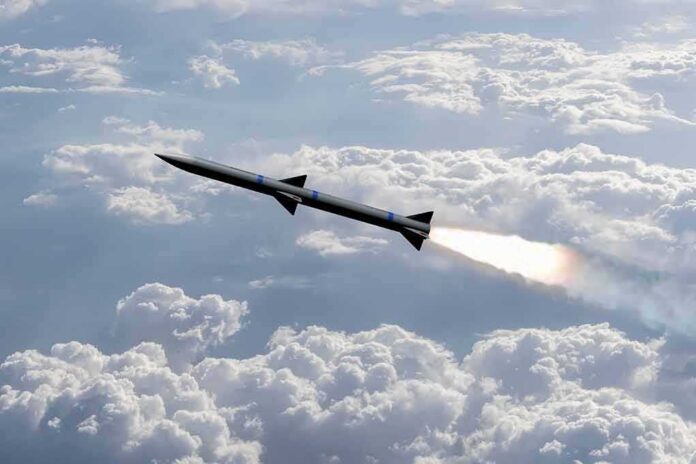
Iran said it struck U.S.-linked bases in Bahrain, Kuwait, and Jordan with missiles and drones in a new wave of retaliation, deepening a dangerous cycle many fear Washington cannot control.
Story Snapshot
- Iran’s Revolutionary Guard claimed coordinated strikes on U.S.-linked facilities in Bahrain, Kuwait, Qatar, and Jordan.
- Tehran framed the attacks as retaliation for recent U.S. strikes inside Iran.
- Gulf states reported interceptions, while satellite analyses show prior damage across multiple bases this year.
- The back-and-forth highlights a costly cycle that risks wider war and strains energy security.
What Iran Says It Hit And Why It Struck Now
Iran’s Islamic Revolutionary Guard Corps said it launched missiles and drones at U.S.-linked military targets in Bahrain, Kuwait, Qatar, and Jordan. Iranian state-linked outlets described waves under “Operation Nasr 2,” naming facilities such as air bases, logistics hubs, and command centers. The Guard said the strikes answered recent U.S. attacks on Iranian territory and infrastructure. A statement carried by Iranian media identified Jordan’s Azraq base among the targets, citing a numbered communique that framed the action as retaliation.
Regional and international outlets amplified Iran’s list of targets in Bahrain and Kuwait, including claimed hits on aviation and naval sites. Reports referenced the use of ballistic missiles and Shahed drones, and asserted damage to aircraft and support equipment. While Iran’s messaging stressed success, the core claim remained consistent: these were reprisal strikes for U.S. operations earlier in the week. That narrative echoes prior Iranian statements during this year’s conflict intervals across the Gulf.
How Gulf States And Independent Analyses Frame The Impact
Gulf governments have often emphasized air defense success and limited on-the-ground effects. That pattern continued as Bahrain and Kuwait reported intercepting incoming threats and managing fallout at logistics and energy sites. Independent analysis this year, however, has documented real damage at U.S.-used installations. Satellite reviews and investigative reporting identified at least 17 damaged U.S. sites early in the conflict, and later counts cited damage to more than 200 structures and assets across the region.
Media and think tank assessments described a cycle where Iran calibrates strikes to answer U.S. or Israeli actions while avoiding full war. One study detailed how Iran matched numbers or types of weapons to signal control and resolve. Another reported that Iran concentrated early salvos on air bases hosting U.S. forces, then expanded to logistics and some civilian-linked infrastructure. These findings support the view that both sides shape public claims to serve strategic aims amid continuing exchanges.
Why This Matters For Americans Across The Spectrum
American families see a grinding contest that risks wider war without clear goals. Each round of strikes invites another, raising odds of a crisis that could drag in more allies and drive up fuel and shipping costs. Investigations have already tied Iranian attacks to significant damage at multiple sites, even when officials stress interceptions. That mix of real harm and reassuring briefings feeds a public worry that leaders downplay risks while the bill lands on taxpayers and service members.
For conservatives angry about endless wars and high energy prices, this cycle threatens both. For liberals focused on human costs and regional stability, the same cycle signals policy drift without accountability. Both sides share a concern that Washington’s security machine moves on autopilot. When U.S. strikes inside Iran prompt predictable retaliation on U.S. positions in the Gulf, it looks like a loop no one breaks. That erodes trust that leaders can protect troops and the economy at the same time.
What To Watch Next: Escalation Risks And Off-Ramps
Escalation risks increase if a strike causes mass casualties, destroys high-value aircraft, or shuts a major port. A hit on desalination or power in Kuwait or Bahrain could spark local pressure to curb U.S. basing. A misfire into a dense city could force broader responses. Off-ramps remain if both sides keep damage bounded and use third-party channels. Past pauses came after matched raids and quiet talks. Energy markets will price in risk from every volley and reported interception rate.
Sources:
insiderpaper.com, timesofindia.indiatimes.com, en.haberler.com, iranintl.com, bbc.com, indiatoday.in