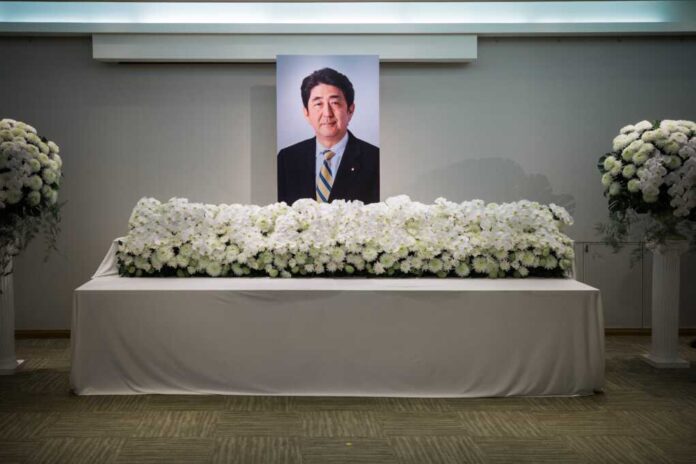
The life sentence handed down today to Tetsuya Yamagami, the assassin of former Prime Minister Shinzo Abe, finally delivers justice in a case that did more than just rock the nation. The trial exposed dangerous security failures and the controversial, unchecked influence of religious groups on elite Japanese politics, revealing the personal grudge that fueled one of modern Japan’s most brazen political killings.
Story Highlights
- Tetsuya Yamagami, who gunned down Abe in 2022 with a homemade firearm, receives life sentence today from Nara District Court.
- Motive rooted in personal grudge against Unification Church, blamed for his family’s financial ruin, highlighting risks of unchecked religious influence in politics.
- Assassination stunned gun-averse Japan, revealing critical lapses in VIP protection that demand stronger safeguards.
- Trial from October 2025 confirmed guilty plea on murder and weapons charges, closing a chapter on one of modern Japan’s most brazen political killings.
Assassination Details
On July 8, 2022, Tetsuya Yamagami fatally shot Shinzo Abe during a campaign speech near Yamato-Saidaiji Station in Nara City. Abe, Japan’s longest-serving prime minister, collapsed after the second shot struck his neck and chest at 11:30 a.m. Yamagami used a primitive homemade double-barrel gun crafted from plumbing parts. Authorities arrested him immediately at the scene. Abe died later that afternoon at Nara Medical University Hospital from massive blood loss.
Yamagami, the man who killed former Prime Minister Abe, has been sentenced to life imprisonment. pic.twitter.com/6Gtdq8APg4
— おはよ!まいぶらざー (@OhayoMybrother) January 21, 2026
Perpetrator’s Grudge and Preparation
Yamagami, a 41-year-old former naval officer, targeted Abe due to a deep grudge against the Unification Church. His mother donated heavily to the church, leading to family bankruptcy in 2002. He viewed Abe as a supporter of the group through political ties. Over years, Yamagami researched weapons and built his device. The attack occurred amid upper house election campaigning, where Abe backed Liberal Democratic Party candidate Kei Sato. Security from local police proved inadequate.
Trial Proceedings and Guilty Plea
The Nara District Court began Yamagami’s trial on October 28, 2025. He pleaded guilty to murder, firearm and sword law violations, ordnance regulations, and property damage. In late November 2025 testimony, Yamagami detailed his upbringing and church-related resentment, stating, “It is true. There is no doubt that I did it.” Defense lawyers argued the homemade weapon did not qualify as a legal handgun to seek leniency. The trial concluded mid-December 2025, leading to today’s life sentence ruling.
Historical Context and Impacts
Japan’s strict gun laws make Abe’s assassination rare, contrasting historical attacks like the 1960 stabbing of Inejiro Asanuma. The killing exposed Liberal Democratic Party links to the Unification Church, sparking public backlash and member exits. Short-term effects included a state funeral on September 27, 2022, overseen by Prime Minister Fumio Kishida. Long-term, it prompted calls for VIP security reforms and debates on separating religion from politics, alerting nations to threats from simple homemade weapons.
Stakeholder Reactions and Legacy
Abe’s widow Akie was present during hospital efforts. The Liberal Democratic Party faced scrutiny over church affiliations, amplified by Abe’s influence. Specialists from CSIS noted the impact to Japan’s low-violence society and security gaps. Commentators called it one of the most effective political assassinations recently due to its exposure of elite ties. Abe’s death left a void in conservative leadership, reminding the world of vulnerabilities even in stable democracies.
Watch the report: Man who killed former Japanese prime minister Shinzo Abe jailed for life – This is the Coast
Sources:
- Man Gets Life in Prison for Killing Shinzo Abe, Former Leader of Japan – The New York Times
- Shinzo Abe’s killer sentenced to life in prison over shooting of Japanese former PM | Japan | The Guardian
- Gunman gets life sentence for killing Japan’s former PM Shinzo Abe
- Man who assassinated former Japan leader Abe with homemade gun sentenced to life in prison | CNN