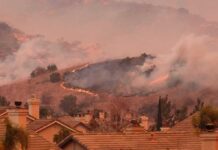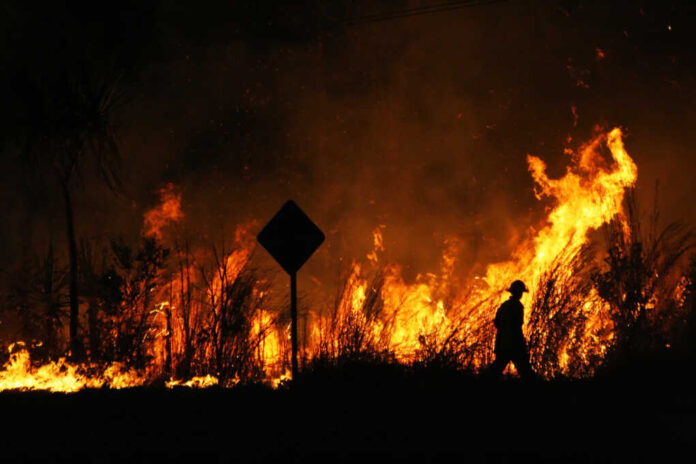
A massive wave of smoke from Canadian wildfires is blanketing the U.S. Midwest, triggering air quality alerts and raising health concerns for millions.
At a Glance
- Over 700 wildfires continue to burn across multiple Canadian provinces
- U.S. states including Minnesota, Michigan, and Illinois are under air quality alerts
- Minneapolis recorded among the world’s worst air quality levels this week
- Hazardous particulate levels prompt officials to advise indoor sheltering
- Vulnerable populations urged to avoid outdoor exposure and wear masks
Smoke Siege Engulfs the Midwest
Thick smoke from ongoing wildfires in Canada has surged into the U.S. Midwest, engulfing cities and suburbs in a dense, toxic haze. States from Iowa to Indiana are under urgent air quality alerts, as particulate matter from the fires reaches hazardous levels.
Minneapolis, in particular, registered one of the highest Air Quality Index (AQI) readings globally, with PM2.5 concentrations exceeding safe thresholds by a wide margin. Nearby cities including Chicago and Detroit have also experienced deteriorating conditions, with visibility reduced and public health warnings in effect.
Watch now: Meteorologist explains why there is constantly wildfire smoke · YouTube
Airborne pollution linked to the fires has now persisted across the region for three consecutive days. Officials report that prolonged exposure may exacerbate respiratory conditions, especially among children, the elderly, and individuals with asthma or heart disease.
Canadian Crisis Fuels Cross-Border Fallout
Canada remains at the heart of the crisis, with over 700 active fires blazing across provinces including British Columbia, Alberta, Ontario, and the Northwest Territories. The 2025 wildfire season is on track to become one of the most destructive in the country’s history, fueled by prolonged drought and elevated temperatures linked to climate change.
Smoke plumes from these massive fires are traveling hundreds of miles, propelled by prevailing winds and atmospheric pressure patterns. These plumes have triggered air quality alerts across the U.S., as fine particulate matter known as PM2.5 infiltrates lungs and bloodstream, increasing risks of stroke and heart attack.
Although cross-border collaboration on emergency response exists, the scale of these wildfires—and their lingering smoke effects—has overwhelmed existing mitigation efforts.
Public Health Urgency Ramps Up
With conditions worsening, health agencies in affected states are issuing strong advisories: stay indoors, seal windows, and avoid strenuous outdoor activity. Schools and community centers are activating emergency protocols, and local governments are distributing N95 masks in urban areas.
In Michigan alone, more than 80 counties have declared pollution alerts, with smoke forecasts suggesting the haze could linger through early next week. Meanwhile, central and northern Illinois are operating under Red Air Pollution Action Days, marking one of the most severe regional air quality crises in recent memory.
Public officials are also calling on residents to use high-efficiency air purifiers, avoid outdoor exercise, and check on vulnerable neighbors as the smoke event drags on.
Escalating Pattern or One-Off Disaster?
Experts warn that these events are no longer anomalies but part of an escalating pattern of climate-driven disruptions. Similar smoke intrusions occurred in 2023 and 2024, but this summer’s crisis stands out in scope and duration. As fire seasons lengthen and intensify, smoke is expected to become a recurring threat to urban life, far beyond the burn zones.
Environmental scientists emphasize the need for coordinated forest management, emissions policy, and public health infrastructure to confront what is increasingly a transnational hazard. Without intervention, smoke-filled summers may become a grim new normal for North America’s heartland.