Illinois’s new law blocking ICE arrests near courthouses exposes a deepening conflict between state sanctuary policies and the Trump administration’s aggressive crackdown on illegal immigration.
Story Highlights
- Illinois joins other Democrat-led states in prohibiting ICE from arresting illegal immigrants at courthouses.
- The Trump administration is pushing for sweeping federal enforcement and penalizing non-cooperative sanctuary jurisdictions.
- New federal policies prioritize mass deportations, expanded detention, and greater local law enforcement involvement.
- Legal and constitutional challenges are escalating as states and the federal government clash over immigration authority.
Illinois Shields Illegal Immigrants from ICE Arrests at Courthouses
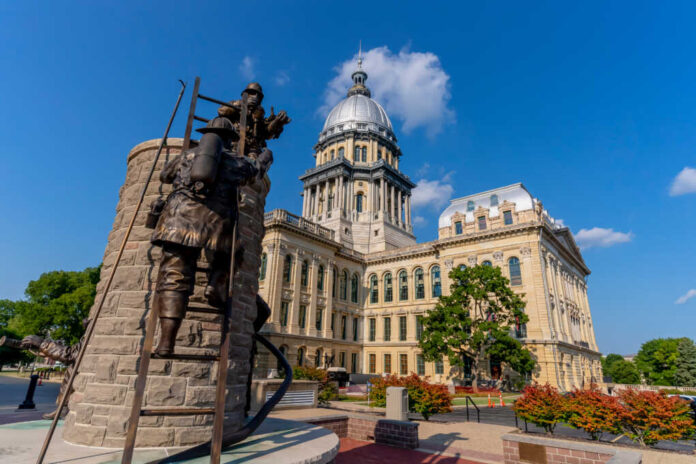
Illinois lawmakers passed legislation preventing federal immigration agents from arresting illegal immigrants in and around state courthouses. This move places Illinois alongside other Democrat-run states adopting sanctuary policies that limit federal immigration enforcement. By enacting this law, Illinois aims to provide undocumented immigrants with a sense of safety when attending court proceedings, regardless of federal priorities. Supporters argue the measure promotes public trust in the legal system, while critics say it directly undermines federal immigration law, fueling ongoing tensions between state and national authorities.
Illinois legislators have enacted a law prohibiting civil immigration arrests inside and within 1,000 feet of state courthouses, aiming to safeguard individuals who are using the judicial system from federal immigration enforcement activities#ICE #Pritzker #SanctuaryState pic.twitter.com/08JWXu1Jbt
— Sandy (@SD73660) November 1, 2025
The Trump administration, now in its second term, has made immigration enforcement a top priority, dramatically expanding the reach and intensity of federal action. Through executive orders and new legislation, the administration has established ambitious deportation targets, expanded expedited removal powers nationwide, and threatened sanctuary jurisdictions with funding cuts and legal penalties if they restrict cooperation with ICE. These steps directly challenge state-level sanctuary laws like Illinois’s, setting up legal battles over the limits of federal and state authority in immigration enforcement.
Federal Response: Mass Deportations and Expanded Detention
President Trump’s administration has set a goal of deporting one million immigrants annually—over triple the previous record. New policies permit ICE enforcement in sensitive locations, including courts, by expanding the scope of expedited removal and daily arrest quotas. Federal funding for detention centers has risen sharply, with billions allocated to expand capacity and facilitate removals. The administration’s approach relies on local law enforcement as a “force multiplier,” pressuring states like Illinois to cooperate or risk losing federal support. These actions have triggered fear among immigrant communities and sparked constitutional debates.
The “One Big Beautiful Bill Act,” signed into law in July 2025, further supercharges these enforcement efforts. The bill provides a massive $170 billion boost to federal agencies for immigration enforcement, quadrupling ICE’s detention budget and explicitly allowing family detention, even for children. Critics warn that these provisions undermine due process and violate longstanding legal protections, raising concerns about indefinite detention and humanitarian standards in detention facilities. The law’s deep cuts to benefit programs also impact legal immigrants and low-income Americans, intensifying the controversy around the administration’s strategy.
Sanctuary States Face Federal Pressure and Legal Uncertainty
Illinois’s refusal to allow ICE arrests at courthouses has made it a flashpoint in the national struggle over immigration policy. The Trump administration is targeting sanctuary states with threats of funding cuts and legal challenges, seeking to force compliance with aggressive federal mandates. New federal measures entangle local police in immigration enforcement through expanded agreements and penalties for non-cooperation, escalating the standoff. Legal experts predict protracted court battles over the constitutional limits of state versus federal power, with both sides claiming to defend the rule of law and public safety.
Limited data is available on the immediate impact of Illinois’s law, as federal agencies have only begun to respond and litigation is expected. What remains clear is that the conflict between state sanctuary policies and the Trump administration’s hardline immigration agenda will continue to define the national debate. Conservatives see the administration’s actions as a necessary defense of the rule of law and national sovereignty, while critics argue that heavy-handed enforcement violates civil rights and disrupts communities. The outcome of these battles may reshape the landscape of American immigration policy for years to come.
Watch the report: Illegal immigrant puts $10k hit on ICE officers: ‘They should be doxxed’
Sources:
The Trump Administration’s 2025 Changes to Immigration Law …
The First 100 Days of the Second Trump Administration
The Anti-Immigrant Policies in Trump’s Final “Big Beautiful Bill …