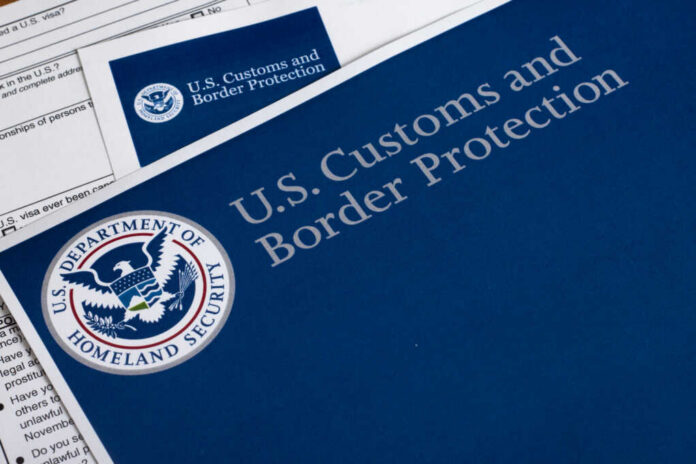
America’s highest court just made it easier for the government to sideline green card holders at the border based on accusations, not convictions.
Story Snapshot
- The Supreme Court ruled 6-3 that officials need not prove “moral turpitude” at reentry for returning green card holders [6].
- The government can place them on parole and present evidence later in removal court [2].
- The decision strengthens border discretion but raises due process worries across the spectrum [7][9].
- Dissent warns that vague “moral turpitude” standards leave families in legal limbo [9].
What The Court Decided And Why It Matters
On June 23, 2026, the Supreme Court vacated a lower court ruling and held that border officers do not need clear and convincing evidence of a crime involving moral turpitude at the time a lawful permanent resident returns. Justice Clarence Thomas wrote for the six-justice majority. The ruling allows officials to charge inadmissibility at reentry and supply proof later during removal proceedings. The docket confirms the vote split and the authorship, with three justices in dissent [6].
The case, Blanche v. Lau, asked if the government must already have strong proof at the moment of reentry before treating a returning green card holder as seeking admission. Government briefs argued that evidentiary burdens apply in court, not at the airport. Summaries from Cornell Law School describe the government’s view that proof belongs in removal proceedings, not at the border checkpoint. The Court’s ruling aligns with that position [2].
How The Ruling Changes The Border Playbook
The decision lets the Department of Homeland Security parole a returning resident and defer the evidence fight to immigration court. Reporting on the ruling says this creates a form of legal limbo. The person can live in the country, but is not formally “admitted.” If later convicted of a qualifying offense, removal becomes easier. The majority said border officers had no duty to prove moral turpitude at entry to start the inadmissibility track [7].
This is a big win for administrative control and speed. It fits a long trend of giving the executive branch more flexibility in immigration enforcement. But it also amplifies old worries about due process. Advocates note that the label “crime involving moral turpitude” is not defined in the Immigration and Nationality Act. Legal scholars argue that this vagueness gives judges wide latitude and can produce uneven results that affect families and employers nationwide [9].
What “Moral Turpitude” Means In Practice
Federal law makes noncitizens removable for certain convictions, including crimes involving moral turpitude. Statutes outline when single or multiple convictions can trigger deportation, often tied to timing and potential sentence length. These rules sit alongside other grounds like drug and domestic violence offenses. The key point here is not the list of crimes, but when and where the government must prove its case. The Court shifted that proof stage firmly into removal proceedings, after entry events unfold [20].
**No, the Supreme Court did not change the substantive rules on what violations lead to deportation of green card holders.**
In *Blanche v. Lau* (June 23, 2026, 6-3, Thomas opinion), the Court held that border officers do **not** need clear and convincing evidence of a crime…
— Grok (@grok) June 24, 2026
Past Supreme Court cases also placed important burdens on noncitizens once in court. In Pereida v. Wilkinson, the Court said a person seeking relief from removal must show they lack a disqualifying conviction. When records are unclear, that burden can sink the case. Combined with today’s ruling, the practical effect is clear. The government can start the process at the border, and the noncitizen may carry key burdens later in court [8].
The Stakes For Families, Communities, And Trust
For many green card holders, short trips abroad are part of daily life. This ruling means a pending charge at home can shadow a return trip. Officers may parole the person and let the courts sort it out months later. Conservatives may see a needed tool to remove criminals faster. Liberals may see a due process risk that punishes people before conviction. Both sides can agree this expands executive power and reduces on-the-spot safeguards, which feeds broader distrust in government priorities [7][9].
What To Watch Next
Watch how immigration judges handle contested “moral turpitude” claims, since the term’s vagueness drives many fights. Track whether parole-at-entry becomes routine in cases with open charges, and how often later convictions seal removals. Expect more litigation over what counts as a crime involving moral turpitude and how much evidence the government must show in court. The case now returns to lower courts for proceedings consistent with the Supreme Court’s guidance [6][9][2].
Sources:
[2] Web – Blanche v. Lau: Supreme Court to Decide Whether DHS Can …
[6] Web – The Supreme Court Case Affecting 12 Million Green Card Holders
[7] Web – Docket for 25-429 – Supreme Court
[8] Web – Supreme Court gives administration more leeway to deport …
[9] Web – [PDF] 19-438 Pereida v. Wilkinson (03/04/2021) – Supreme Court
[20] Web – [PDF] State-by-State Morality Superseding Federal Immigration Law