A Fort Eisenhower murder case turned into a guilty plea, and the official record now carries the strongest possible admission of responsibility.
Quick Take
- U.S. Army National Guardsman Natravien R. Landry pleaded guilty in federal court to second-degree murder and a firearm charge.[1]
- Federal prosecutors said the killing involved U.S. Army Sgt. Andre S. Stewart Jr. at Fort Gordon, also known as Fort Eisenhower.[1]
- Early reporting said Landry had gone to the residence of a woman with whom he shares a child, then found Stewart inside.[1][4]
- The case now moves from guilt to sentencing, where Landry faces a minimum of 10 years and up to life in prison.[1]
What Landry Admitted in Court
The Justice Department said Landry pleaded guilty in United States District Court to murder in the second degree and to using a firearm during and in relation to a crime of violence.[1] Prosecutors said the plea covers the December 2024 shooting death of Sgt. Andre S. Stewart Jr., a soldier stationed at Fort Gordon in Georgia.[1] That changes the case from a disputed charge into an admitted federal homicide.
The plea is also the clearest public sign that the defense chose to stop fighting the government’s core murder case. Earlier reports described Landry as a National Guard soldier accused of shooting a man who had spent the night with his ex-girlfriend or with the mother of his child.[4][6] Those accounts gave the story a personal and explosive frame, but the federal plea now matters more than the tabloid label. Court admissions control the legal outcome, not the headline.
How the Shooting Unfolded
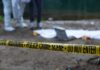
According to the Justice Department, Landry went to an apartment on the installation where a woman with whom he shares a child lived.[1] Prosecutors said he saw another vehicle outside, went inside, walked upstairs to a bedroom, and found Stewart there.[1] The government said Landry knew Stewart was unarmed and then shot him once in the chest.[1] Stewart was later pronounced dead at the apartment.[1]
That account matters because it shows why prosecutors pushed a murder charge rather than treating the case as a lesser fight or panic reaction. The public record released so far does not include the full plea colloquy, so the exact words Landry used in court are not all visible here. Even so, the federal statement leaves little doubt that the government believes the facts support a serious intentional killing, not a random or accidental discharge.[1]
Why the Case Drew So Much Attention
The case hit a nerve because it mixed military life, domestic conflict, and violence inside base housing. Fort Gordon officials locked down the installation after the shooting, which made the incident larger than a private dispute.[4][6] Federal agents later arrested Landry about three hours away during a traffic stop south of Atlanta, and deputies recovered a 9 millimeter handgun that testing linked to the shooting.[1][4] That chain of events fed public anger over how quickly a personal conflict became a deadly crisis.
#BREAKING | 27-year-old Natravien R. Landry pled guilty to Murder in the Second Degree and Use of a Firearm During and in Relation to a Crime of Violence in the death of U.S. Army Sgt. Andre S. Stewart Jr. https://t.co/9o8ca5gJwZ
— WJBF (@WJBF) June 11, 2026
The broader lesson is familiar to many readers: when institutions move slowly, ordinary people are left with the aftermath. A soldier is dead, a service member has admitted guilt, and a family is now tied to a federal prison sentence instead of a courtroom fight.[1] The Justice Department said the plea agreement carries a minimum sentence of 10 years and can reach life in prison.[1] Sentencing will now decide the full punishment, but the case already shows how fast a private dispute can spiral into a public failure.
Sources:
[1] Web – National Guardsman pleads guilty to fatal shooting of soldier he found …
[4] Web – National Guard soldier charged after allegedly killing man found …
[6] Web – National Guardsman pleads guilty to fatal shooting of soldier he …