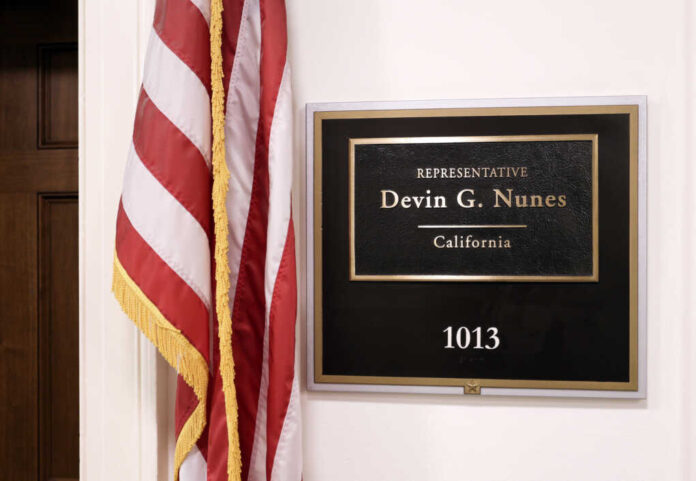
A federal judge dismissed Trump Media CEO Devin Nunes’s defamation suit against MSNBC and Rachel Maddow, finding that the challenged statements were not actionable as defamation.
At a Glance
- Devin Nunes sued MSNBC and host Rachel Maddow for defamation over a 2021 broadcast
- A federal judge ruled the statements were protected opinion or not provably false
- The dismissal marks another unsuccessful defamation case by Nunes against media outletsNunes is CEO of Trump Media & Technology Group, parent of Truth Social
- Legal experts say the decision reinforces high standards for public figures in defamation claims
Court Dismisses Defamation Case
Devin Nunes, former U.S. congressman and current CEO of Trump Media & Technology Group, filed a defamation lawsuit in federal court against MSNBC and Rachel Maddow in 2022. The suit centered on comments Maddow made during a 2021 broadcast of her primetime show, in which she referenced Nunes’s alleged connections to Russian interests and handling of intelligence documents. Nunes claimed the remarks were false, damaging to his reputation, and made with actual malice.
On August 2, 2025, U.S. District Judge Laura Taylor Swain dismissed the lawsuit. The court found that Maddow’s statements were either protected as opinion or not subject to verification as factual claims, thus not meeting the legal threshold for defamation. The judge’s decision emphasized that for a public figure like Nunes, U.S. law requires proof of “actual malice” and clear evidence that statements are both false and defamatory—a bar that was not met in this case.
Watch now: Judge Tosses All But One Part of Devin Nunes’ NBCUniversal Defamation Case
Nunes’s Legal Track Record and Media Reaction
This decision marks another failed attempt by Nunes to pursue defamation claims against national news organizations. While in Congress, Nunes filed multiple lawsuits against media outlets and journalists, often claiming unfair or misleading coverage. Most of these cases have ended in dismissal, with courts frequently upholding the press’s First Amendment protections—especially when the subject is a prominent public figure.
Legal analysts point out that this latest ruling aligns with established precedents requiring rigorous proof of falsity and actual malice. They note that courts are generally reluctant to penalize opinion-based commentary, particularly in cases involving elected officials or high-profile executives. MSNBC and Maddow’s legal teams welcomed the outcome, framing it as a victory for robust political debate and freedom of the press.
Implications for Defamation Law and Media Standards
The Nunes v. Maddow dismissal reinforces the difficulties faced by public figures seeking to prevail in defamation actions against news outlets. Legal scholars explain that the “actual malice” standard—established by the landmark Supreme Court decision New York Times Co. v. Sullivan—continues to provide broad latitude to journalists covering matters of public concern. As misinformation and political polarization fuel high-profile lawsuits, this case is expected to serve as a reference for future litigation involving media criticism of prominent individuals.
Industry observers suggest that such court decisions can shape the boundaries of aggressive reporting, commentary, and satire in American political journalism. The Nunes case also highlights the persistent legal and reputational risks faced by executives of politically charged media ventures such as Truth Social, especially when they seek redress in the courts.
Sources