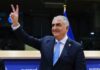
A prominent German soccer executive has ignited a major controversy by calling for a boycott of the 2026 FIFA World Cup. Oke Göttlich, a vice president of the German Football Federation, is proposing the action as a direct protest against U.S. President Donald Trump’s foreign policy maneuvers, specifically his bid to take control of parts of Greenland and the threatened imposition of tariffs on European nations. This suggestion frames the sporting event as a new battleground for geopolitical tensions, drawing comparisons to Cold War-era Olympic boycotts, and is already facing significant institutional resistance from within the German Football Federation and FIFA.
Story Highlights
- Oke Göttlich, a German soccer federation executive, calls for a boycott of the 2026 World Cup.
- The proposal is a reaction to Trump’s Greenland takeover bid and threatened tariffs on European nations.
- Göttlich compares the situation to Cold War-era Olympic boycotts, highlighting political tensions.
- The boycott suggestion faces resistance within the German Football Federation and FIFA.
- The proposal remains under discussion, with no official stance from the German government.
German Soccer Executive Calls for Boycott
Oke Göttlich, president of Bundesliga club St. Pauli and a vice president of the German Football Federation, has called for Germany to consider boycotting the 2026 FIFA World Cup. His proposal is a protest against U.S. President Donald Trump’s bid for U.S. control of parts of Greenland and the threatened imposition of tariffs on European countries. Göttlich’s suggestion aims to defend democratic values and challenge perceived geopolitical threats.
2026 World Cup facing ‘boycott’ threat from major European nations pic.twitter.com/r5wGZ0UmpB
— Chris 🐉📜🧬 (@HorvthKris31477) January 25, 2026
Historical Context of Sports Boycotts
The notion of sports boycotts as a form of political protest is not new. Göttlich references the 1980 Moscow Olympics boycott when the U.S. and allied nations boycotted the Games due to the Soviet invasion of Afghanistan. By drawing parallels with Cold War-era tensions, Göttlich frames the current situation as a moment requiring decisive action through sports diplomacy to address Trump’s foreign policy maneuvers.
Institutional Resistance and Broader Implications
Despite Göttlich’s call for action, the proposal faces resistance from key stakeholders like German Football Federation President Bernd Neuendorf and FIFA President Gianni Infantino, who are likely to uphold the organization’s political neutrality. Infantino, reportedly a close ally of Trump, may further complicate efforts to rally support for the boycott. This situation places increased international scrutiny on Trump’s actions and potential implications for the upcoming tournament.
The potential boycott could impact the tournament’s planning and marketing, potentially leading to diplomatic tension between the U.S. and European allies. If the boycott gains traction, it could set a precedent for future political protests in sports, challenging the traditionally neutral stance of international sporting events.
Watch the report: German Football official calls for boycott of 2026 World Cup over Trump’s Greenland push – YouTube
Sources:
- ESPN – German Soccer Federation World Cup Boycott Donald Trump 2026
- Fox News – German Soccer Official Calls World Cup Boycott Protest Trump
- GiveMeSport – Germany Soccer Official 2026 World Cup Boycott Donald Trump