America’s leaders say they’re pausing a major war with Iran based on a deal that isn’t fully confirmed, and that gap between talk and proof is exactly what makes many citizens on both the right and left uneasy about who is really steering U.S. power.
Story Snapshot
- President Trump says he canceled planned strikes on Iran because top Iranian leaders agreed to parameters for a peace deal, including opening the Strait of Hormuz and limits on Iran’s nuclear program.
- Iranian officials publicly say “nothing has been finalized,” raising doubt about how firm the deal really is and whether Washington is overselling progress.
- Trump also claims regional allies, from Israel to Gulf states, back the framework, but their detailed positions and any signed texts are not yet public.
- The Pentagon has paused bombing while talks continue, showing real military decisions are being made based on diplomatic signals that ordinary Americans rarely see clearly.
Trump Ties Halted Strikes To A Near-Ready Peace Framework
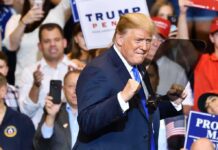
President Trump says he called off planned United States strikes on Iran because a broad outline for ending the war has been reached with Iran’s top leadership. In a Truth Social post, he claimed talks had reached “the highest levels” of Iran’s government and that “final points” of a deal had been approved in concept. He described the agreement as including a ceasefire, reopening the Strait of Hormuz, and steps to curb Iran’s nuclear ambitions, with a formal signing expected once documents are finished.
Trump and aides frame the pause as leverage, not surrender, saying strikes can resume if Tehran backs away. Reports describe the cancellation as part of a pattern: threat of heavy attacks followed by a pause once talks move forward. For many Americans watching from home, this can feel like whiplash. One day war seems likely; the next day it depends on a deal most citizens never get to read. That kind of opaque decision-making fuels distrust across the political spectrum.
Iran And Allies Send Mixed Signals On How “Real” The Deal Is
Iranian officials have pushed back on Trump’s confident tone, saying publicly that no final decision or fully agreed deal is in place. Iran’s foreign ministry spokesperson called talk of a finished agreement “speculative” and stressed that “nothing has been finalized,” even as mediators from Qatar and other countries say key gaps in the talks have narrowed. Reuters reporting also notes that Iran has signaled it will halt its own attacks only as long as the United States keeps its bombing paused, which sounds more like a fragile truce than a signed peace.
Trump claims that a long list of regional governments approve the outline, including Israel, Saudi Arabia, the United Arab Emirates, Qatar, Turkey, Pakistan, Bahrain, Kuwait, Jordan, and Egypt. Israeli statements thank Trump for promising any final agreement would remove enriched uranium and limit missiles, but they do not publish the full terms. For readers, this looks like a familiar pattern: leaders say “trust us, the details are handled,” while the actual text and trade-offs remain hidden. Both conservatives who worry about globalist deals and liberals who fear back-room power politics can see reason for concern.
Real Military Pauses Show Talk In The Palace Has Consequences
Reports from major outlets say the Pentagon has in fact paused planned bombing runs on Iran while talks continue, showing that Trump’s statements are tied to real orders, not just rhetoric. One account describes strikes on Iranian power and energy sites being postponed for days during “productive conversations” about a “complete and total resolution” to the conflict. Another notes a two-week delay in attacks, linked to conditions on “complete, immediate” safety in the Strait of Hormuz and a ten-point Iranian proposal.
Trump announced the U.S. will call off strikes on Iran with a preliminary deal including open Hormuz Strait and Iran nuclear program shutdown.
Crude oil war premium evaporates, lowering inflation rebound risk and locking in Fed easing expectations.
Top beneficiaries: AI cloud &…— Henry Miller (@Manjuu_saculu) August 2, 2026
These pauses matter far beyond the battlefield. Every time Washington stops or starts strikes based on private negotiations, it reminds people how much war and peace now depend on a small circle of officials and intermediaries. Many Americans feel the federal government listens more to foreign capitals and corporate energy interests than to families facing high prices and unstable jobs at home. When they hear about billions in frozen assets, oil flows through Hormuz, and secret term sheets, they see a system serving elites while ordinary citizens carry the economic and security risks.
Why This Episode Feeds Deep State Fears On Both Right And Left
This Iran story fits a long-running pattern in United States–Iran crises: leaders ramp up threats, then announce a pause and hint at a big diplomatic win, while clear proof lags behind. Conservatives who dislike endless wars and globalist bargains worry that America’s military is being used as a bargaining chip in shadowy deals that may never truly protect the country. Liberals who focus on human rights and inequality see powerful men trading strikes and sanctions while civilians in both countries pay the price.
Both sides share one key frustration: they do not trust a political class that seems to treat war, peace, and massive energy decisions as tools for staying in power. Trump’s claim that he alone canceled strikes “for the future benefit of the WORLD” and a “prosperous Iran” sounds noble, but it also underscores how much depends on one leader’s word and how little on transparent debate. When Iran says “nothing has been finalized” at the same time the White House talks about near-total approval, it reminds citizens that they are often the last to know what is really happening—and the first to feel the fallout.
Sources:
redstate.com, bbc.com, apnews.com, nbcnews.com, pbs.org, youtube.com, bloomberg.com, yahoo.com, cnn.com, politico.com