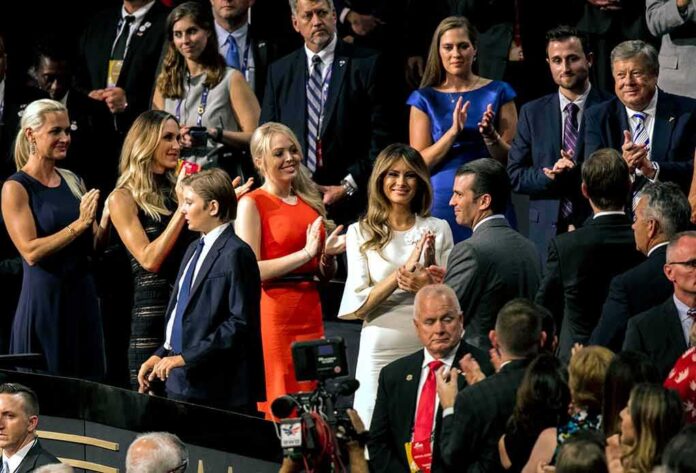
Newly released White House documents show the Biden-era FBI tracked Melania and Barron Trump’s travel and secretly logged Susie Wiles’ phone calls while building the classified documents case against President Trump.
Story Snapshot
- Documents show FBI agents watched Melania and Barron Trump’s travel in a late-May 2022 email chain
- A pen register on Susie Wiles’ phone ran from February to May 2023, logging calls but not their content
- Records tie the monitoring to contacts with 21 Trump-affiliated lawyers, campaign advisers and five journalists
- The White House Government Transparency Task Force released the files on October 5, 2026
- Jack Smith’s team has defended similar phone-record collection in past testimony as lawful and routine
Travel Tracking and Phone Monitoring Revealed
The documents, released by the White House Government Transparency Task Force on October 5, 2026, describe Federal Bureau of Investigation (FBI) agents as “watching Donald, Melania and Barron Trump closely” in a late-May 2022 email exchange. That messaging came as agents planned the search of Mar-a-Lago, according to the records cited in multiple reports published the same day.
Separate memos describe a pen register and trap-and-trace operation placed on Wiles’ phone from roughly February through May 2023. That tool records who calls a phone, who gets called back, and how long each call lasts. It does not capture what was said during the calls.
Calls With Lawyers and Journalists Logged
The released records tie the Wiles phone monitoring to her contacts with at least 21 lawyers representing Trump, along with campaign advisers and at least five journalists. Investigators reportedly tracked who she called and who called her back during a three-month stretch while the classified documents probe moved forward inside the Justice Department.
One memo says the FBI interviewed Wiles on April 7, 2023, and showed her four pages of her own communications gathered during the monitoring. That detail suggests investigators had already reviewed and organized her call data before sitting down with her, rather than collecting it afterward.
Jack Smith’s Team Has Defended Similar Tactics
Special counsel Jack Smith, who led the classified documents investigation, has testified that gathering phone records in complex cases is standard practice. He told senators the records show only call dates and times, not conversation content, and said such subpoenas were “entirely lawful, proper and consistent with established Department of Justice policy.”
Debates over federal surveillance of political figures are not new in American history, stretching back through decades of controversy over domestic monitoring programs. What usually settles those disputes isn’t the initial claim of surveillance itself, but later disclosure of who authorized it, how wide it reached, and whether it stayed within its original legal limits.
The documents released this week came from an internal government source, the White House’s own transparency task force, rather than outside leaks or court filings. That distinguishes this disclosure from past surveillance controversies, where independent reporters or whistleblowers first surfaced the underlying claims before officials responded.
Sources:
redstate.com, wfmd.com, westernjournal.com, thegatewaypundit.com, cbc.ca