Trump’s sudden invitation to Colombia’s leftist President Gustavo Petro shows how hard-line pressure on foreign leaders is being leveraged into a high-stakes deal over drugs, security, and America’s borders. This dramatic pivot, following months of public threats, sanctions, and military action, has turned an open feud into a tentative diplomatic opening focused on measurable results for U.S. security and conservative priorities.
Story Highlights
- Trump pivots from public threats against Colombia to an hour‑long call and White House invitation for President Gustavo Petro.
- The outreach follows sanctions, visa revocation, and U.S. strikes on suspected drug boats tied to cocaine trafficking.
- Petro accepts the invitation while speaking at an anti‑Trump, pro‑sovereignty rally in Bogotá.
- Both sides now frame the relationship around drugs, security, and possible clean‑energy cooperation.
From Near‑War Rhetoric to White House Invitation
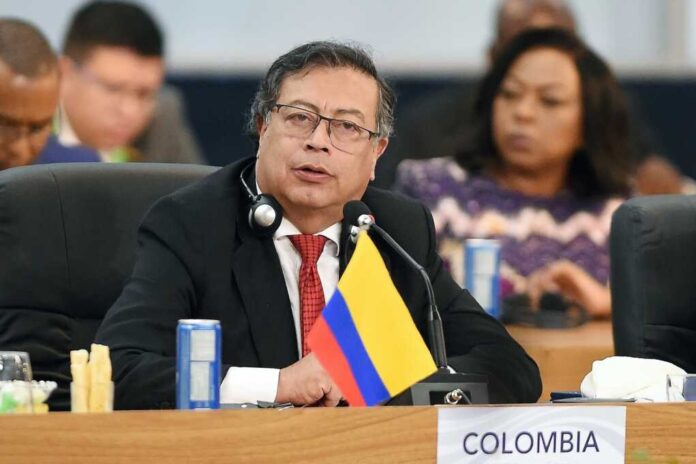
Donald Trump’s latest move toward Colombia is as dramatic as it is strategic. After months of open hostility toward Gustavo Petro’s leftist government, including sanctions, a revoked U.S. visa, and public talk of potential military action, Trump now says he had a “great honor” phone call with Petro and is preparing to welcome him to the White House. The call reportedly lasted more than an hour and focused on drugs and bilateral disagreements, turning a public feud into a tentative diplomatic opening.
For many American conservatives who have watched the left in Latin America undermine stability and fuel drug flows north, this shift looks less like a softening and more like a calculated deal from a position of strength. Trump’s earlier threats, combined with sanctions and the high‑profile removal of Venezuela’s Nicolás Maduro, signaled that Washington was willing to push hard. Petro’s decision to engage directly suggests he recognizes the real leverage the United States holds over his agenda and Colombia’s economy.
🚨🇨🇴🇺🇸 URGENT: Reports say President Trump held a 30-minute call with Colombian President Gustavo Petro after issuing stern warnings about potential U.S. action.
Pressure is mounting — Petro is clearly rattled. 🔥 pic.twitter.com/6dZGTNEeOD— Victoria Byrne (@Thevictoria76) January 8, 2026
Petro’s Rally, Sovereignty Message, and the Phone Call
The timing of Petro’s acceptance tells its own story. As he addressed an anti‑Trump, pro‑sovereignty rally in Bogotá, railing against U.S. policy and intervention, Petro told supporters that he had just spoken with Trump and had agreed to visit the White House. Colombian media cast the gathering as a defense of national sovereignty, a reaction to U.S. threats and recent military operations in the region. Yet from the same stage, Petro admitted that peace and security would require dialogue with Washington.
That juxtaposition matters for American readers trying to piece together what is really happening. A leftist president who previously accused Trump of complicity in “genocide” and demanded criminal accountability for U.S. strikes is now publicly calling the conversation “historic” and highlighting the chance for peace and partnership. The rally allowed Petro to claim he was defending Colombia’s independence, even as he moved to restore high‑level contact with the very administration he had denounced. Trump, in turn, can present the call as proof that his tough posture brought Petro to the table.
Drugs, Security, and U.S. Leverage Over Colombia
At the heart of this reset is the decades‑long struggle over cocaine trafficking and how Washington and Bogotá define “security.” The United States has poured billions into Colombia’s military and police under the banner of counternarcotics, while Colombian leaders, especially on the left, complain that this approach ignores peace, development, and sovereignty. Trump’s second term has sharpened that tension. His administration accused Petro’s camp of links to the drug trade, sanctioned Petro and his family, and oversaw more than 30 strikes on suspected drug‑running boats in the Caribbean, with over 100 deaths reported.
Those actions underscore both the asymmetry and the mutual dependence in this relationship. The U.S. can freeze assets, cancel visas, and project force far from its shores. Colombia depends on U.S. cooperation, markets, and security assistance, yet it also controls territory and intelligence crucial to limiting cocaine flows north. Conservatives worried about fentanyl, cartel violence, and border crisis see this as exactly where Washington must be toughest. A White House meeting offers Trump a stage to demand measurable results on coca eradication, interdiction, and collaboration that protect American communities first.
Clean Energy Talk and Concerns About Globalist Agendas
Petro used his rally speech to pitch something that raises red flags for many on the right: a “clean energy” alliance with the United States. He framed it as a way to move Colombia beyond both fossil fuels and the cocaine economy, linking climate policy to peace and “life and love.” For U.S. conservatives, that language echoes the same globalist climate frameworks that Democrats and European elites have tried to use to weaken American energy dominance and push costly green mandates onto U.S. taxpayers and businesses.
Trump now faces a familiar test: how to explore cooperation without sliding into another international climate deal that sacrifices American sovereignty or burdens U.S. workers. Any talk of joint energy projects must be anchored in what benefits the United States, not in abstract environmental rhetoric that leftist leaders use to advance their own political legitimacy. Readers know how quickly “clean energy” language can morph into pressure for new regulations, subsidies, and restrictions that hit middle‑class families and small businesses at home.
What This Means for U.S. Sovereignty and Conservative Priorities
The coming White House meeting will determine whether this pivot becomes a genuine conservative win or just another elite photo‑op. On one side of the table will be an American president whose base demands secure borders, reduced drug inflows, and respect for U.S. law and sovereignty. On the other will be a former guerrilla and first leftist president of Colombia, trying to defend his domestic agenda while avoiding further confrontation with Washington. The stakes are high for both leaders, but in different ways.
For Trump’s supporters, success means turning rhetorical toughness into concrete gains: stronger cooperation against cartels, clear accountability on cocaine production, and no concessions that undercut U.S. security or hand legitimacy to anti‑American movements. Any agreement must respect the Constitution, avoid entangling bureaucracies, and keep decision‑making in American hands. Diplomacy backed by strength can serve conservative priorities, but only if it resists the usual slide toward endless talks, vague promises, and globalist frameworks that do nothing to protect families facing real consequences from drugs and border crime.
Watch the report: Trump Softens Tone On Colombia? Petro To Visit White House After Military Threats Post Venezuela Ops
Sources:
- Trump Invites President Gustavo Petro to White House After Threatening Attacks on Colombia
- Trump invites Colombia’s Petro to White House after earlier threat of military action
- Trump touts friendly call with Colombia’s Petro, planning a White House meeting
- Donald Trump announces upcoming meeting with Gustavo Petro at the White House