Tom Cruise’s decision to decline President Donald Trump’s Kennedy Center Honor spotlights the growing collision between Hollywood, politics, and national traditions reshaped by renewed conservative leadership.
At a Glance
- Tom Cruise declined his Kennedy Center Honor, citing scheduling conflicts.
- President Trump now chairs the Kennedy Center and directly selected honorees.
- The move breaks with 45 years of presidential distance from honoree selection.
- Trump’s role reflects a conservative push to reclaim cultural institutions.
- Experts warn political calculations may increasingly shape future honors.
Trump’s Cultural Imprint
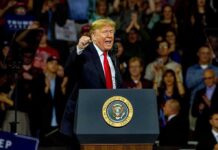
President Trump’s assumption of the Kennedy Center chairmanship marks an unprecedented shift in the role of the presidency within America’s cultural institutions. For over four decades, presidents attended the annual ceremony as honorary guests, symbolizing bipartisan respect for the arts. Trump, however, directly oversaw honoree selection for the December 2025 event, creating a lineup featuring Kiss, George Strait, and Gloria Gaynor.
Watch now: Trump Names Honorees as Cruise Declines · YouTube
The inclusion of diverse and widely recognized performers underscored Trump’s desire to make the ceremony a celebration aligned with his cultural vision. For many conservatives, his involvement signals a restoration of balance after what they saw as years of ideological drift. Yet, the spectacle of Tom Cruise’s refusal has overshadowed the honoree list, amplifying tensions between Hollywood and Trump’s efforts to redefine cultural institutions.
Cruise’s Calculated Distance
Tom Cruise’s official explanation—“scheduling conflicts”—did little to quell speculation about deeper motivations. After a banner year with the release of Mission: Impossible – The Final Reckoning and an upcoming honorary Oscar, Cruise remains one of Hollywood’s most bankable stars. His decision not to attend a Trump-led honor suggests caution about entanglement in a politically charged event.
Observers note that Hollywood’s prevailing progressive culture places major figures in a difficult position when confronting institutions reshaped by conservative leadership. While Cruise has historically avoided public political stances, analysts argue that participation in Trump’s event risked backlash among peers and audiences. His refusal echoes earlier moments in American history when artists and athletes declined invitations under presidents whose policies they opposed, highlighting how political climate increasingly influences cultural decisions.
A Precedent in the Making
The Kennedy Center Honors were conceived as a celebration of artistic achievement above partisan disputes. Trump’s direct control—and Cruise’s rejection—signal a redefinition of that mission. Supporters argue that restoring presidential influence counters an elite-driven cultural agenda. Critics warn that the event risks losing credibility if honorees weigh politics over merit.
As one of the most recognizable American actors, Cruise’s decision could inspire future honorees to similarly decline participation, eroding the institution’s status as a unifying celebration. If such refusals grow common, the Kennedy Center may struggle to maintain legitimacy as a national tradition.
Cultural Fault Lines
Coverage from Euronews, Fox News, and The Daily Beast confirms the facts of Cruise’s refusal and Trump’s expanded role, though interpretations diverge. Some view Cruise’s absence as a subtle rebuke of Trump, while others stress his professional obligations. The polarized reactions reflect a larger cultural fault line: one in which entertainment, politics, and tradition collide.
For conservatives, Trump’s hands-on leadership symbolizes an effort to reclaim a cultural space long perceived as monopolized by progressive ideals. For Hollywood, however, alignment with a politically charged administration can jeopardize careers and reputations. As America’s cultural institutions continue to reflect—and intensify—partisan divides, incidents like Cruise’s refusal will likely remain central to debates over the intersection of art, politics, and national identity.
Sources