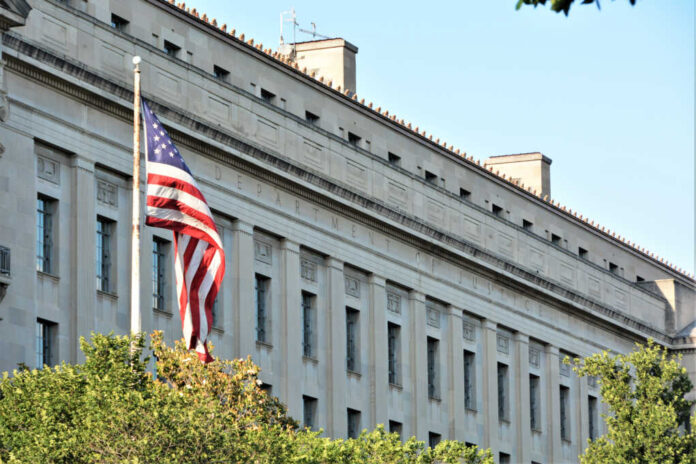
Questions are swirling around the Trump administration’s handling of the Epstein files following the release of a heavily redacted cache of documents by the U.S. Department of Justice (DOJ) on December 19, 2025. This move, mandated by the Epstein Files Transparency Act, has sparked bipartisan accusations of a cover-up to shield high-profile individuals, which Deputy Attorney General Todd Blanche firmly denies, citing privacy concerns for victims. The controversy highlights ongoing demands for transparency and accountability regarding the administration’s compliance with the new law.
Story Highlights
- The DOJ released redacted Epstein documents, sparking accusations of a cover-up.
- Deputy Attorney General Todd Blanche denies any political motivation, citing privacy concerns.
- Trump signed the Epstein Files Transparency Act under congressional pressure.
- Bipartisan criticism arises amid demands for full transparency.
Redactions Fuel Accusations of Cover-Up
The U.S. Department of Justice (DOJ) released a heavily redacted cache of Epstein-related documents under the Epstein Files Transparency Act on December 19, 2025. Victims, Democrats, and some Republicans have accused the Trump administration of redacting materials to protect President Trump. Deputy Attorney General Todd Blanche has firmly denied these allegations, stating that redactions were made solely to protect the privacy of victims.
The release comes amid ongoing demands for transparency, particularly from victims who have long sought justice. The DOJ’s decision to redact images and information has only intensified the debate, with critics arguing that the administration is hiding behind privacy protections to shield powerful individuals.
Epstein files release leaves Trump facing fresh row over limited disclosures
Critics complain of heavy redactions to thousands of documents held by the US justice department pic.twitter.com/8PEJGIbq9G— Count Dooku (@jaapvander3) December 21, 2025
Trump’s Role and Legislative Pressure
President Trump signed the Epstein Files Transparency Act in response to significant congressional pressure, including from members of his own party. This law mandated the DOJ to release the documents by a specific deadline. The administration’s handling of these files has raised questions about transparency and accountability, with some critics suggesting that selective concealment is at play.
Despite the controversy, it is important to note that Trump himself was never accused of any wrongdoing related to Epstein. His social ties with Epstein ended years before the financier’s arrest. Nevertheless, the redacted documents have fueled conspiracy theories and political divides, with both parties using the issue to score points against one another.
Ongoing Developments and Reactions
The DOJ has promised further releases if additional documents are found, maintaining that all redactions are in line with legal and privacy standards. As of December 21, 2025, a group photo initially redacted to conceal Trump’s presence was reposted unredacted after confirming no victims were depicted. This decision was made to address public outcry and accusations of a cover-up.
Amidst the political storm, the DOJ continues to manage the Epstein Library website, allowing public access to the documents while safeguarding sensitive information. The site’s interface, however, is noted to have technical limitations, affecting the ease of searching through the files. Victims and their advocates remain vocal in their demand for full transparency, urging the DOJ to uphold the spirit of the Epstein Files Transparency Act.
Watch the report: Justice Department releases heavily redacted Jeffrey Epstein case
Sources:
- Epstein victims and lawmakers criticise number of files released and redactions – BBC News
- Outrage and legal threats: Trump justice department slammed after limited Epstein files release
- Justice Department’s heavily redacted Epstein file release draws criticism from lawmakers | PBS News Weekend
- Lawmakers say White House ‘covering up things’ in release of Epstein files – POLITICO